






Buying guides
Best Dog Collars for Large Dogs: What Actually Matters
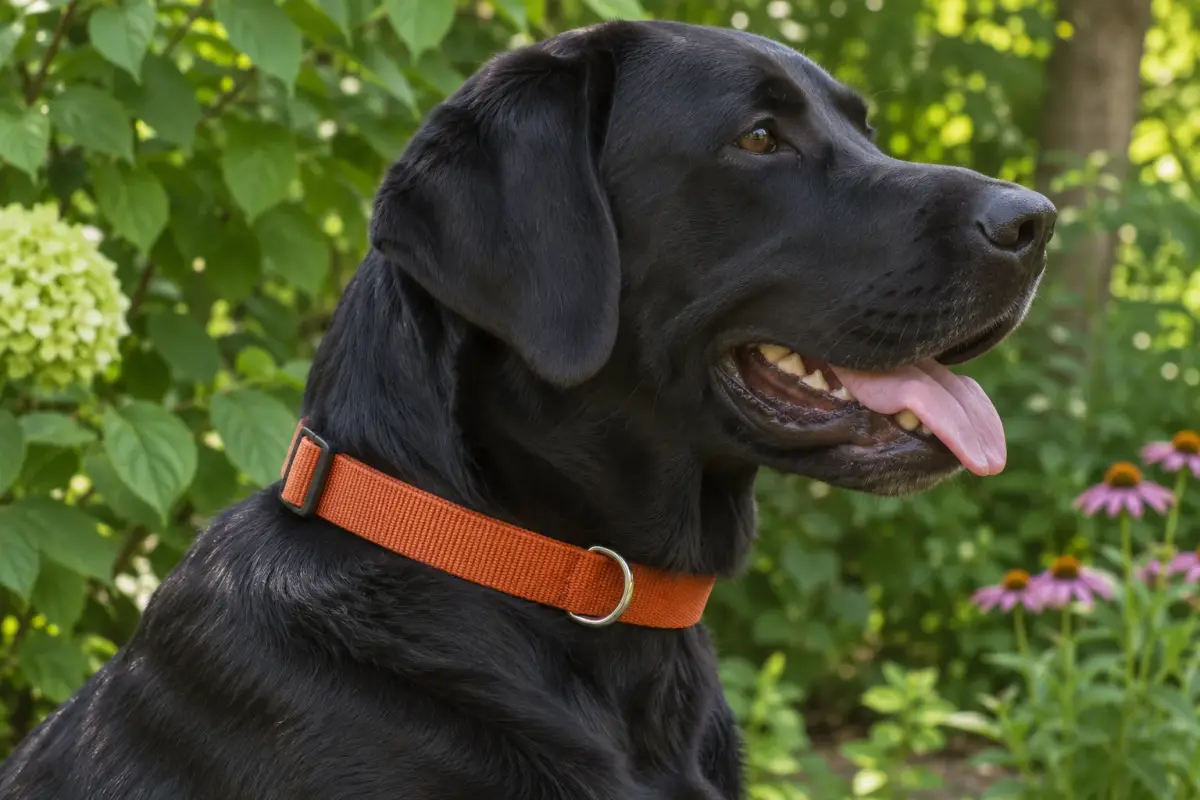
The best collar for a large dog is a flat buckle or martingale collar sized from a measured neck, with solid hardware and a metal D-ring for leash control. On a big dog, fit and hardware strength decide more than looks. Measure first, check for a two-finger gap, and then browse our large dog collars for a style that suits how your dog actually walks.
By Matt GarnettUpdated November 14, 20265 min read3 sources
What matters most on a large dog
Fit comes first. The AKC says you should be able to slide two fingers between a large dog's skin and the collar, with one finger enough for small dogs. Too loose and a strong dog can back out of it; too tight and it rubs and restricts. Because collar labels vary, the AKC advises using your dog's exact neck measurement rather than the size estimate printed on the packaging.
Next is hardware. The AKC notes that D-rings give a handler more control than O-rings, which matters when a heavy dog lunges. Check that the buckle or clip, the ring and the stitching around it all look robust and sit on the same side as the leash pull. A collar is only as strong as its weakest part, so a sturdy strap with a flimsy ring is no use on a 90-pound dog.
The main collar types compared
A flat buckle or clip collar is the most common type and the easiest place to carry an ID tag, according to the AKC. A martingale has a second loop that tightens when the dog pulls, which discourages pulling without blocking the airway when it is sized correctly. VCA warns that a martingale that is too tight can choke, and a poorly fitted one can let the lower jaw catch in the loop, so check the fit with the loop pulled snug.
Rolled collars are rounder and gentler on long coats but, per the AKC, they are not the best choice for a dog that pulls a lot. Reflective collars help your dog stay visible in dim light, and personalized collars carry your contact details on the fabric. For a plain everyday start, a medium and large dog collar in a flat style covers most needs.
Best collar for each kind of large dog
For a calm, well-trained dog, a flat collar with a metal D-ring and an ID tag is usually enough. For a large dog that is learning leash manners, a martingale gives more security than a flat collar without relying on tightening pressure at the throat. For long-haired large breeds, the AKC suggests neoprene, which resists dirt and suits coats that mat easily.
Sighthound-type large dogs, such as Greyhounds and Whippets, have heads that are often smaller than their necks, so a flat collar can slip off; the AKC points to this as a risk. If your large dog pulls hard, the AKC and VCA both point to a harness as a more comfortable tool for the walk, so see our large dog harnesses and keep the collar for the ID tag. A fast-growing giant puppy can outgrow a collar nearly every week, so buy cheaply and recheck often.
Materials compared
Nylon is inexpensive and practical for a growing puppy, says the AKC. Leather and lightweight aluminum are more durable and more resistant to water and heat; the AKC adds that some aluminum models withstand up to 350 pounds of pull force, though you should check the maker's rating for your own dog's weight. Leather needs care: the AKC warns against furniture or shoe leather cleaners because their chemicals can be toxic to dogs, and suggests a baking soda and vinegar solution instead.
Run your fingers along the strap edges to check for rough spots. Look closely at the stitching around the leash ring and buckle. Loose threads, torn webbing or bent hardware are reasons to replace a walking collar.
What to avoid
Skip decorative studs and sewn-on bow ties. The AKC warns they can irritate skin or snag during play, so put safety first and style second. Be careful with calming collars filled with herbs: the AKC notes that some plants, such as cloves, are toxic to dogs, so check ingredients and ask your vet before using one.
Avoid relying on a collar alone for a large dog that pulls hard, as VCA notes that pulling on a flat collar can injure the neck. Do not leave a loose collar on a dog that can slip it, and do not leave a martingale on an unsupervised dog, since loops can catch. Never buy by the size name alone: a large dog's neck can differ a lot from the next dog's.
How to measure, and when to replace it
Wrap a soft measuring tape around the neck where the collar will sit and adjust it so you can fit two fingers underneath. If the tape slips over the head, tighten it and take that measurement. Compare it with the maker's size chart, and choose an adjustable collar with some range so that coat changes and weight changes do not push it out of fit.
Recheck the fit regularly, especially after grooming or a change in weight. Keep contact details on the ID tag up to date. Browse dog collars to compare fastening styles.
Collar body and identification features
| Feature | Physical construction | Verify separately |
|---|---|---|
| Flat collar | A flat strap with buckle or clip | Strap width,adjustment and closure |
| Martingale | A second loop changes the collar circumference | Exact fitted range and handling instructions |
| Rolled collar | A rounded strap body | Diameter,edges and adjustment |
| Reflective details | A reflective surface or stitching | Where the reflective material appears |
| Personalized details | Text attached or printed on the collar | Ordering method and permitted characters |
Common questions
What is the best dog collar for large dogs?
For most large dogs, a flat buckle or martingale collar sized from a measured neck, with strong stitching and a metal D-ring, is a good fit. Choose the style by how your dog walks, and check for a two-finger gap.
How tight should a collar be on a large dog?
You should be able to slide two fingers between the collar and your dog's skin, according to the AKC. If you cannot fit two fingers it is too tight, and if you can fit more than two it is too loose.
Is a martingale collar good for a large dog?
It can be, especially for dogs that slip a flat collar. The second loop tightens when the dog pulls without blocking the airway, but it must be sized correctly, because VCA warns that a too-tight or poorly fitted one can choke or catch the jaw.
Should a large dog that pulls wear a collar or a harness?
A harness is usually more comfortable for walks, since pulling against a collar presses on the neck. Keep the collar for the ID tag and clip the leash to a well-fitted harness instead.
Sources we checked
This guide is general information, not veterinary advice. If your pet is unwell or injured, contact your veterinarian.


