Buying guides
Best Tactical Dog Collar: Fit, Hardware and Material
The best tactical dog collar fits with two fingers of room, has a sturdy buckle and a D-ring for the leash, and uses a material that suits your dog's coat and skin. Tactical describes the style, with wide webbing, hardware and often a handle, not a certified strength. A harness is the better choice for dogs that pull hard.
By Matt GarnettUpdated November 13, 20265 min read2 sources
What a tactical collar is, and what it is not
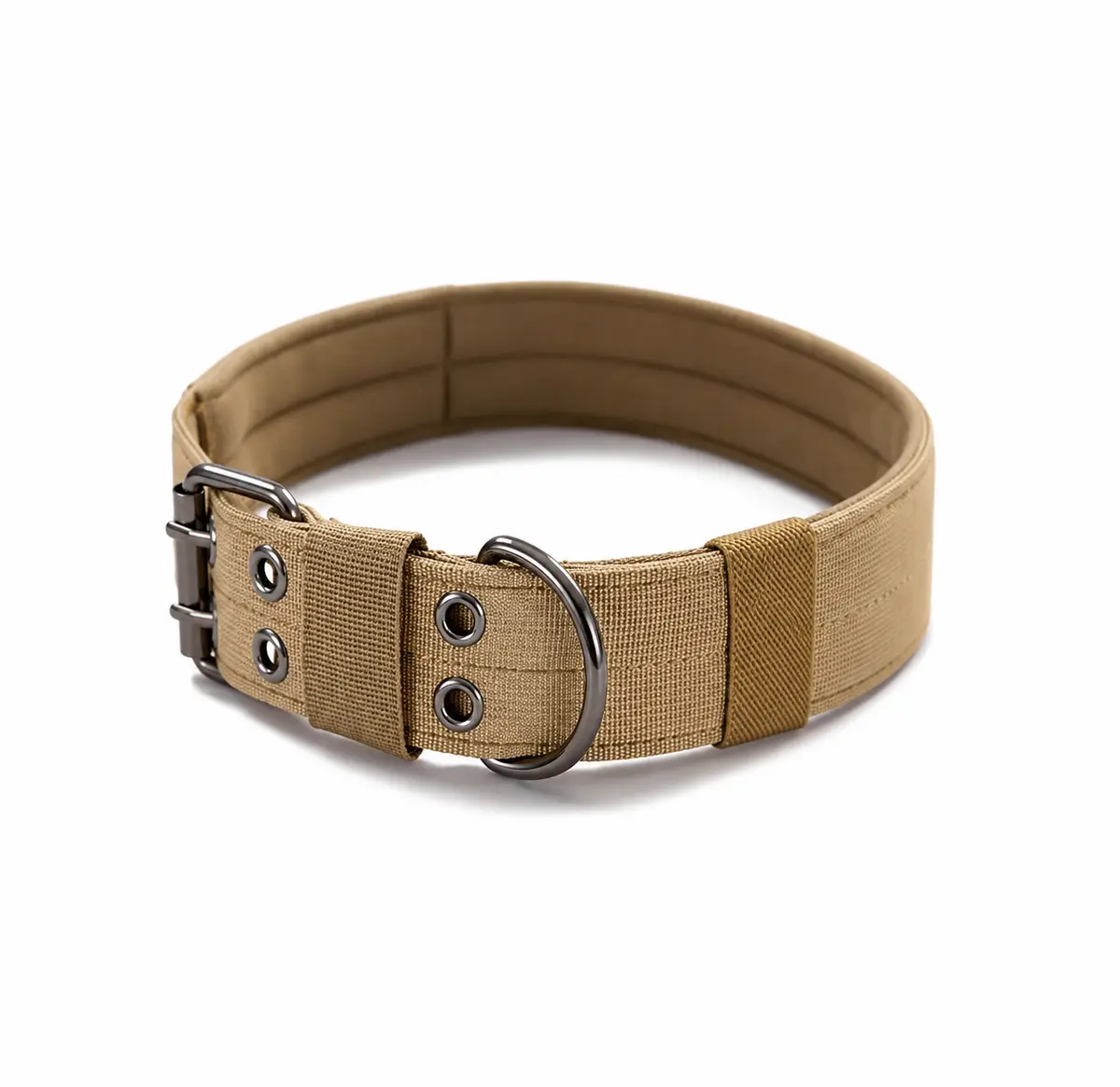
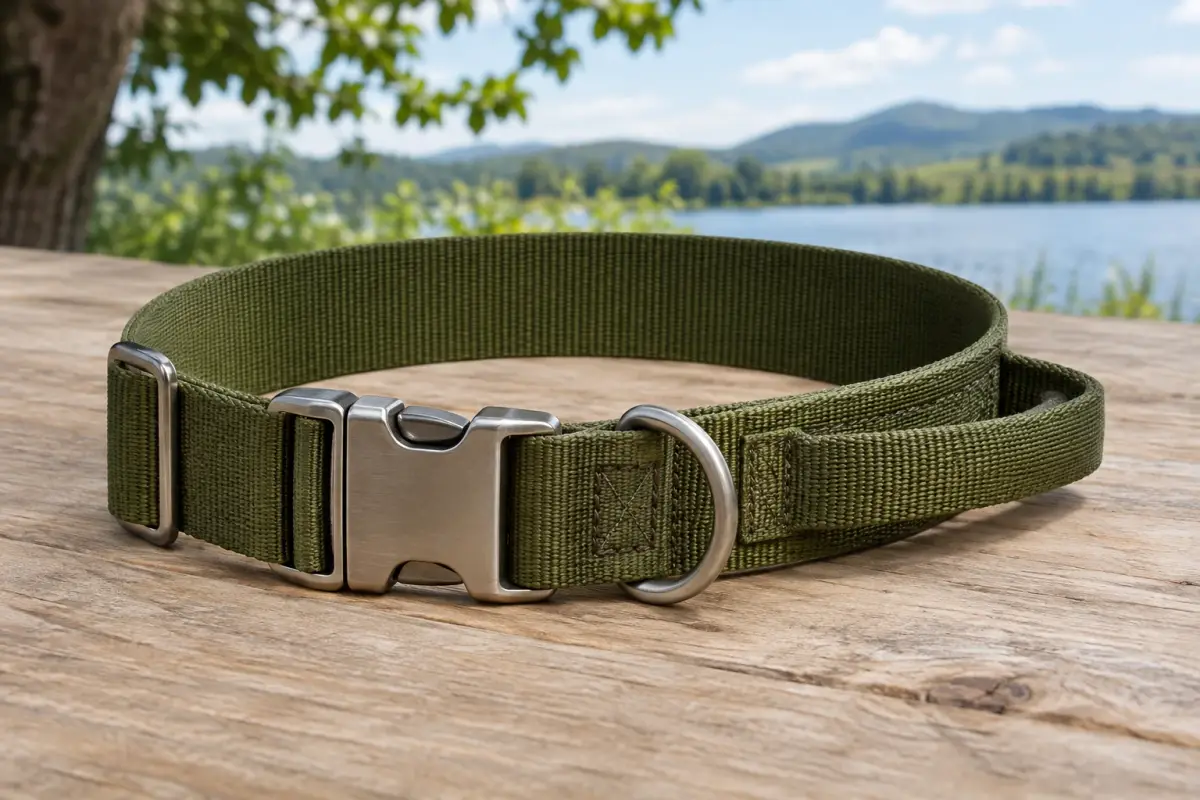
A tactical collar is a wide, flat collar, usually in nylon webbing, with a metal or heavy plastic buckle, a D-ring for the leash and often a grab handle on the top. Many add loop panels for patches. The look comes from outdoor and working-dog gear, and you can browse our tactical dog collars for the range. The word describes a design, not a performance standard.
That matters because the word suggests strength that a listing may not back up. Unless a product states its hardware rating or materials, you cannot assume a tactical collar is stronger than an ordinary wide collar. Read what the listing says about the webbing, the buckle and the stitching, and treat a missing detail as an unknown, not a promise. A collar is for ID and leash attachment, not for restraining a dog.
Fit and sizing
The AKC advises measuring your dog's neck with a soft tape rather than relying on the size labels on products. Then use the two-finger check: you should be able to slide two fingers under the collar, and if you cannot, it is too tight, while more than two means it is too loose. The AKC also says to check that the collar does not slip over your dog's head.
A wide tactical collar adds a second sizing question. Width must suit the neck, since a broad strap on a small dog can crowd the jaw and sit awkwardly, while a very narrow one on a big dog concentrates pressure. Check the adjustable range on the listing and make sure your measurement sits comfortably inside it, not at the very end. Recheck the fit on a growing puppy every few weeks.
Hardware, material and handles
Buckles, D-rings and handles do the work. The AKC says D-rings give a handler more control on a leash than O-rings. Choose a collar where the ring is welded or stitched firmly, the buckle clicks positively and the handle is stitched through the webbing instead of just glued. A tactical dog collar with an adjustable K9-style design shows the typical layout, and a tactical collar and leash set pairs it with a matching lead.
On materials, the AKC lists nylon as inexpensive, which suits growing puppies; leather as durable and better once a dog is full grown; aluminum as lightweight and easy to wipe clean; and neoprene as a good choice for long coats that mat. Most tactical collars are nylon, so match that to your dog's coat and skin. Padded or rolled edges help prevent chafing on short-haired or sensitive-skinned dogs, according to the AKC.
Collar or harness?
A collar is not right for every dog. The AKC says a body harness with a back attachment can help prevent potential throat damage when a dog pulls, and that a no-pull harness applies pressure to the chest instead of the neck. If your dog lunges, pulls hard or has a neck or throat concern, talk to your vet and consider a harness, such as those in our tactical dog harnesses.
Breeds with necks about the size of their heads, and Greyhounds and Whippets, whose heads are often smaller than their necks, can slip out of a standard collar, as the AKC notes. For those dogs a martingale collar or a harness is safer. Our harness vs collar guide goes through the decision, and the dog harness and collar size guide covers measuring.
Features worth having, and ones to skip
Useful features include a place to attach ID tags, a reflective strip for walks at dusk and a handle for crossing a road or lifting a dog over a gap. The AKC also notes that some collars have pockets for tracking tags such as a GPS device. A handle should be used for brief control, not to drag or lift a dog by the neck.
Skip anything that makes the collar harder to keep safe. The AKC says to choose a collar that is safe first and stylish second, since studs and decorative extras can irritate skin or snag in play. Rough hardware edges and stiff webbing can rub, so check your dog's neck regularly for redness or hair loss and see your vet if skin looks sore.
Care, ID and when to replace
Wash the collar whenever your dog has a bath, as the AKC advises, to prevent skin irritation and chafing. Check the stitching, the buckle and the D-ring monthly, and retire a collar that frays, rusts or stretches. A collar that is worn, sun-faded or loosened with use should not be trusted for control near traffic.
Keep your contact details on a tag or the collar itself, because an ID tag is how a lost dog gets home. Make sure the collar is never left snug on a growing puppy, and take it off when your dog is crated or playing roughly with others if the handle or ring could snag. When you are ready to compare fits, our tactical dog collars show the sizes side by side.
Common questions
What makes a dog collar tactical?
It is a style, not a standard: wide, flat webbing with a sturdy buckle, a D-ring and often a handle or loop panel. Check the listing for what the materials and hardware actually are.
How tight should a tactical dog collar be?
The AKC says you should be able to slide two fingers under it. If you cannot, it is too tight, and if more than two fit, it is too loose. Also check that it cannot slip over the head.
Is a tactical collar good for a dog that pulls?
Usually a harness is better. The AKC says a body harness with a back attachment can help prevent throat damage when a dog pulls, and a no-pull harness presses on the chest instead.
Can I leave a tactical collar on all the time?
Many owners do for ID, but check the neck for rubbing, wash the collar with each bath and take it off if it could snag in a crate or in rough play. Ask your vet if skin looks sore.
Sources we checked
This guide is general information, not veterinary advice. If your pet is unwell or injured, contact your veterinarian.