






Dogs
Smart dog collars
Better walks, every day.
1 item picked for everyday life with your pet, with shipping estimates on every item.
 Out the door and ready for anything.
All dogs walking & training →Dog harnesses →Dog collars →Dog leashes →Retractable dog leashes →Dog muzzles →Dog vest harnesses →Cute dog collars →Tactical dog harnesses →Pooper scoopers →No pull dog harnesses →Personalized dog collars →Small dog harnesses →
↗Tracked US shippingEstimates on every item↶Returns & refundsHow it works♡Here to helpTalk to Giddy Pets
All smart dog collars
Little essentials. Lots of love.A little guidance
Help choosing smart dog collars
Buying guides and care advice written for this range: what to measure, what matters and what to skip.
From our guides
- Best Dog GPS Tracker: How to Choose a Tracking Collar →
- Best Breakaway Dog Collars: When They Make Sense →
- Best Collar for a Puppy: What Actually Matters →
- Best Designer Dog Collars: How to Choose Style That Is Also Safe →
- Best Dog Appeasing Pheromone: Diffuser, Collar or Spray? →
- Best Dog Collars for Large Dogs: What Actually Matters →
This page narrows our dog tech down to the smart pieces that attach to a collar: real-time GPS pet trackers with anti-lost alerts, smart Bluetooth tracker tags, including one that works with a phone finding network, and a waterproof collar holder for a tracker tag. It is for owners who want to turn an ordinary collar into a smart one and find a wandering dog faster. Our dog GPS trackers page covers the wider range.
What a smart collar does
A smart collar is usually an ordinary collar carrying a small device. The devices here do one main job: tell you where your dog is. A real-time GPS tracker reports your dog's location to an app, usually over a cellular connection, and can alert you when your dog leaves an area you set.
A Bluetooth tag is smaller and cheaper. It is located when it comes within range of your phone, or a phone on the same finding network, which then reports its position. It works best in towns and neighborhoods with plenty of phones nearby.
GPS or Bluetooth
Choose GPS if your dog bolts, hikes off leash or lives somewhere rural, since it does not rely on other people's phones. Most real-time GPS trackers need charging every few days and often a monthly data plan, so check the listing.
Choose a Bluetooth tag for a dog that stays close to home and a backup for a gate left open. Tags are light enough for small dogs and have long battery life.
Fitting a device to a collar
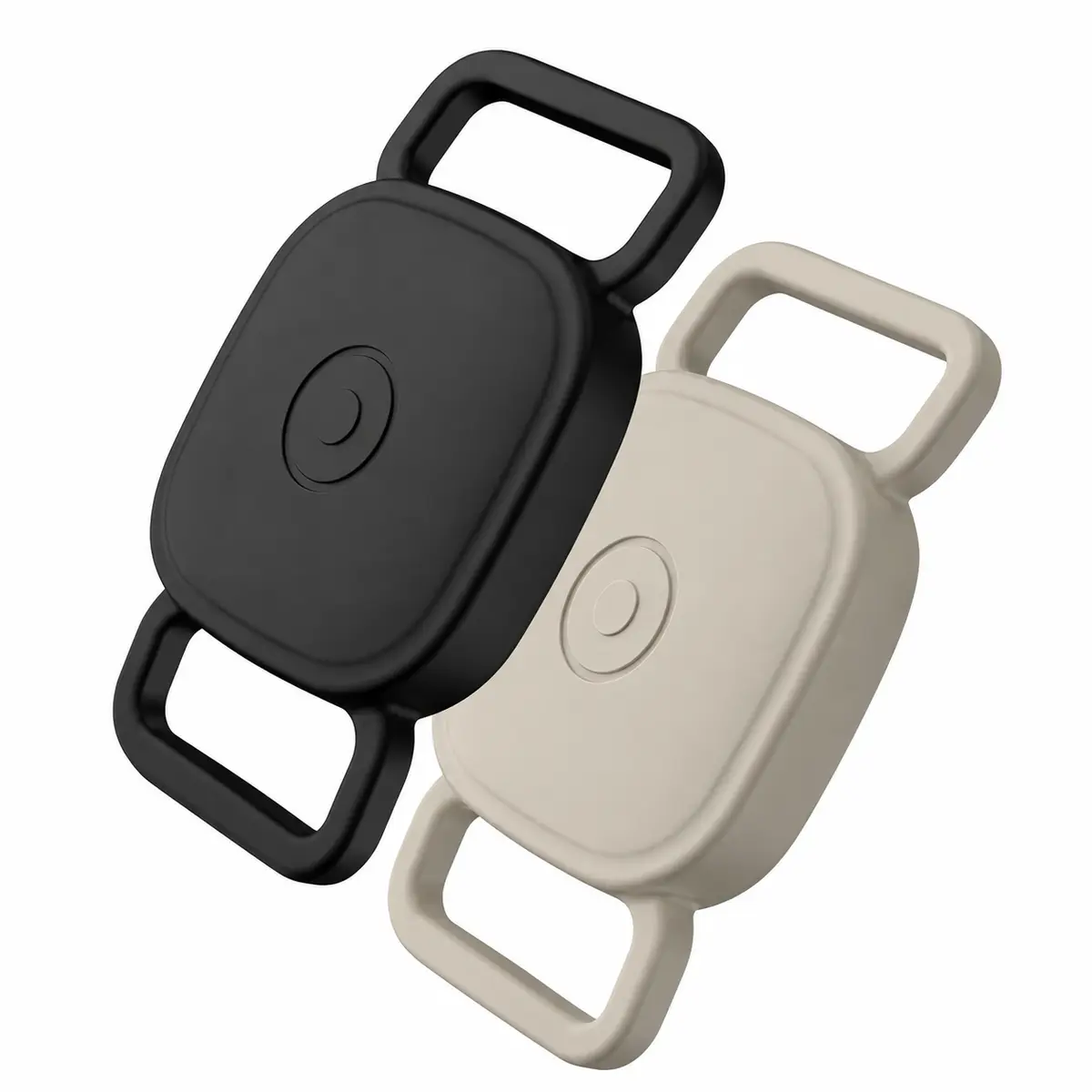
A tracker should sit flat and secure on the collar. The waterproof holder here encloses a round tag so it cannot twist off on brush, fall into a puddle or be chewed by a housemate. Close it fully before every walk.
Fit the collar so you can slide two fingers under it. A collar that is too loose lets the tracker swing and catch; too tight is uncomfortable. Check the weight of a GPS unit against your dog's size.
Getting the most from a tracker
Charge or check batteries on a routine, set up safe-zone alerts around home, and test the tracker on a walk before you rely on it. Keep the app updated and the account active.
If your dog goes missing, the tracker narrows the search, but act fast: check the last location, call local shelters and post a recent photo.
Smart collars do not replace ID
A tracker tells you where your dog is, not who your dog belongs to. Keep an ID tag with your phone number on the collar and keep your dog's microchip registration up to date, as shelters and vets scan for microchips.
Trackers also do not replace a secure yard and good recall training. Check fences and gates, and practice calling your dog back with high-value rewards.
What is a smart dog collar?
A collar fitted with a device, such as a GPS tracker or Bluetooth tag, that helps you locate your dog.
Do wireless dog trackers need a subscription?
Most real-time GPS trackers need a data plan. Bluetooth tags usually do not, but rely on nearby phones.
Will a Bluetooth tag work if my dog runs into the woods?
It may go quiet away from phones. A GPS tracker is better for rural areas and off-leash hiking.
How do I attach a tracker tag to my dog's collar?
Use a holder designed for the tag, slide it onto the collar and close it fully. Check it before walks.
Does my dog still need a microchip with a GPS tracker?
Yes. A tracker shows location, but a microchip and ID tag identify your dog if someone finds them.