







Cats
Heated cat beds
Little things. Happy cats.
7 items picked for everyday life with your pet, with shipping estimates on every item.
 A happy life, one little thing at a time.
All cats beds & furniture →Cat trees →Cat cave beds →Cat beds →Outdoor cat houses →Cat hammocks →Cat window perches →Cat wall shelves →Elevated cat beds →Cat furniture →Cat houses →
↗Tracked US shippingEstimates on every item↶Returns & refundsHow it works♡Here to helpTalk to Giddy Pets
All heated cat beds
Little essentials. Lots of love.



A little guidance
Help choosing heated cat beds
Buying guides and care advice written for this range: what to measure, what matters and what to skip.
From our guides
- Best Heated Cat Bed: How to Choose a Safe, Warm One →
- Best Bedding for Guinea Pigs: What Is Safe and Easy to Clean →
- Best Cat Beds: How to Choose One Your Cat Will Actually Sleep In →
- Best Cat Cave Beds: How to Choose One Your Cat Will Use →
- Best Cat Stairs for a Bed: How to Choose Safe, Stable Steps →
- Best Cooling Mat for Cats: How to Choose One Your Cat Will Use →
Shop heated cat beds for cold homes, garages and porches: weatherproof insulated heated cat houses for outdoor and feral cats, elevated heated houses, electric heating pads with adjustable temperature and chew-resistant cords, self-warming thermal mats that need no power, and enclosed winter beds. This page narrows our Cat Beds range to warmth, for senior, thin-coated and outdoor cats. Below is how electric and self-warming beds differ, and how to use them safely.
Which cats benefit from a heated bed
Cats love warmth, but some need it more than others. Senior cats with stiff joints, very thin or hairless cats such as Sphynx, kittens, cats recovering from illness and cats in cold rooms or drafty homes all benefit from a warm place to sleep. The ASPCA's cold weather advice is a warm, draft-free bed off the floor.
Outdoor, barn and community cats need shelter most of all. An insulated, weatherproof house with a heated pad inside can make a real difference on freezing nights, and many owners and colony caretakers put them on porches and in garages through the winter.
Electric heated beds and pads
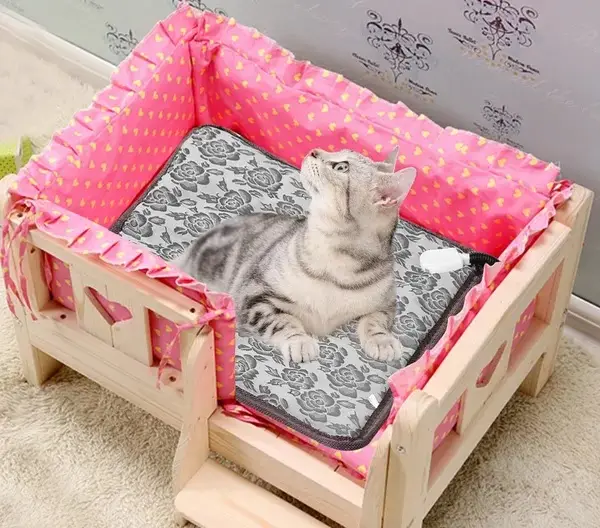
Electric heating pads warm to a set temperature and many have adjustable settings and an auto shutoff. They go inside a cat house or under a bed cover. Look for a waterproof pad if it will be used outdoors, and a chew-resistant, steel-wrapped cord, since cats and other pets may bite cables.
A good heated pad warms to around body temperature rather than getting hot. Place it so your cat can move off it onto an unheated part of the bed. That choice matters for any cat that cannot move easily, because a pet should never be stuck on a heat source.
Self-warming beds with no power
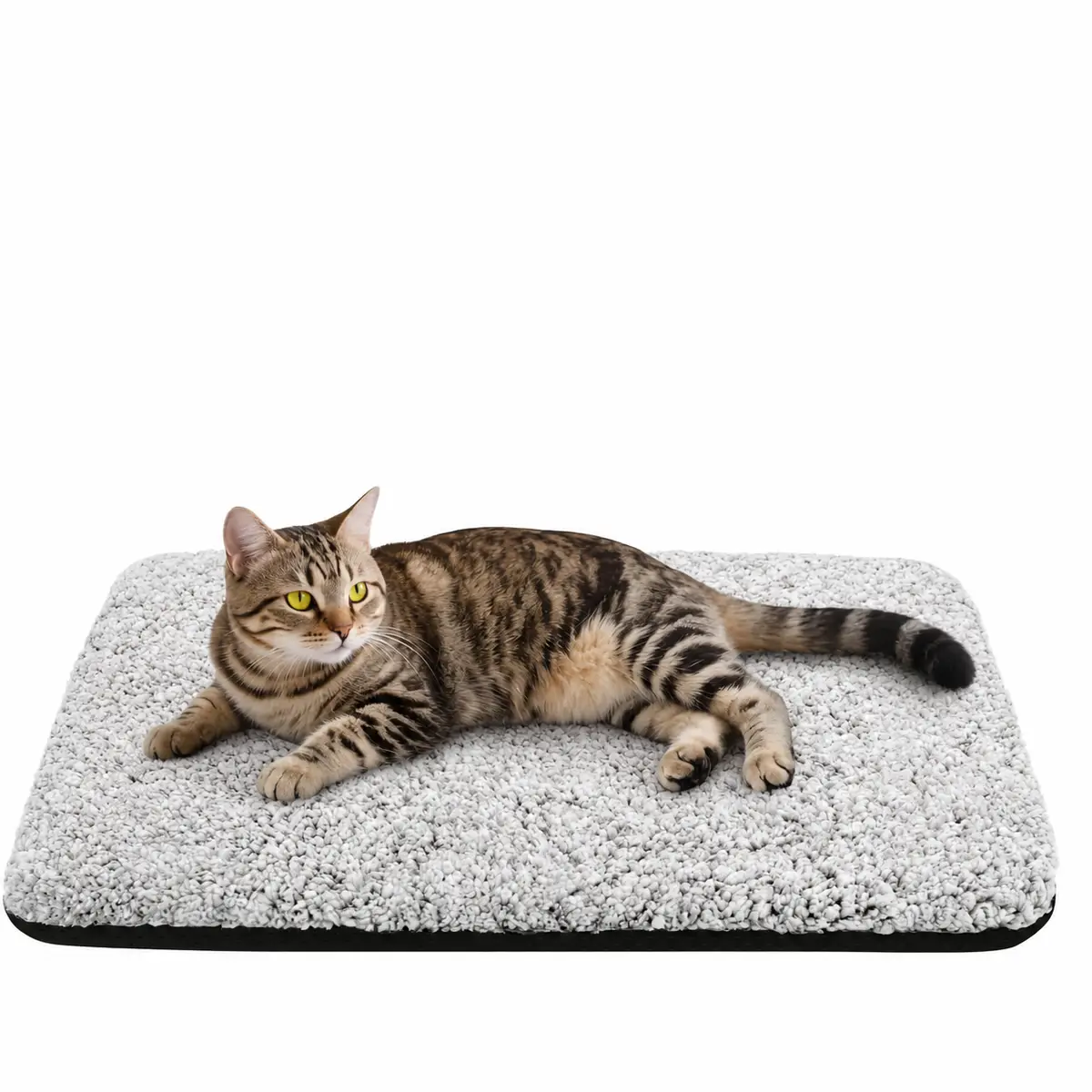
Self-warming beds and thermal mats contain a reflective or insulating layer that bounces your cat's own body heat back. They need no cord, so they are safe anywhere, cannot overheat and suit cats who chew wires or homes where outlets are not handy.
They do not create heat, so they work best for indoor cats in cool rooms and as a layer inside an outdoor house. In a freezing garage or on a porch in hard frost, an electric pad inside an insulated house gives more warmth.
Outdoor heated cat houses
For outdoor cats, look for a weatherproof shell, such as the 600D Oxford fabric houses here, with insulated walls and a raised floor so the bed stays off cold, wet ground. Two exits let a cat escape if another animal blocks one door, and flaps or small openings keep wind out.
Place the house against a wall, out of the wind and rain, and raise it on a pallet if your ground floods. Use a weatherproof outdoor extension cord rated for the conditions, run it where it cannot be chewed, and check the house after storms.
Safety and care
Check an electric pad's cord and cover regularly and replace it if the cord is damaged or the pad has been chewed. Do not put extra blankets over an electric pad unless the maker allows it, since that can trap heat. Unplug before washing covers.
Watch elderly or unwell cats on a heated bed. If your cat suddenly seeks heat all the time, sleeps far more than usual or seems cold to the touch, book a vet visit, because heat-seeking can be a sign of illness or weight loss.
Are heated cat beds safe?
Yes, when used properly. Choose a pad that warms to around body temperature with an auto shutoff, keep the cord protected from chewing, and always leave your cat room to move off the heat.
What is the difference between heated and self-warming cat beds?
A heated bed uses electricity to make heat. A self-warming bed has an insulating layer that reflects your cat's own warmth back, needs no power, and is better for mild cold or as an extra layer.
Can I leave a heated cat bed on all the time?
Many pads are designed for continuous use, but check the instructions. Look for auto shutoff and adjustable temperature, inspect the cord often, and unplug the pad if you see damage.
How do I keep an outdoor cat warm in winter?
Provide an insulated, weatherproof house raised off the ground, with a heated pad or straw inside, out of the wind. Check it daily, keep water from freezing, and check under the hood before starting your car.
Do older cats need heated beds?
Many senior cats appreciate one, especially those with arthritis, because warmth eases stiffness. Make sure the bed is easy to step into, and talk to your vet if your cat seems constantly cold.