Buying guides
Best Cat Cave Beds: How to Choose One Your Cat Will Use
The best cat cave bed is big enough for your cat to turn around and curl up inside, holds its shape so the entrance stays open, and can be cleaned easily. Wool felt caves are firm and warm; fabric and fleece caves are soft and washable. Put the cave somewhere quiet and slightly raised, near where your cat already naps.
By Matt GarnettUpdated November 14, 20263 min read2 sources
Why cats like caves
Many cats prefer to rest where they feel hidden and safe. VCA Animal Hospitals' guidance on indoor enrichment includes giving cats safe resting places and hiding spots, and putting a soft, non-slip bed in a favorite location. A cave bed offers both shelter and warmth, which suits shy cats, cats in busy homes and cats that like to burrow.
Not every cat likes enclosed beds. A cat that sleeps sprawled in the open may never use one. Watch where your cat naps now: under blankets, in boxes or under furniture suggests a cave will be popular.
What matters most: size and shape
Your cat should be able to step in, turn around and curl up without its head pressed against the roof. Measure your cat curled up and compare with the internal diameter. Large cats such as Maine Coons need extra-large caves or open-front hideaways.
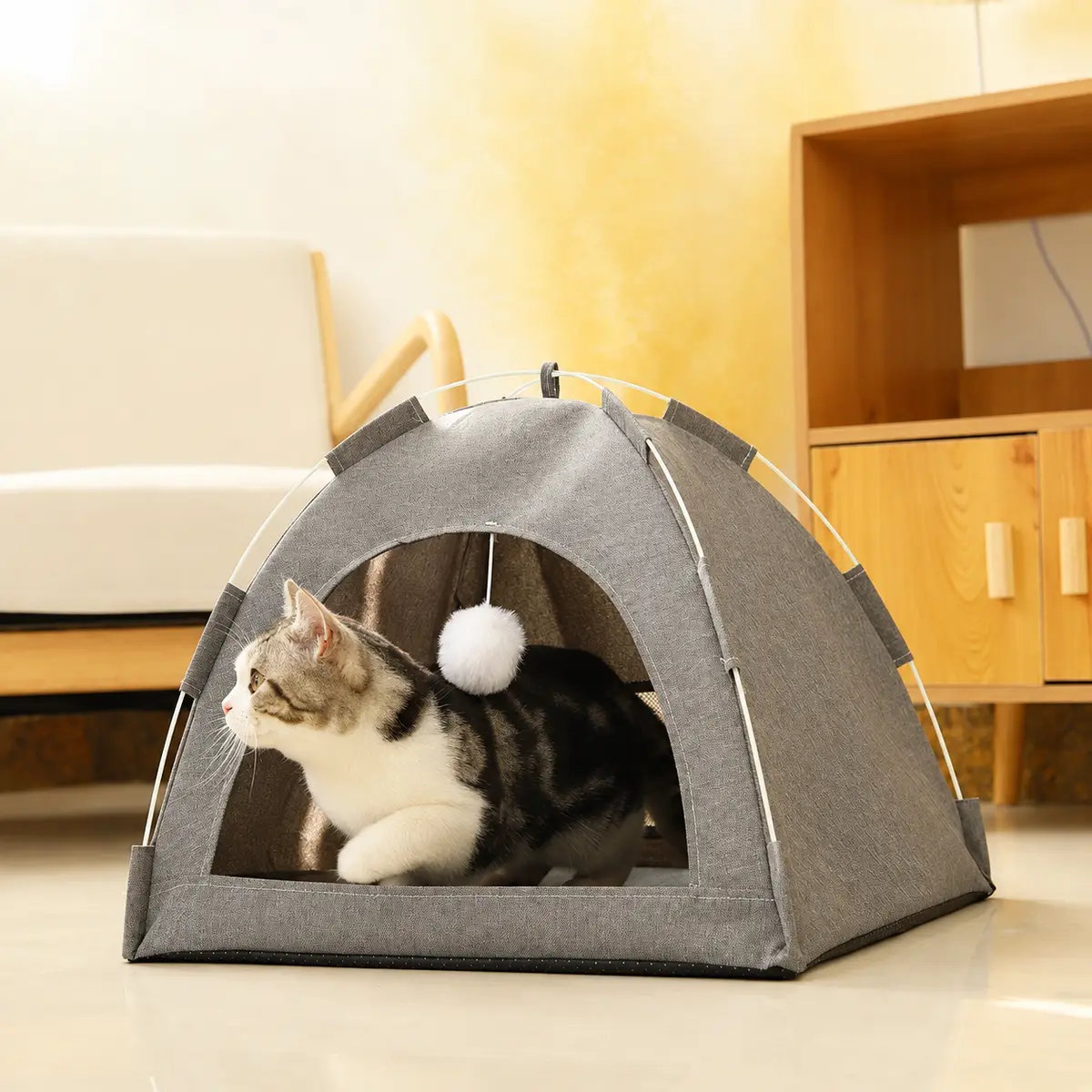
Shape matters because a collapsed entrance is a closed door. Firm wool felt or structured caves keep their opening; soft fabric caves may sag and need a stiffening ring or need reshaping after washing. Some caves, like a dome tent bed, fold flat into an open bed, which helps cats that hesitate. If your cat sleeps in a cave but seems cramped, with paws or tail poking out of the entrance, size up rather than replacing it with the same model.
Materials compared
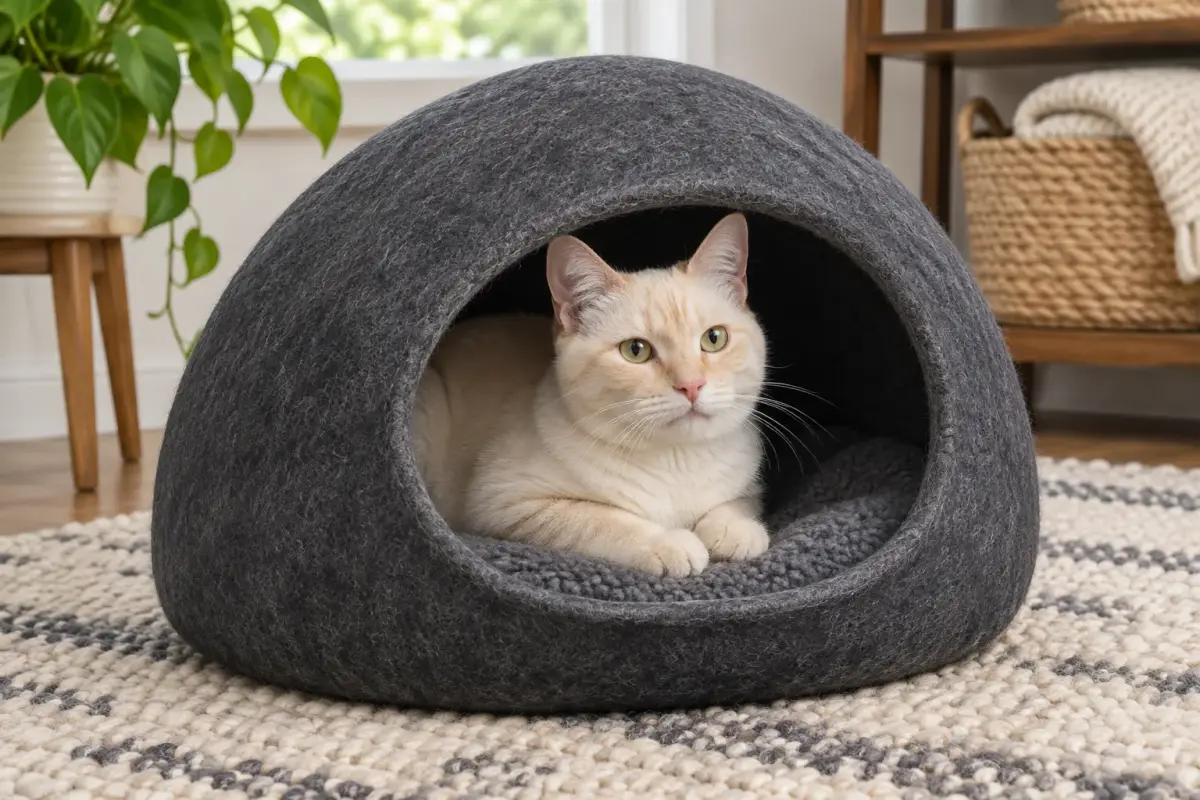
Wool felt caves are firm, breathable and warm, and many cats like the texture. Most need hand washing or spot cleaning, and some cats scratch or knead them. Fleece and plush fabric caves are softer, cozier for cats that burrow, and usually machine washable.
Knitted and crocheted caves look appealing but can snag claws in loose stitches. Hard plastic or wooden hideaways with a removable cushion are easy to clean and good for multi-cat homes. Avoid caves with dangling pompoms, tassels or strings; the Cornell Feline Health Center warns against string and small parts cats can swallow.
Best cave for each cat and placement
For a shy or anxious cat, a firm cave in a quiet corner, away from the litter box, food and busy doorways. For a cat that likes warmth, a fleece-lined cave near, but not touching, a radiator or a sunny window. For senior cats, a cave with a low entrance that is easy to step into.
For multi-cat homes, provide more than one resting spot, because cats may guard a favorite. VCA suggests cats like high resting spots too, so a cave on a shelf or a cat-tree platform appeals to many. Add a familiar blanket to help a new cave smell like home.
Cleaning and care
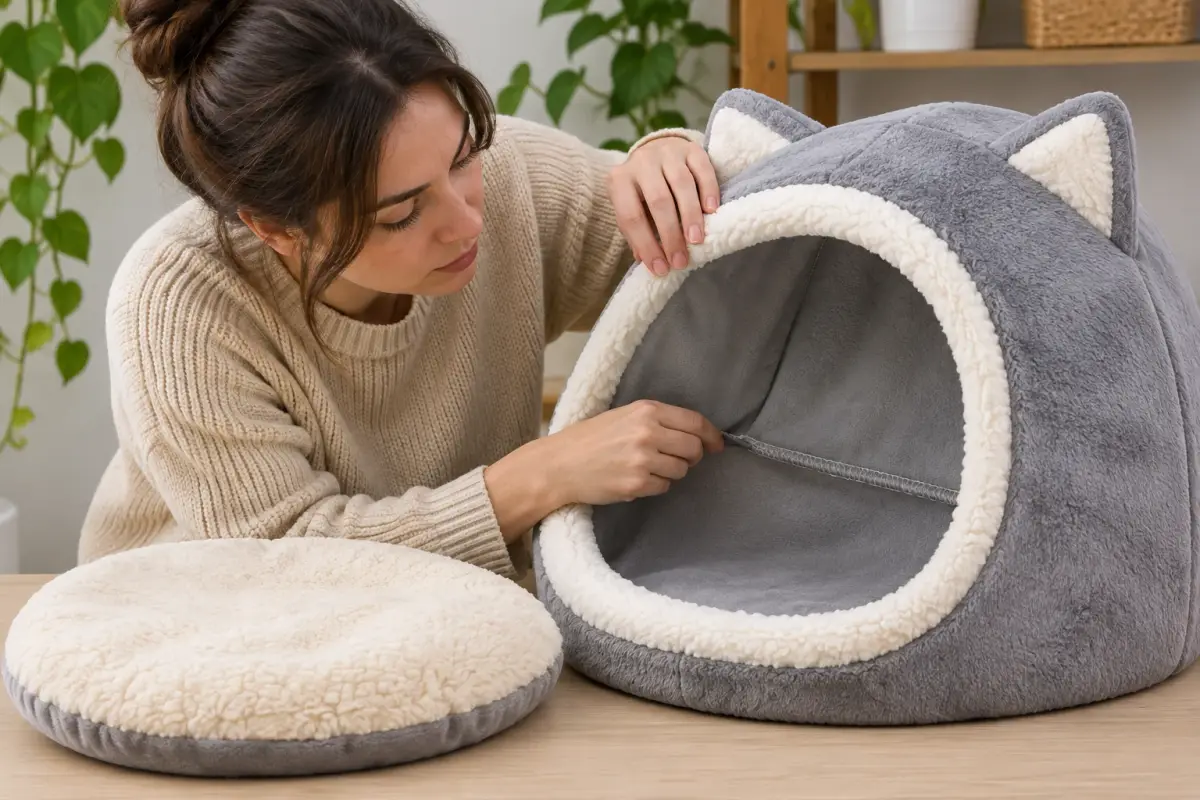
Shake out hair weekly and wash or spot-clean according to the material. Fleece caves can usually go in the machine on a gentle cycle; dry fully before reuse to avoid mildew. Felt is often best hand washed and reshaped while damp.
Replace a cat cave bed that has holes, loose threads or a flattened shape your cat no longer uses. If your cat starts hiding far more than usual or stops coming out to eat, that can signal illness or pain, so contact your vet.
Cave shells and cleaning access
| Shell | Construction difference | Check on the exact bed |
|---|---|---|
| Wool felt | A shaped felt enclosure | Opening size and permitted cleaning method |
| Fleece or plush | A soft fabric enclosure | Whether filling and cover separate |
| Knitted or crocheted | A stitched shell | Loose loops and snagged stitches |
| Plastic or wood | A rigid hideaway,possibly cushioned | Access for wiping and whether the cushion lifts out |
Common questions
Do cats like cave beds?
Many do, especially shy cats and cats that burrow. A cat that already naps under blankets or in boxes is likely to use one. Some cats prefer open beds.
What size cat cave do I need?
Your cat should be able to step in, turn around and curl up without the roof pressing on its head. Large breeds need extra-large caves.
Are felt cat caves better than fabric?
Felt keeps its shape and breathes well, but usually needs hand washing. Fabric and fleece caves are softer and more often machine washable. Choose by how your cat sleeps and how you prefer to clean.
Where should I put a cat cave bed?
In a quiet spot where your cat already naps, away from the litter box, food and busy doorways, or raised on a shelf or tree platform.
Sources we checked
This guide is general information, not veterinary advice. If your pet is unwell or injured, contact your veterinarian.