






Buying guides
Best Cat Beds: How to Choose One Your Cat Will Actually Sleep In
A cat bed gets used when it matches how your cat already sleeps, sits somewhere warm and draft-free, and feels secure. Cats that curl up tight like round bolster beds, cats that hide like caves, cats that sprawl like flat mats, and cats that watch the world like window perches and raised beds. Choose the shape first, then size, warmth and a cover you can wash.
By Matt GarnettUpdated November 14, 20264 min read2 sources
What matters most: shape and security
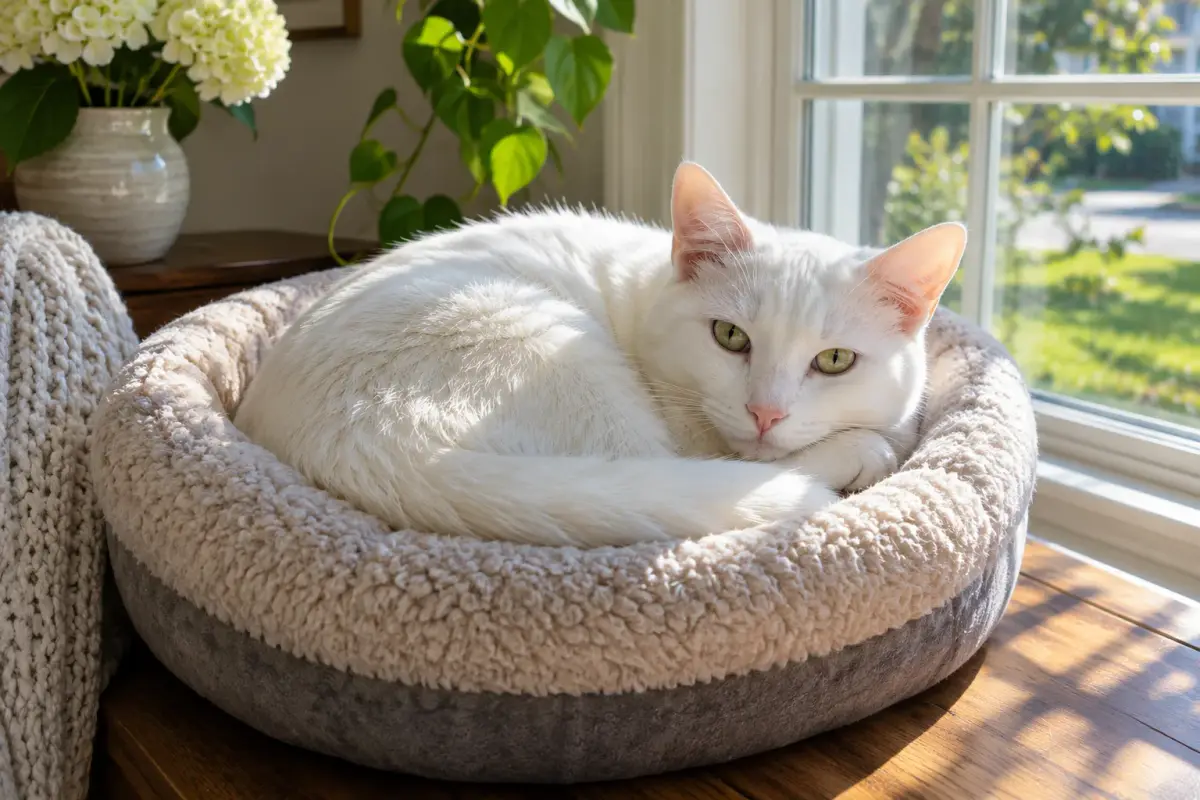
Watch where and how your cat sleeps now. A cat that curls into a tight ball in a laundry basket wants raised sides to lean against. A cat that sleeps under the bed covers wants a cave or hooded bed. A cat that stretches out on the floor in a sunny patch wants a flat cat mat or pad. Matching that habit is the best predictor of success. You can browse cat beds with these shapes in mind.
Security comes from walls, height or both. Many cats feel safer with their back against something and a view of the room, which is why beds against a wall or on a shelf often win over one in the middle of the floor.
The main types compared
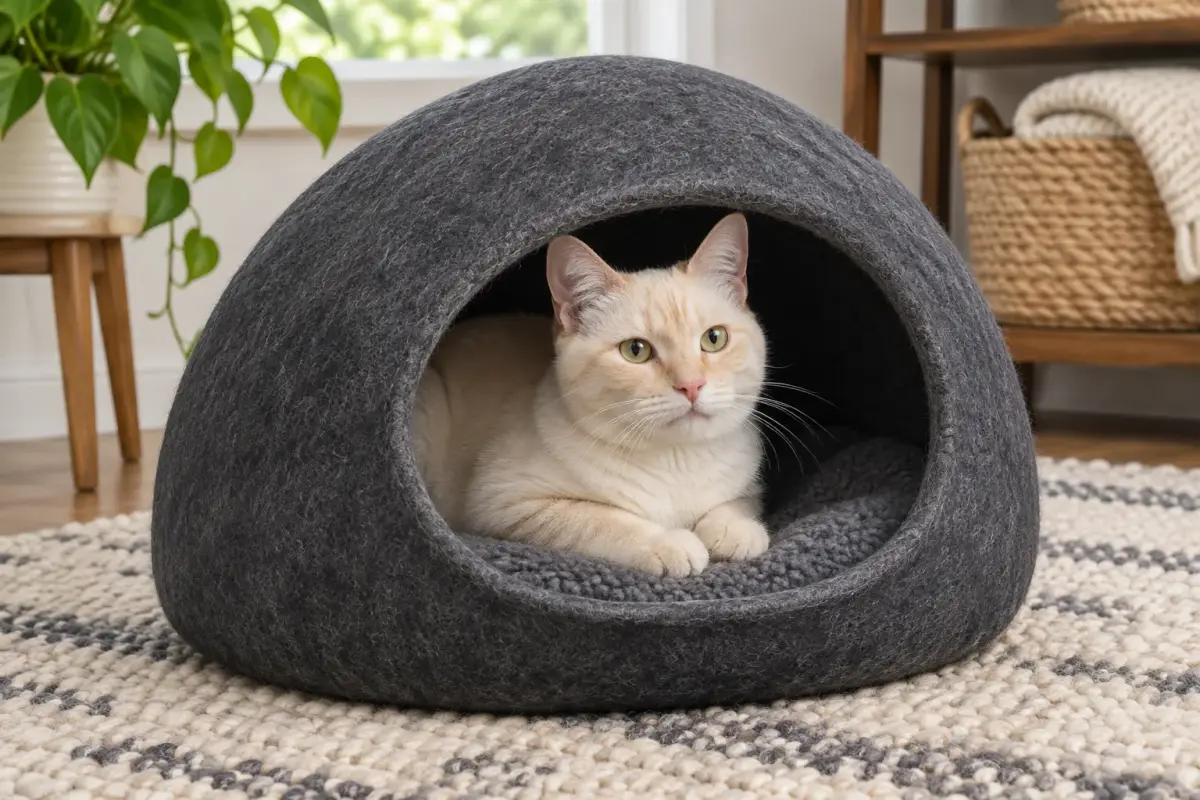
Bolster and donut beds have raised, soft rims for curling and leaning, and suit most cats; a plush sleeping nest is one example. Cave and hooded beds give an enclosed hiding spot that suits shy cats and cats in busy homes, and a teepee-style tent bed is a lighter take on the same idea. Flat mats and pads are versatile, fit on furniture and in carriers, and suit sprawlers and hot climates.
Window perches and wall-mounted beds give height and a view, which many indoor cats love. Elevated and hammock beds lift the cat off a cold floor. Self-warming beds have a reflective layer that returns body heat, and heated beds use a low-wattage element; both suit seniors and cold homes.
Best type for each cat
For senior cats, Cornell Feline Health Center advises a soft bed away from drafts, kept warm but not hot, because an older cat that cannot move away quickly can be burned by too much heat. A low-entry bolster or a self-warming bed is ideal, and steps or a ramp help it reach favorite raised spots.
For large cats such as Maine Coons, choose a bed at least 24 inches across or a large flat mat; most standard beds are too small. For kittens, a small, washable bed with sides, placed near people, works well. For multi-cat homes, offer more beds than cats, in different places, since cats often avoid sharing.
Heated beds: what to check
Choose a heated bed with a low-wattage, thermostatically controlled pad that only warms to a gentle temperature, ideally with an unheated area the cat can move to. Check for a chew-resistant cord and keep it out of reach and away from water bowls.
Follow Cornell's think warm, not hot rule, especially for cats that are frail, arthritic or unwell. A self-warming bed with no power is the safest option for cats that chew cords or for anyone unsure about leaving electrical items on.
What to avoid
Avoid beds too small for your cat to stretch or turn in, and cave beds with openings so tight a large cat struggles to get out. Avoid strong fabric scents or freshly washed beds with perfumed detergent; cats rely on scent and may reject a bed that smells unfamiliar.
Avoid placing a bed next to the litter box or food bowls, in a drafty hallway, or in the path of household traffic. Avoid loose threads and pom-poms that a cat could chew and swallow.
Placement, washing and lifespan
Put the bed somewhere your cat already likes: a sunny window, a quiet corner of the living room, or on a shelf. Rub a cloth on your cat's cheeks and then on the bed, or add a worn T-shirt, so it smells familiar. Give it a week before deciding it has failed.
Choose a bed with a removable, machine-washable cover and wash it every one to two weeks with unscented detergent. Replace a bed when the stuffing flattens or the base no longer insulates from the floor. When you do, compare cat beds against the shape your cat actually uses. A cat that suddenly stops using its usual sleeping spots, or seems stiff getting up, should see a vet.
This page is general information, not veterinary advice, and it cannot replace an examination by the vet who knows your pet.
Cat-bed access and support shapes
| Shape | Physical arrangement | Measure or inspect |
|---|---|---|
| Bolster or donut | A soft center within raised edges | Inner resting space and entrance |
| Cave or hood | A covered resting space | Doorway and inside floor |
| Flat mat | An open resting layer | Flat dimensions and care label |
| Window or wall perch | A platform fixed above the floor | Surface compatibility and exact mount |
| Raised fabric bed | Fabric resting area supported by a frame | Sleeping area and frame footprint |
Common questions
What kind of bed do cats prefer?
It depends on the cat. Curlers like round bolster beds, hiders like caves, sprawlers like flat mats, and watchers like window perches. Look at where your cat sleeps now and choose the shape that matches.
What is the best bed for a kitten?
A small, warm bed with low sides and a washable cover, placed near where the family spends time. Kittens may chew, so avoid loose threads and decorations, and wash the bed often.
Are heated cat beds safe?
Low-wattage, thermostatically controlled beds are generally safe if the cord is protected and there is an unheated area to move to. Cornell's advice for older cats is warm, not hot. Self-warming beds avoid electricity altogether.
Why won't my cat use its new bed?
It may be the wrong shape, in the wrong place, or smell unfamiliar. Move it to a favorite spot, add something that smells of your cat, and give it time. Many cats ignore a new bed for days, then adopt it.
Sources we checked
This guide is general information, not veterinary advice. If your pet is unwell or injured, contact your veterinarian.


