






Care & how-to
Why Do Cats Like Boxes? Safety, Warmth and Hunting
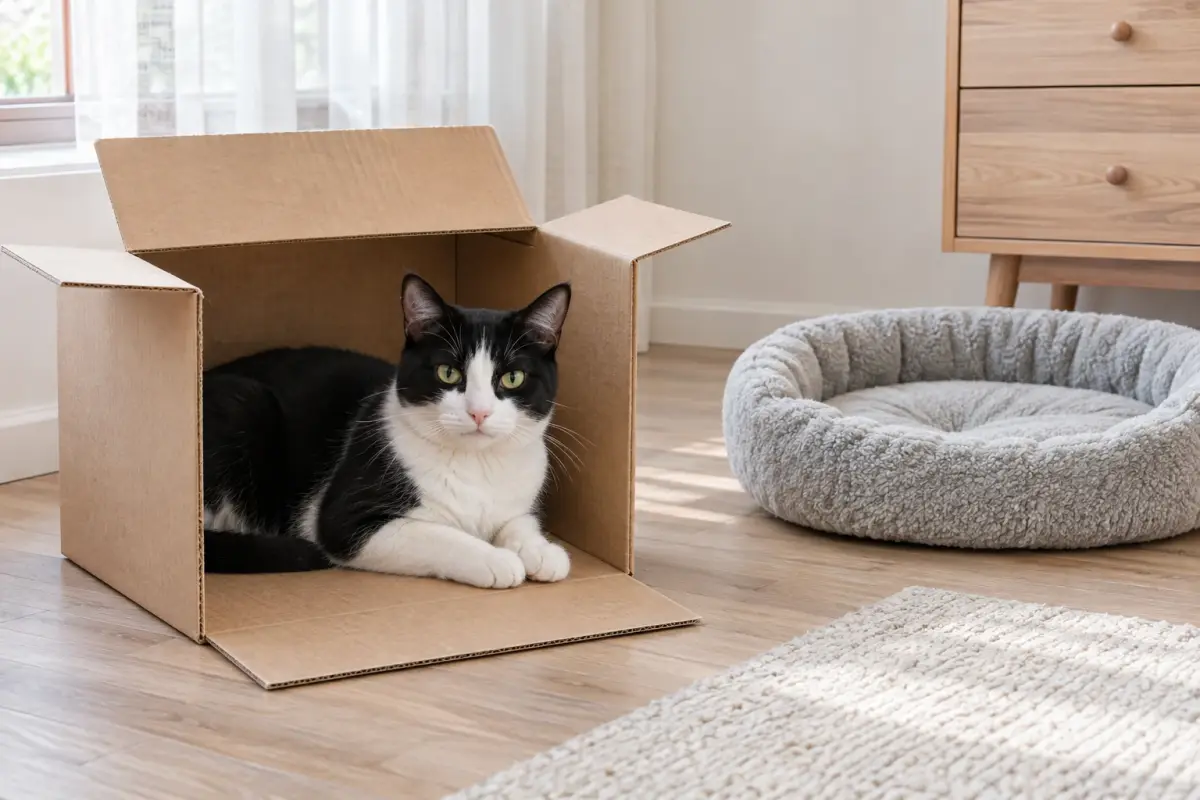
Cats like boxes because a small, enclosed space feels safe. VCA explains that cats keep the instincts of solitary hunters with no pack to watch their back, so they look for places where nothing can sneak up on them. A box also holds body heat, gives a good hiding spot to watch from or pounce out of, and is simply new and interesting.
By Matt GarnettUpdated November 9, 20264 min read3 sources
A safe place to hide
Cats are both predators and, in the wild, prey for larger animals. Being able to retreat somewhere with solid walls on most sides lets a cat rest without worrying about being surprised. VCA notes that small enclosed spaces such as boxes, drawers and sinks leave no room for anyone to sneak up on a dozing cat.
This is why so many cats head into a box the moment it is opened, and why a new or nervous cat often hides in one for the first days in a new home. Hiding is a normal way for cats to cope with change. Giving them a place to do it calmly is kinder than pulling them out.
Warm and snug
Small spaces trap heat, and cats like warmth. A cardboard box with a cat curled inside warms up quickly, and cardboard itself insulates well. VCA points out that this makes boxes cozy napping spots, which is why the same cat that ignores an expensive cat bed may sleep in its delivery box for a week.
Cats also seem to enjoy a snug fit. A box only just big enough to squeeze into, or even a square of tape on the floor, can attract a cat that wants to feel enclosed. Many cats like pressing against the sides of a box the way they might curl against another cat.
A perfect ambush spot
Cats hunt by stalking, waiting and pouncing. A box gives cover to watch from and a launchpad to spring out of, which is why cats in boxes so often bat at passing feet, toys or other pets. It turns an ordinary room into hunting territory.
You can use this. Cut a couple of paw-sized holes in a box and drag a wand toy past them, or hide a few treats inside crumpled paper in the box. These are cheap, effective ways to give an indoor cat the hunting play it needs, and they often reduce boredom-driven behaviors like night zoomies or ankle attacks.
Boxes for stressed or new cats
Because a box feels safe, it can help a cat settle into a new home, cope with visitors, or recover after a vet visit. Put an open box or a covered cat bed with a soft blanket in a quiet corner of the room where your cat spends time. Many shelters give cats a hiding box for exactly this reason.
When traveling, leave the cat carrier out at home all the time with a blanket inside, so it becomes a familiar box rather than something that only appears before a vet trip. A cat that already sleeps in its carrier is far easier to take to appointments, and less stressed when it gets there.
Keeping box play safe
Remove tape, staples, plastic wrap, string and packing materials before giving your cat a box, because swallowed string or plastic can cause a dangerous intestinal blockage. Avoid boxes that held chemicals, and check that your cat cannot get trapped in a box with a closing lid, drawers or appliances like a dryer.
Hiding is normal, but a change in hiding is not. If your cat suddenly spends most of the day in a box or under furniture, especially with a change in appetite, litter box use or energy, it can be a sign of pain or illness. Cats hide when they feel unwell, so contact your vet if your cat's hiding is new.
This page is general information, not veterinary advice, and it cannot replace an examination by the vet who knows your pet.
Common questions
Why do cats like small boxes?
A snug space feels secure on all sides and holds body heat. Many cats will squeeze into a box smaller than they are because the tight fit feels safe and comforting, much like curling up against a companion.
Do boxes help stressed cats?
Yes. A hiding place gives a cat a way to cope with change, such as a move, visitors or a new pet. Provide a box or covered bed in a quiet spot and let your cat use it without being pulled out.
Why does my cat sit in a box instead of its bed?
Boxes are enclosed, warm and new, and they smell interesting. A bed that is open on all sides may feel less secure. Try placing a soft blanket in a box, or a covered cat bed, where your cat already likes to rest.
Should I worry if my cat is hiding in a box all day?
Some hiding is normal, but a sudden change can mean your cat is unwell or stressed. If hiding comes with not eating, litter box changes or lethargy, contact your vet, because cats often hide when in pain.
Sources we checked
This guide is general information, not veterinary advice. If your pet is unwell or injured, contact your veterinarian.


