






Care & how-to
Why Does My Cat Sleep on Me?
Your cat may sleep on you because you are a warm, comfortable, familiar place to rest. Warmth and bonding are among the likely reasons. Sleeping on your chest or lap does not reveal one exact motive, though. Consider your cat’s usual preferences, give it other resting options, and notice any new change in sleep or general wellbeing.
By Matt GarnettUpdated November 14, 20264 min read3 sources
Warmth and comfort are plausible attractions
Sharing body heat can make a person an appealing sleeping place, and VCA notes that cats choose sleeping spots that feel safe and warm up quickly. Human beds also offer comfort and an elevated position. If your cat settles on you while you sit or lie down, those features may contribute to its choice. They do not establish that every cat resting on a person is doing so for exactly the same reason.
Notice when your cat chooses contact and when it chooses another location. Does it approach during a quiet evening, or only after you have settled beneath a blanket? These observations can help you offer an appealing alternative if needed. You do not need to test a theory by repeatedly moving the cat or interrupting its rest to see whether it returns.
Close contact should remain the cat’s choice
Sleeping close to a person may be a sign of trust. Merck emphasizes that positive human interaction should be defined by the cat’s experience. A cat that rests nearby without touching can also be comfortable in your company. Whether it chooses your chest, the end of the couch, or a separate perch is not a reliable score for the strength of the relationship.
Let the cat approach and leave freely, and avoid holding it in place to prolong a cuddle. If it settles against you, quiet companionship may be enough. Pay attention to whether touch seems welcome rather than assuming a sleeping cat is requesting petting. Respecting its choices gives you a more useful guide than insisting on a particular sleeping arrangement as proof of affection.
Provide attractive alternatives when you need space
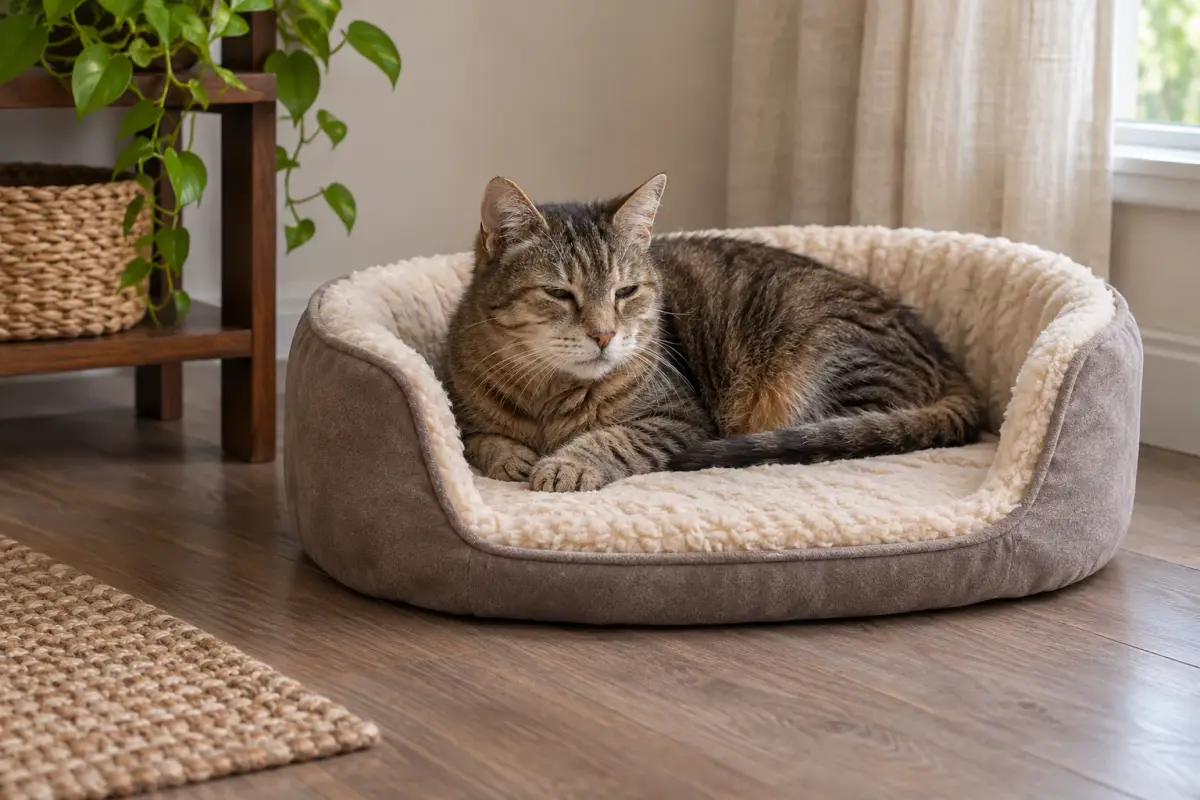
VCA explains that enclosed or elevated resting places can appeal to cats, with shelter, warmth, and a view of the surroundings among the attractions. Offer safe options suited to your cat’s mobility and preferences. One cat may use an open resting surface near you, while another prefers somewhere more enclosed. Observe the choices rather than buying an item because all cats are supposed to like it.
Choose an alternative before the next time you need to move, and make access straightforward. If your cat regularly settles on your lap during work, a nearby resting place may let you share the room more comfortably. Try a calm routine and allow time for the cat to investigate. Avoid repeatedly placing it in a bed it keeps leaving, since the intended benefit is a voluntary resting choice.
An enclosed design such as the canvas teepee bed and an open sofa-style cat bed illustrate different formats to consider without assuming your cat will prefer either.
Your comfort and household routine matter too
Merck describes predictable human interaction and safe resting areas as parts of an appropriate feline environment. Apply those principles to an arrangement that works for both of you. If a cat on your chest makes it difficult to settle or move comfortably, you can provide another option without treating the cat as disobedient for approaching.
Keep your response calm and consistent. Make sure everyone in the household understands the available resting spaces and allows the cat to disengage. If changing bedroom access leads to persistent distress or a substantial behavior change, ask your veterinarian about an individual plan. Do not respond with punishment or force; Merck warns that punitive handling can damage the relationship and contribute to fear or aggression.
Use our cat bed guide to compare cat beds that let your cat choose a nearby resting place.
Notice changes beyond the sleeping location
VCA advises looking at a pet’s usual sleep pattern and behavior when awake rather than counting sleep hours alone. Missing ordinary activities, appearing listless, or having additional signs alongside a changed sleep pattern can warrant veterinary assessment. A cat newly sleeping on you is not automatically ill, but a broader change should not be dismissed as extra affection.
Tell the clinic if the new arrangement coincides with reduced appetite, unusual inactivity, vomiting, or other changes. Describe when the pattern began and what the cat is like away from your lap. Ask whether an examination is needed and what to monitor. For an otherwise comfortable cat following its usual routine, provide choices and let resting near you remain an ordinary part of shared life.
This page is general information, not veterinary advice, and it cannot replace an examination by the vet who knows your pet.
Common questions
Why does my cat choose my chest?
The chest can be a warm, comfortable place that also puts the cat near a familiar person. That is a plausible explanation, but the location alone cannot reveal the individual cat’s exact motive.
Does my cat dislike me if it sleeps elsewhere?
No. Cats differ in their preferred level of contact. Merck emphasizes interactions that the cat experiences positively, so a comfortable relationship does not require the cat to sleep directly on your body.
Should I worry if this is a new habit?
Consider the wider pattern. VCA recommends attention to changed sleep alongside missed activities, listlessness, or other signs. Discuss those changes with your veterinarian rather than judging health from the sleeping location alone.
Sources we checked
This guide is general information, not veterinary advice. If your pet is unwell or injured, contact your veterinarian.


