






Buying guides
Best Kitten Bed: What to Look For and What to Skip
The best kitten bed is small enough to feel enclosed, soft enough to sleep on, washable, and free of cords or loose parts a kitten could chew. Put it in a quiet spot and skip heated electric beds for young kittens. Browse our cat beds to compare styles, or read on to match the type to your kitten.
By Matt GarnettUpdated November 13, 20264 min read3 sources
What matters most in a kitten bed
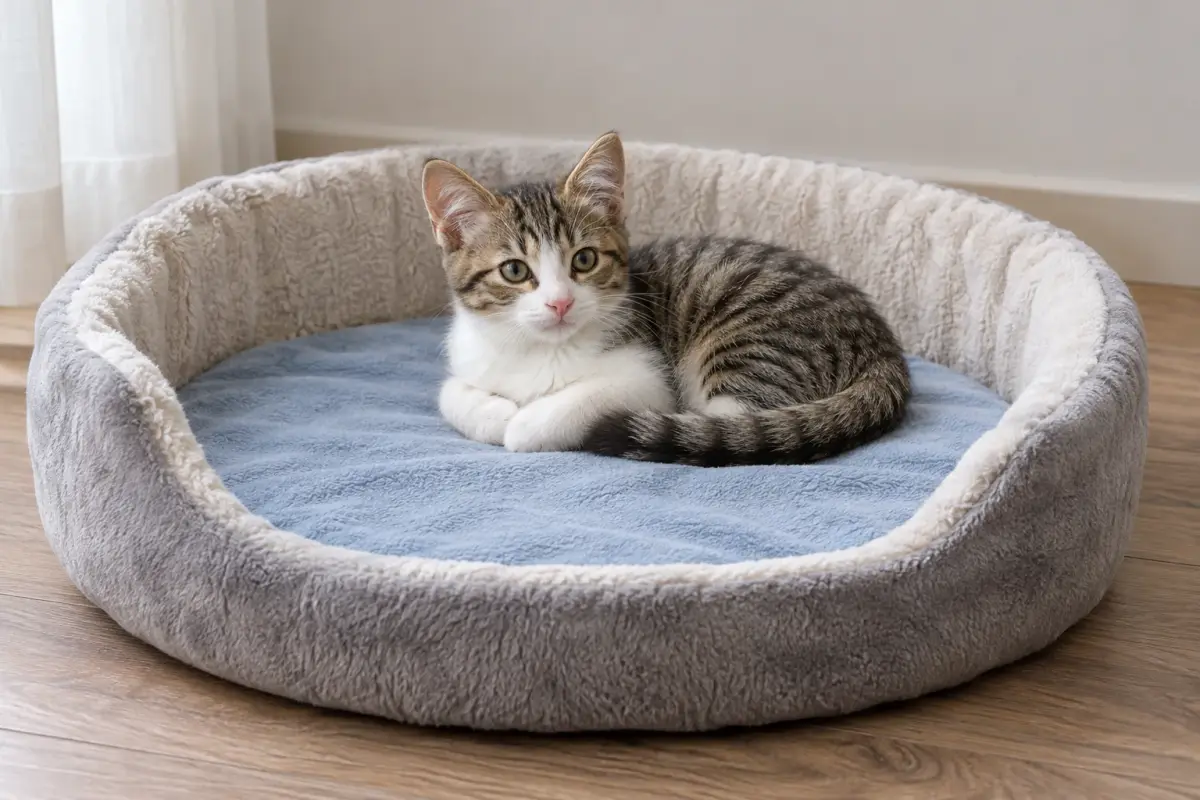
Kittens sleep a great deal, and they tend to pick spots that feel snug and out of the way. A bed that is a little snug on the sides, with a soft base, gives them that feeling of cover. A huge, flat bed can feel exposed, while a bed with a low rim or a hooded opening lets a kitten curl up with its back protected. Pick the size for the kitten you have now, not the cat it will become; you can move up to a larger bed later.
Next comes washing. Kittens have accidents, shed fur and drag food into bed, so a cover you can machine wash is worth more than any design feature. The ASPCA advises giving each cat its own clean, dry sleeping place, lined with a soft, warm blanket or towel that you wash often. A bed with a removable cover, or a simple basket you line with a towel, meets that advice easily.
Safety first: cords, stuffing and tight spaces
Young kittens explore with their mouths. VCA Hospitals advises cat-proofing a new kitten's area by removing hazards such as electrical cords, string and rubber bands, and checking for nooks and crannies where a kitten might hide or get stuck. For a bed, that means no dangling ribbons or pom-poms, no loose beads or buttons, and no stuffing that can be pulled out through a torn seam.
Look at the stitching and the lining before you buy, and check the bed again every week or two. If a seam splits or a kitten starts shredding the fabric, replace the bed or switch to a firm, chew-resistant style. If your kitten swallows fabric or stuffing, or vomits repeatedly after chewing bedding, call your vet the same day.
The main bed types compared
A flat mat provides an open resting surface, while a bolster bed has a raised rim around its center. The round cat-ear pet bed with pom-pom detail is the latter: its suede-fabric body has a padded surrounding rim. It is not a flat mat. Its overall diameter includes the rim, so compare the usable center with the kitten's resting position and inspect all decorative attachments. Choose a simpler bed without dangling details for a kitten that paws at or mouths them.
A tent adds a canopy around the resting space. The patterned pet teepee with a wooden frame uses cloth over a wooden support. The canvas teepee pet tent with wooden poles is also a fabric tent, rather than a solid wooden nest. It offers cushion and no-cushion options, so check the selected contents before adding bedding. With either tent, inspect ties and frame connections and leave the entrance clear.
Heated beds and warmth: use caution
Kittens like warmth, but electric heat needs care. VCA Hospitals says a heating pad can heat up over time and cause burns, particularly when a sleeping pet does not wake quickly as the surface gets hot, and that a pet may chew the cord. Its safer suggestion is a cozy nest of bedding and blankets in a sunny spot.
If you still choose a heated product, VCA's advice for pads is to use the lowest setting, cover it with several blankets, supervise, and never shut a pet in a crate or carrier with one. A very young or unwell kitten that seems unable to stay warm needs a vet's advice, not another blanket layer.
Where to put the bed
VCA recommends starting a new kitten in a small, quiet room away from traffic, with comfortable, accessible bedding in a quiet location so the kitten sleeps in its own quarters. Keep the bed away from the litter box and the food and water bowls; cats prefer these areas separated. A spot with a view and a little daytime sun suits many kittens.
Once your kitten settles, add a second bed in the room where the family spends the evening. Many kittens do not use a bed at first and sleep in a laundry basket or a cabinet instead, so close cabinet doors and dryers and check them before shutting them. If your kitten ignores the bed, rub a worn T-shirt on it or move it to where the kitten already naps.
What to avoid and when to replace the bed
Avoid beds with dangling parts, thin zippers a kitten can pull, strong chemical smells, or fill that looks like loose stuffing. Avoid large, deep beds that a very small kitten has to climb into. Avoid placing the bed near radiators, drafty doors or noisy appliances.
Replace a bed when the fill goes flat, the cover frays or smells linger after washing. Kittens grow fast, so most people move up a size within a few months. When that day comes, look again at our cat beds, read the broader cat bed buying guide, and see our guide to cat trees for kittens if climbing is next on the list.
Kitten-bed enclosure shapes
| Shape | Physical arrangement | Measure or inspect |
|---|---|---|
| Flat mat | An open resting layer | Flat dimensions and seams |
| Fabric tent | A fabric roof around an entry | Entrance,frame and usable floor |
| Bolster | A soft center with raised sides | Entry and space inside the rim |
| Covered den | A more enclosed resting space | Doorway and cleaning access |
Common questions
What kind of bed is best for a kitten?
A small, washable bed with soft sides and no dangling parts or loose stuffing suits most kittens. Enclosed or hooded styles help shy kittens feel secure. Choose the size for the kitten you have now and move up as it grows.
Do kittens need a heated bed?
Most healthy kittens stay warm in a cozy nest of bedding and blankets in a draft-free spot. VCA Hospitals warns that heating pads can cause burns and that cords can be chewed. If your kitten seems chilly or unwell, ask your vet.
Why won't my kitten sleep in the bed I bought?
The bed may be in a busy or drafty spot, feel too exposed, or smell unfamiliar. Move it to a quiet place, add a worn T-shirt or towel with your scent, and give it a few days. Many kittens also prefer a box or basket.
How many beds does a kitten need?
One is enough to begin with, kept in a quiet room. Once your kitten is settled, a second bed in the main living area gives it a place to nap near the family without needing to use the couch.
Sources we checked
This guide is general information, not veterinary advice. If your pet is unwell or injured, contact your veterinarian.


