






Buying guides
Best Cat Tree for Kittens: What to Look For
The best cat tree for a kitten is low to medium in height, wide and stable at the base, with close-spaced platforms and a sisal or rope scratching post. Kittens are small and fearless, so the wrong tree can tip or leave gaps they get stuck in. Older cats need the same stability and gentler steps. Here is how to choose for either.
By Matt GarnettUpdated November 14, 20265 min read2 sources
Why kittens need a different tree
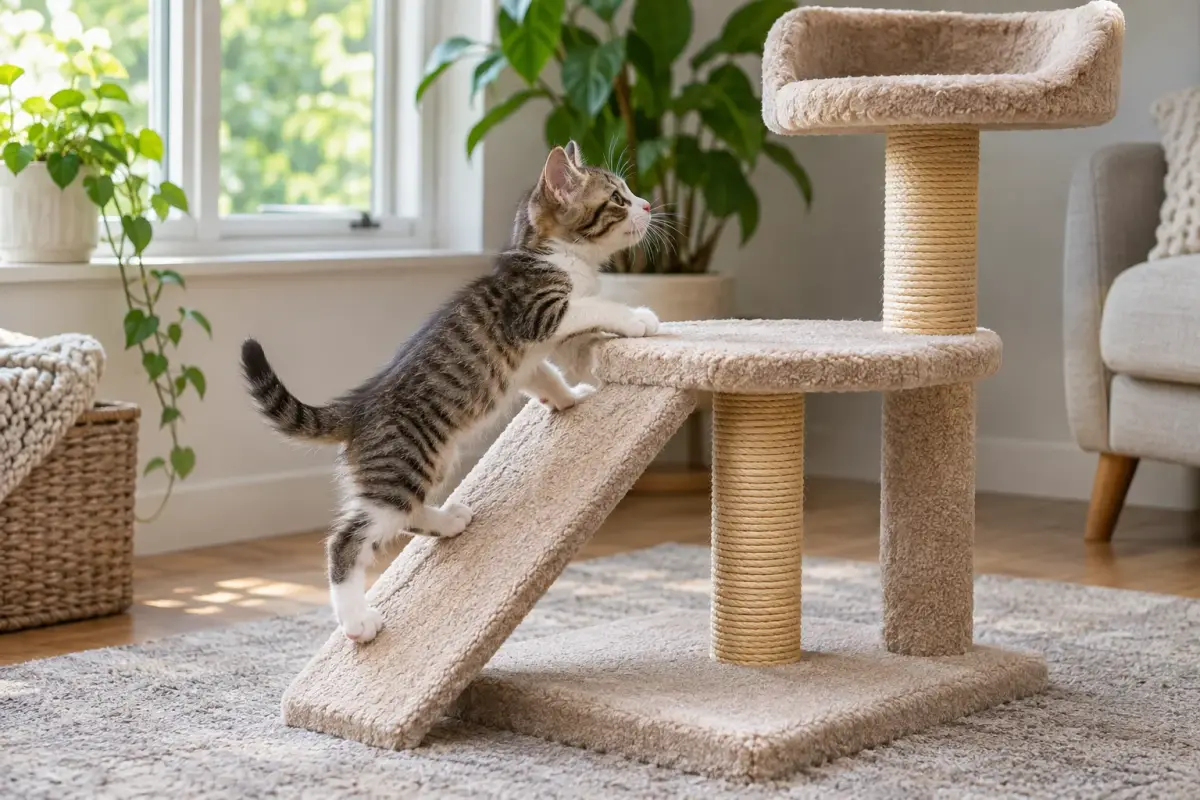
When you look at cat trees for kittens and seniors, remember that a kitten's instincts arrive well before its coordination. VCA Hospitals says cats usually begin scratching at about 8 weeks old, so a tree with a good scratching surface is useful almost from the day your kitten comes home. But a kitten that climbs fast and misjudges a jump can fall hard from a tall tree, so the right choice is a smaller, lower design with platforms close together.
A tree for a kitten is also an investment in the adult cat it becomes. Many owners buy a tall tree and a kitten that cannot yet reach the first platform ignores it. Others buy a very small one that the cat outgrows in months. A medium tree with a wide base and a low first step can serve through the first year, and you can add height or a second piece later.
Stability comes first
VCA's guidance on scratching posts says a post must be sturdy enough not to topple, because cats put their full weight into it, and the same applies to every part of a tree. Look for a wide, heavy base, a design with anti-tip hardware or a wall anchor, and posts that do not wobble when you push on them. A kitten that gets frightened by a wobble may avoid the tree for good.
Test the tree after assembly by pushing on the top platform and the corners. Re-tighten the screws after a week, since fittings loosen with use. A design such as a 29 inch four-level moon and star cat tree with an anti-tipping device shows the type of feature to look for, and a compact 16 by 16 inch tower with a perch and toy ball suits a very young kitten and a small space.
Height, platform spacing and openings
For a kitten, a sensible rule of thumb is a tree no taller than about two to three feet at first, with platforms spaced a short hop apart, roughly a foot or less. Check that any gap between platforms and posts is too narrow for a head to wedge into, and that openings in condos are wide enough to walk through but not so wide that a kitten feels exposed. Rounded, fully covered edges are safer than sharp or stapled ones.
Elevation is something cats seek, but VCA stresses that cats should go up high because they want to, not because they are frightened. Place the tree so a kitten can approach it from several angles and retreat easily. Avoid putting a tall tree beside a shelf, window ledge or bookcase from which a kitten could jump and mis-land, and choose a wide, shallow design if your home has hard floors.
Scratching surfaces and materials
VCA says good post covers include cardboard, carpet, wood and sisal, and that many cats prefer a loosely woven material where the claws can hook. Sisal or jute rope posts are a good default, and a tree with posts on more than one level gives a kitten several chances to scratch the right thing instead of the sofa. The post should be tall enough that an adult cat can stretch fully against it, so think ahead.
Treat dangling ropes and hanging toys with caution. VCA warns that it is very dangerous for cats to ingest ropes or strings, so check that attachments are short, firmly fixed and not fraying, and remove any toy that comes loose. A 39 inch sisal-post tree with a condo and hanging rope is the kind of design where a regular inspection matters.
What suits a senior cat
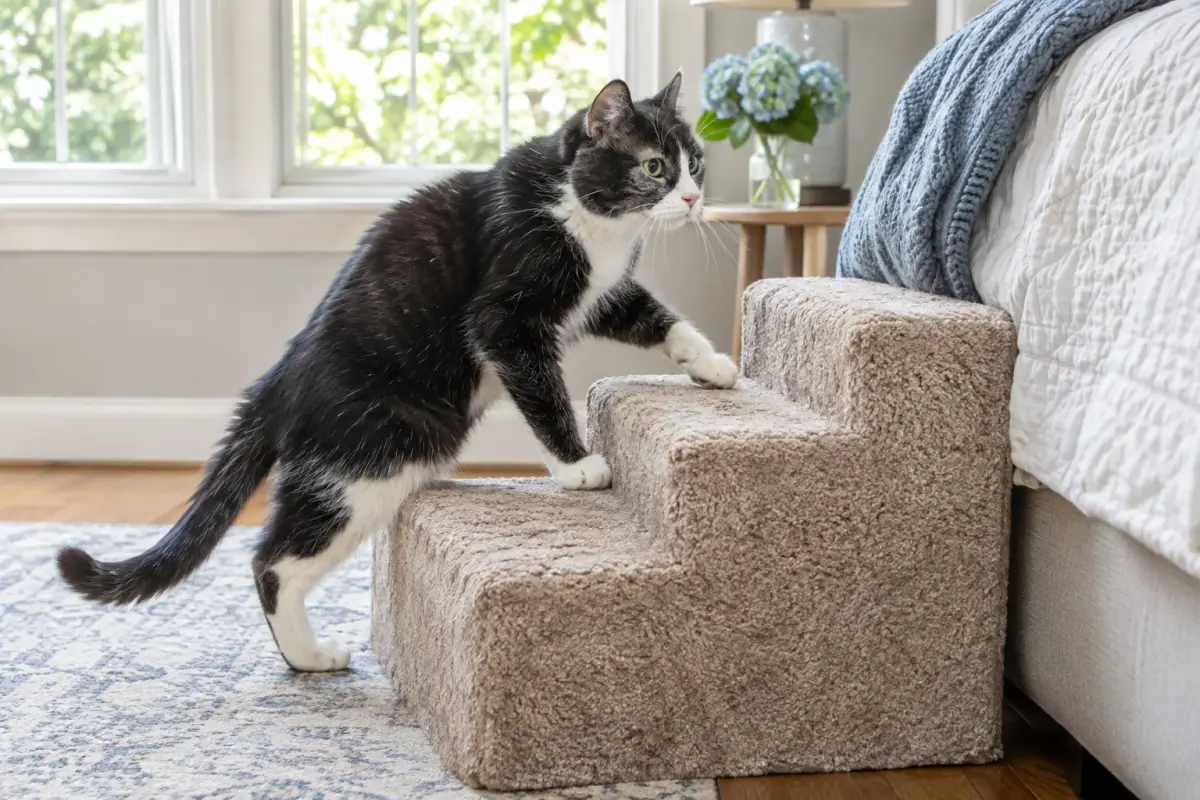
Older cats want the same stable base, with lower steps and bigger, softer platforms. A design with a wide base and padded perch, such as a 40 inch multi-level tree with soft platforms and a large condo, suits a cat that no longer leaps like a kitten, and short-legged breeds like the munchkin. Put it where the cat already sleeps, next to a window or a sofa, so the climb is optional.
If an older cat starts hesitating at jumps it used to make, avoids its favorite perch or stops climbing altogether, tell your vet rather than assuming it is just age. There can be a medical reason behind that kind of change, and only a vet can sort it out. In the meantime, add a low stool or step so the cat can still reach its favorite spot, and keep food, water and the litter box on one floor.
Placement, what to avoid, and next steps
VCA recommends putting cat trees in busy family areas, not a back room or garage, and ideally away from a wall so the cat can approach from different angles. Place the tree near a window if you can, and set a scratching post beside the place your kitten already likes to scratch. Avoid trees that wobble, have exposed staples or sharp fixings, have tiny parts a kitten could pull off, or sit on a slippery floor without a mat.
Pair the tree with a good play routine and with other places to scratch: see our cat scratching posts and our guide to how tall a cat tree should be. For the wider field, read the best cat trees guide, then browse our cat trees for kittens and seniors. If a kitten falls, limps or stops playing, call your vet.
This page is general information, not veterinary advice, and it cannot replace an examination by the vet who knows your pet.
Scratching surfaces and removable attachments
| Surface or part | Construction described | What to inspect |
|---|---|---|
| Cardboard | A paper-based scratching surface | Wear and loose pieces |
| Carpet | Fabric covering a post or platform | Loose edges and trapped hair |
| Wood | An exposed wooden surface | Splinters and finish |
| Sisal or jute rope | Rope around the post | Fraying and attachment |
| Hanging toy | An attachment beside the structure | Connections and loose string |
Common questions
What is the best cat tree for a kitten?
A low to medium tree with a wide, heavy base, close-spaced platforms, no gaps a head could wedge into and a sisal or jute post. Stability matters more than height for a young kitten.
What is the best cat tree for senior cats?
Choose a stable, wide-based tree with low steps and large padded perches, placed where the cat already rests. If an older cat stops jumping to favorite spots, tell your vet.
When do kittens start using a cat tree?
VCA says cats usually begin scratching at about 8 weeks old, and kittens often start exploring low platforms soon after. Start with a low tree and supervise early climbing sessions.
Where should I put a cat tree?
VCA suggests busy family areas, not a back room or garage, and ideally away from a wall so the cat can approach from different angles. A spot near a window works well.
Sources we checked
This guide is general information, not veterinary advice. If your pet is unwell or injured, contact your veterinarian.


