






Buying guides
Best Cat Tree for Multiple Cats: What Actually Matters
The best cat tree for multiple cats is a stable one with several perches and hiding spots at different heights, so each cat has its own place and none gets cornered. Look at stability first, then the number of separate spots, then the scratching surfaces. This guide explains each and how to place the tree in a shared home.
By Matt GarnettUpdated November 14, 20264 min read4 sources
Why several cats change the checklist
In a one-cat home a tree is mostly furniture and a scratching post. With several cats it becomes shared territory. VCA Animal Hospitals, summarizing the feline environmental needs guidelines, says each cat should have a private place to retreat, with at least as many safe spaces as cats in the home, and that for a lot of cats it helps to have the safe space in a raised location.
That makes the useful question not how big a tree is, but how many separate places it offers. A tall tree with a single top platform gives one cat a throne and the others nothing. A tree with several perches and enclosed spots at different levels gives more than one cat a place to rest. Our multi-cat cat trees collection is organized around that idea.
Stability comes first
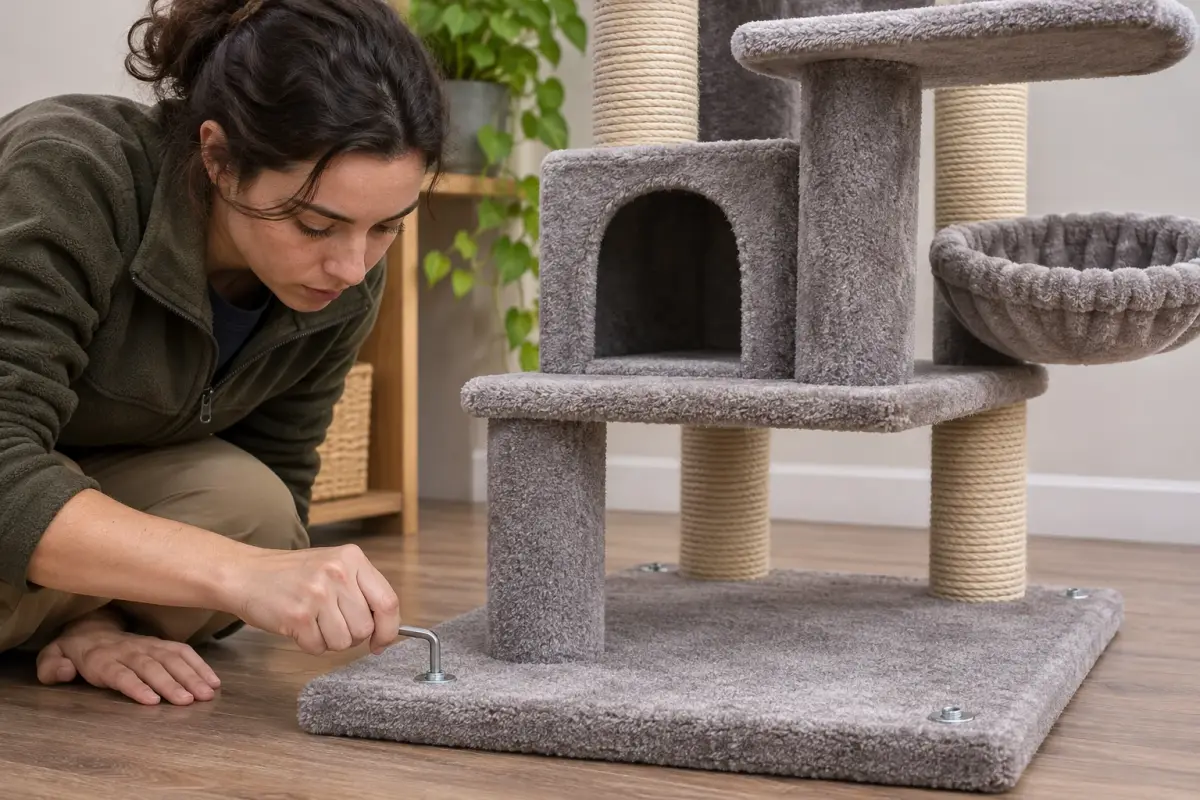
Cornell Feline Health Center says a scratching structure should be sturdy enough that it does not topple during use, and VCA says the same of posts. With two or more cats jumping on and off, a tree takes more force than it does with one, so a wide, heavy base and a solid connection between levels matter more than extra decorations.
Check the maker's stated weight limit for each platform, and compare it with the combined weight of cats that might sit together. Tip it gently in the shop or at home: if it rocks, it will not survive a chase. Floor-to-ceiling designs and wall-anchored trees are another route to stability, which you can browse in our floor-to-ceiling cat trees. If a tree has a loose joint after a few weeks, tighten it or stop using it.
Perches, hiding spots and entrances
VCA recommends that in multi-cat homes, safe spaces have multiple entryways so one cat cannot corner another. In tree terms, that means condos or cubbies with two openings, hammocks that are open on the sides, and platforms that can be reached by more than one route. A single-entrance cave can become a trap.
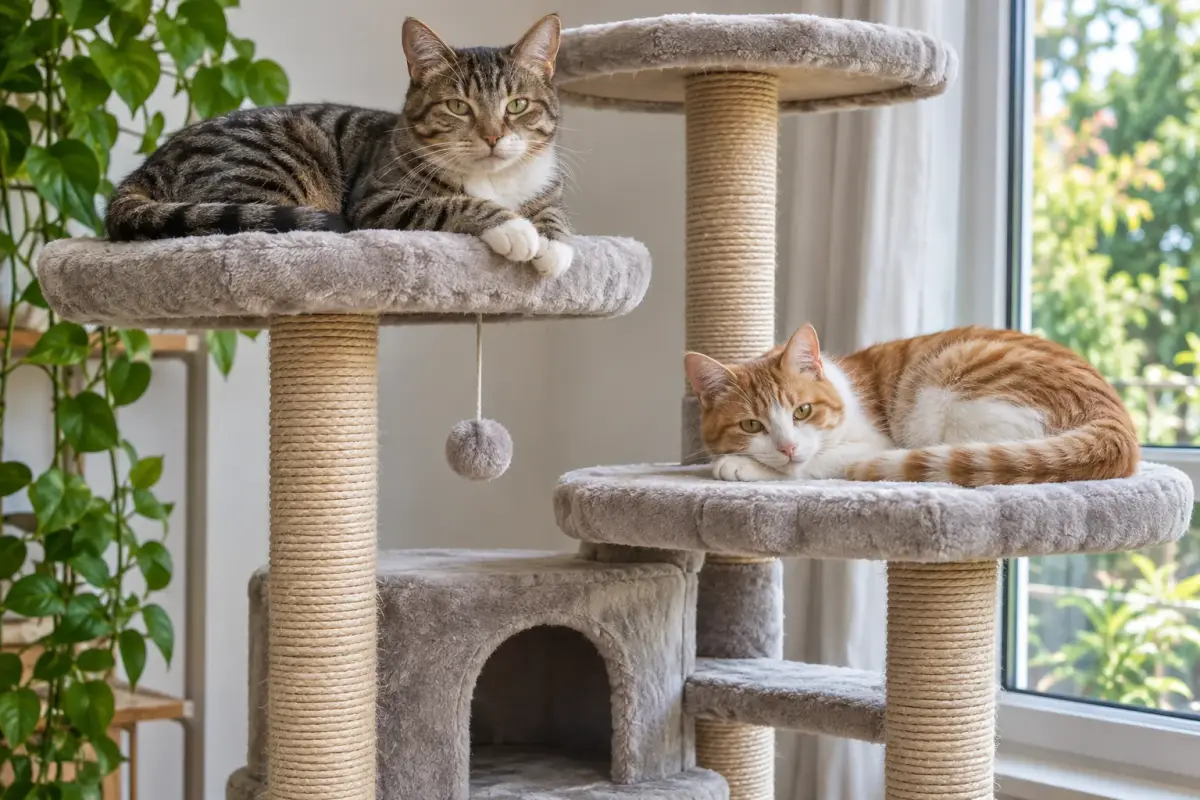
Look for platforms big enough for a cat to lie fully stretched out, spread across different heights and different sides of the tree. Mix open perches for watching the room with covered spots for hiding. A multi-level cat tree with condos and a hammock and a taller tree with a condo and perch show two common layouts. Carpet and plush on platforms wear faster with several cats, so look at how they attach.
Scratching surfaces
VCA says scratching posts should be tall enough for the cat to stretch fully on its hind legs and should offer a material the cat likes, such as sisal, cardboard, carpet or wood. It also notes that many cats prefer a loosely woven material where claws can catch. Scratching also leaves scent, which VCA says helps a cat feel secure, so it matters more in a shared home.
Treat the tree's posts as one of several scratching spots, not the only one. VCA's guidelines say cats should have at least two options for each key resource, scratching included, and that resources should not all be in one place. Keep a separate scratching post near sleeping areas and near any furniture a cat has been scratching. A sisal-wrapped multi-cat tower is an example of a tree with scratching built into the posts.
Where to put the tree and what to avoid
VCA advises placing cat trees where the family spends time, not in a back room or garage, and securing them away from a wall so cats can jump on from different angles. In a shared home, a tree in the living room works as a social hub, and a second perch or tree elsewhere gives cats a choice. If one cat is blocking others, add more spots rather than removing the tree.
Avoid trees with a single platform, narrow ledges that do not fit a full-grown cat, tall wobbly stacks, and loose carpet or glue that peels. Be careful with a tree for a cat that is elderly or has joint pain, because tall jumps can be hard, so watch for hesitation. Talk to your vet if cats start fighting, hiding, or soiling outside the box. Our guide to the best cat trees covers general choices. This page is general information, not veterinary advice, and it cannot replace an examination by the vet who knows your pet.
Common questions
How many cat trees do I need for multiple cats?
There is no fixed number. VCA says each cat should have at least as many safe spaces as cats, and at least two options for each key resource. One large tree with many separate spots, or two trees, can meet that.
How tall should a cat tree be for multiple cats?
Height helps because many cats prefer a raised safe space, but variety matters more than one tall tower. Offer perches at several heights and make sure each cat can stretch out fully on its post.
Will two cats share one cat tree?
Some do and some do not. Trees with multiple levels, several entrances and more than one route up make sharing easier. Add a second tree or perch if one cat guards the best spot.
What makes a cat tree stable enough for several cats?
A wide, heavy base, solid joints between levels and, for some designs, anchoring to the wall or ceiling. Cornell says a scratching structure should not topple during use, so test it before letting cats climb.
Where should I place a cat tree in a multi-cat home?
In a room where the family spends time, with space around it so cats can approach from different angles. VCA advises against putting trees in back rooms or garages.
Sources we checked
This guide is general information, not veterinary advice. If your pet is unwell or injured, contact your veterinarian.


