






Buying guides
How Tall Should a Cat Tree Be, and Where Should It Go?
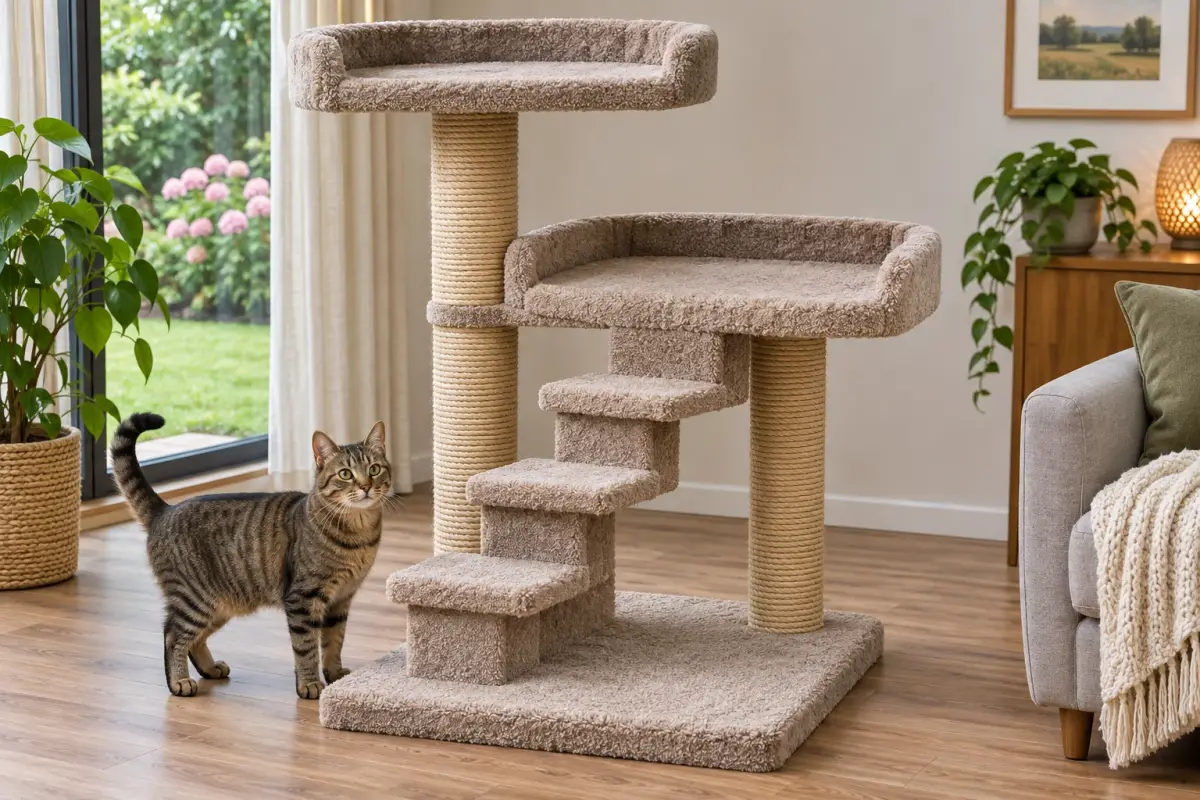
For most adult cats, a cat tree of about 4 to 6 feet gives enough height to feel safe and watch the room, with a scratching post section at least as tall as your cat at full stretch. Kittens and seniors need lower, wider steps. Put it where the family spends time, near a window, slightly away from the wall, and never in a back room.
By Matt GarnettUpdated November 9, 20264 min read3 sources
Why height matters to cats
Cats feel safer when they can see what is coming from above. VCA notes that elevated resting spots help cats feel secure and calls cat trees aerobic centers for climbing, hiding and play. In a multi-cat home, height also lets cats share a room without sharing the floor, which eases tension.
But taller is not automatically better. A tree is only useful if your cat can climb it comfortably and it stays rock-steady. A 6-foot tree with a narrow base and big gaps between platforms may be ignored, while a 4-foot tree with a wide base and easy steps gets used every day.
Height guide by cat
Kittens: start with something about 2 to 3 feet with low, closely spaced platforms. VCA's kitten checklist suggests shorter cat trees at first. Healthy adult cats: 4 to 6 feet suits most homes, giving a top perch near or above eye level. A 67.7-inch tower or a 68-inch multi-level tree sits inside that range. Active, confident climbers and multi-cat homes can use floor-to-ceiling trees, as long as they are anchored.
Senior cats and cats with stiff joints: keep the top perch at 3 to 4 feet, with wide platforms no more than about 12 inches apart, or add a ramp. Large breeds such as Maine Coons need bigger, thicker platforms and posts at least 4 inches across, more than extra height.
Scratching height and platform size
Any scratching post section should be at least as tall as your cat standing on its hind legs with its front legs stretched out, Cornell Feline Health Center advises, which is about 30 inches or more for most adults. On many trees the lower posts are too short for a full stretch, so a separate tall post may still be needed.
Platforms should be big enough for your cat to lie stretched out; about 14 by 18 inches is comfortable for an average adult. Gaps between levels of 12 to 18 inches are easy jumps. Cornell also warns against high spots where a distracted cat could fall, so the top perch should have raised edges or be wide.
Where to put a cat tree
Put it where people spend time. VCA recommends placing the tree where the family is, not in a back room or garage. Near a window with a view of birds, the street or the yard is ideal. A sunny spot is a bonus for cats that love to bask.
VCA also suggests keeping the tree slightly away from the wall so your cat can jump on from different angles. Avoid spots next to doors that slam, heating vents that blast, or the litter box and food bowls. If your cat scratches a particular piece of furniture, a tree beside it doubles as a legal alternative.
Stability comes first
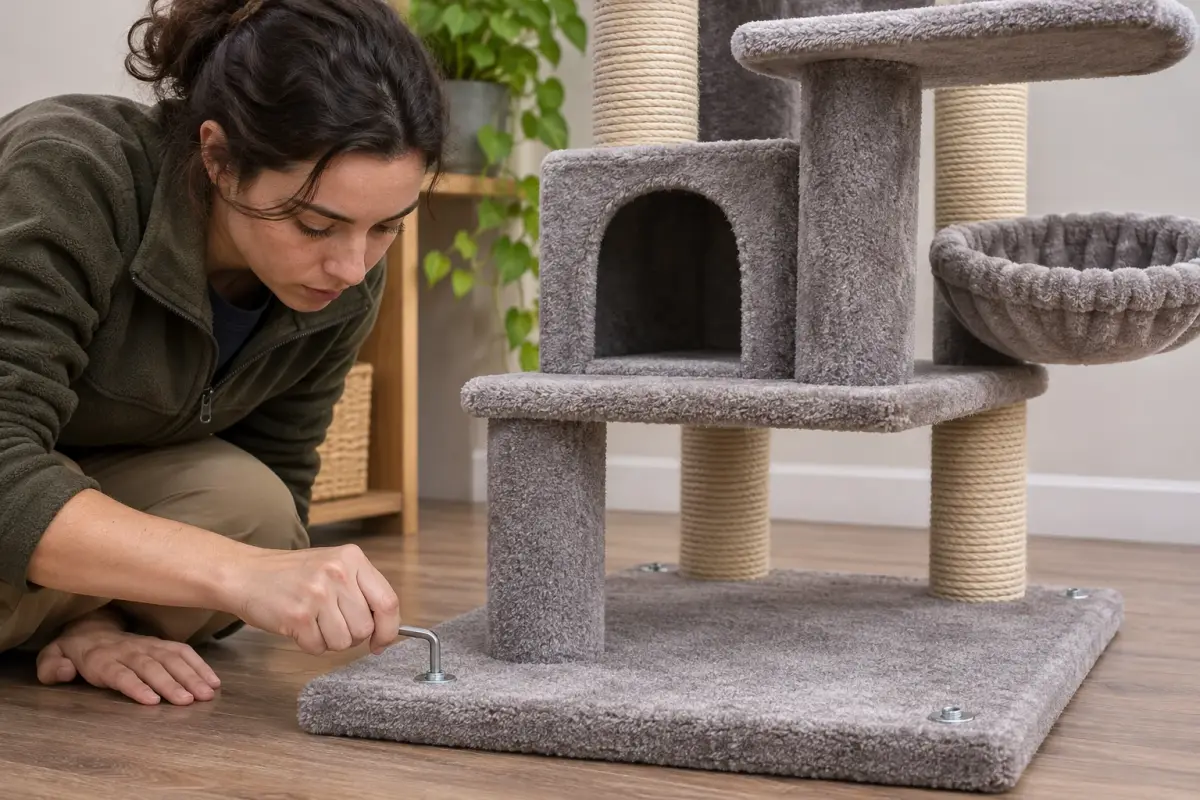
Cornell stresses that scratching posts must be sturdy enough not to tip, and the same applies to any tree. Look for a wide, heavy base and posts that do not flex. Anything over about 5 feet should be strapped to a wall stud with a furniture anchor, especially with large or very active cats.
Push the top firmly from every direction when you set it up and again every month or so, tightening bolts as needed. A cat that feels a tree sway once may never trust it again.
Getting your cat to use it, and when to call your vet
Drop treats on the platforms, rub catnip on a post and use a wand toy to lead your cat up. Many cats explore a new cat tree at night, so give it a few days before deciding it has failed.
If your cat stops using a tree it loved, hesitates before jumping, or jumps only partway up, mention it to your vet. Reluctance to jump and climb is one of the common early signs of arthritis in cats.
This page is general information, not veterinary advice, and it cannot replace an examination by the vet who knows your pet.
Common questions
Do cats prefer tall cat trees?
Many cats like a high perch with a view, but they prefer a stable tree they can climb easily over a tall, wobbly one. A 4 to 6-foot tree with a wide base suits most adult cats.
Should a cat tree be near a window?
Yes, if possible. A window view gives your cat something to watch and a sunny place to rest. Keep it away from drafts and secure window screens so your cat cannot push through.
Can a cat tree go in a bedroom?
It can, but your cat may be more active at night. A bedroom tree suits a cat that sleeps with you. For daytime use, a spot in the main living area is usually more popular.
Sources we checked
This guide is general information, not veterinary advice. If your pet is unwell or injured, contact your veterinarian.


