






Buying guides
Best Cat Hammocks: How to Choose the Right Type
The best cat hammock is the one that holds your cat's weight with room to spare, mounts securely where your cat already likes to rest, and has a soft, washable fabric. Window, radiator, under-chair, cage and desk-clamp designs each suit different homes. This guide explains how to choose, then you can browse our cat hammocks with the right type in mind.
By Matt GarnettUpdated November 14, 20265 min read2 sources
Why cats like hammocks, and what that means for choosing one
Cats like to rest somewhere raised, with a view, where they can relax while still watching for anything unexpected. VCA Hospitals recommends giving indoor cats a wide variety of safe resting places with interesting views, and describes elevated spots such as the top of a bookcase as ideal places to put a soft, non-skid bed. A hammock is a way of adding one of those spots without needing floor space.
That tells you what to look for. The hammock should be where your cat already likes to sit, not wherever it is convenient for you to fit it. A hammock on a sunny window or beside a radiator suits a cat that follows warmth, while one hung under a chair suits a shy cat that wants cover. Choose the location first, and the type follows from it.
The main types compared
Window hammocks attach with suction cups or a frame and give a view of the outdoors; they suit curious cats and homes with a sill or glass that can carry the load. Radiator hammocks hook over a radiator and offer warmth, but only suit a heating system that stays at a safe, moderate temperature. Under-chair and under-table hammocks fasten to the frame and create a den-like space that suits shy cats.
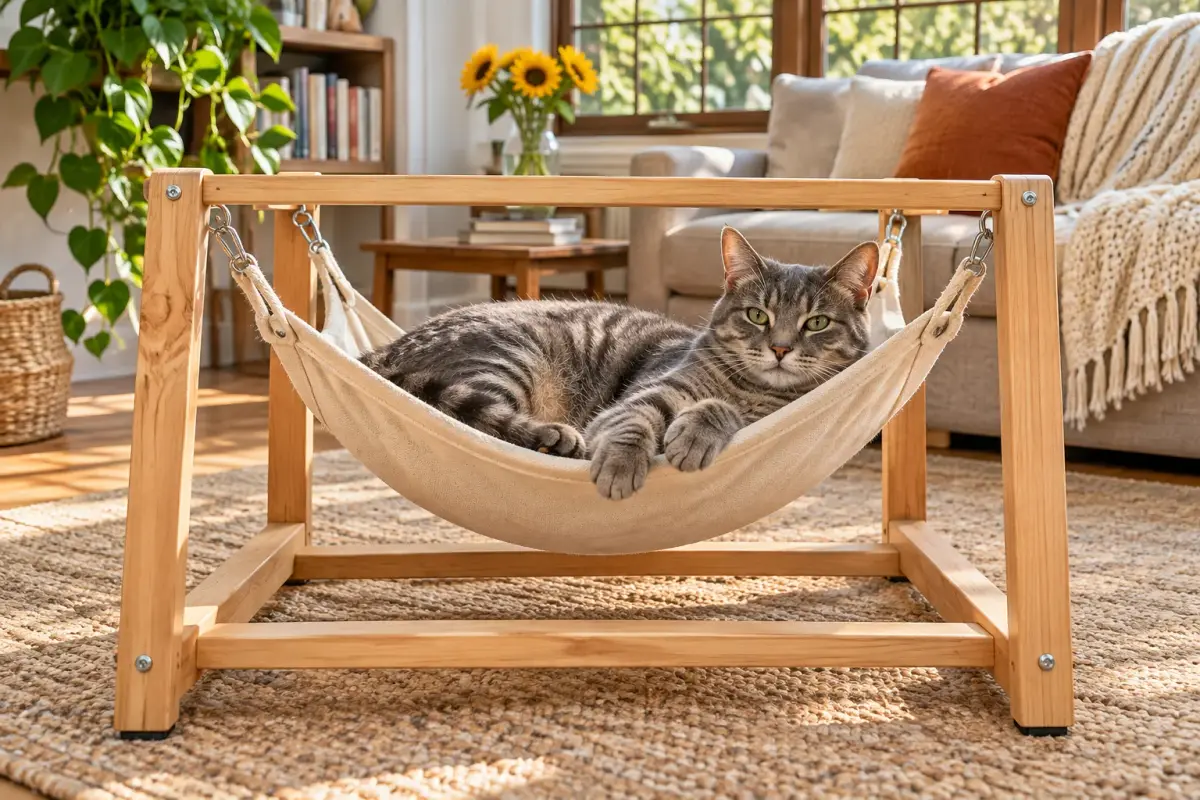
Clamp-on and desk designs, such as a clamp-on desk cat bed and perch, put a cat at your eye level and suit cats that like company. Hanging fabric hammocks, like this cotton linen hanging cat hammock, swing slightly and suit cats comfortable with movement. Hammocks that sit inside a cat tree or cage give you the most stable base.
Weight, fit and mounting strength
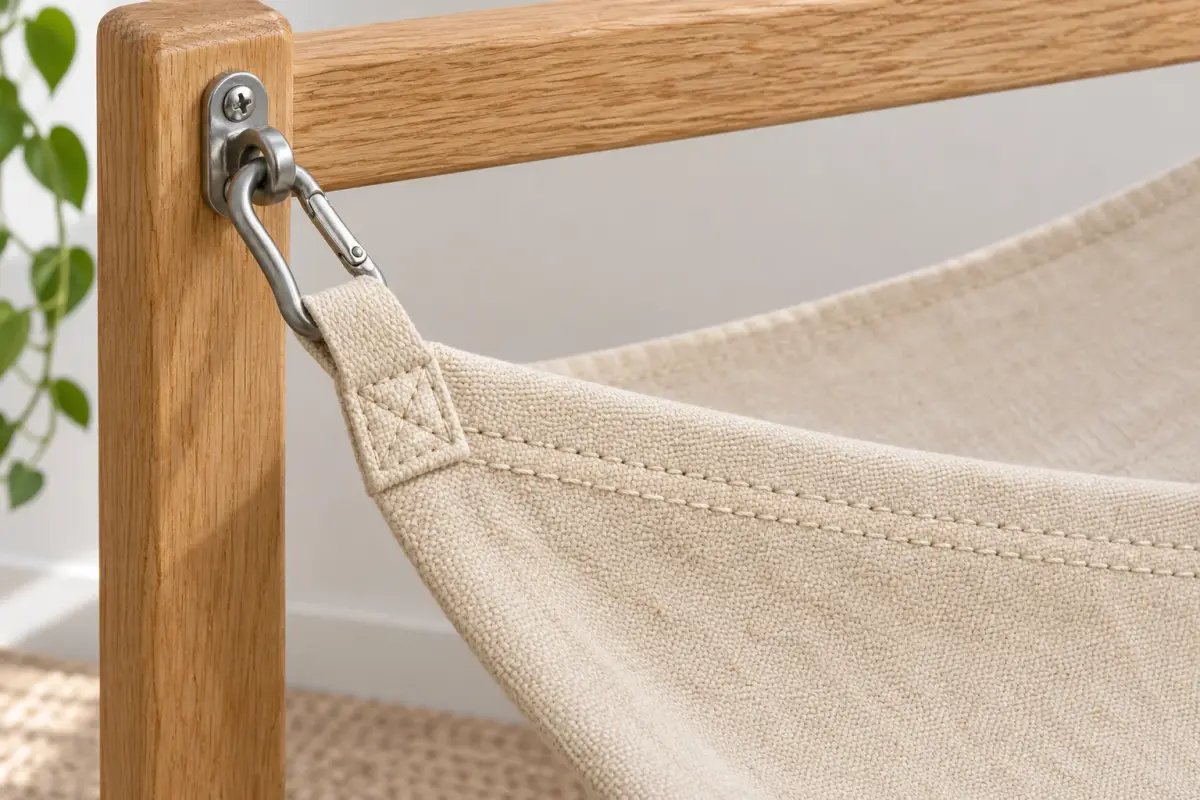
Strength is the first thing to check, because a hammock that fails drops a cat from height. Look for a stated weight capacity that is comfortably above your cat's weight, remember that a cat jumping on lands with more force than it weighs, and treat a vague listing with no capacity as a reason to look elsewhere. Heavier cats, and homes with two cats that share, need a sturdier frame or stronger attachment.
Check the mounting itself. Suction cups lose grip on dirty, textured or cold glass, so clean the surface first and recheck the cups regularly. Hooks and straps should fit the radiator, chair leg or frame you plan to use, and any frame should stand firm without wobbling. If you rent or have a condensation-prone window, read the maker's instructions closely before relying on suction.
Fabric, warmth and washing
Cats shed, and hammocks collect hair, dander and the occasional hairball, so a removable or machine-washable cover is worth far more than a pretty pattern. Soft fleece or plush suits cold homes, while breathable cotton and linen suit warm rooms. A plush design like this plush radiator cat hammock bed is a warm option, but warmth is only useful if the cat can also leave easily.
Avoid loose threads, dangling strings and decorative parts that a cat could chew off and swallow. Check seams after the first few weeks, and replace a hammock once it frays. A hammock with a slightly raised edge helps a cat feel held, while a flat sling is easier for older cats to step onto.
Which hammock suits which cat
Kittens and young cats can use almost any type, but need a hammock low enough to jump onto safely and tough enough to survive claws. Senior cats, and cats with stiff joints, usually do better with a low hammock or a design with a step, because a high jump becomes uncomfortable. VCA Hospitals notes that a cat should not be up high because it is frightened, so watch whether your cat is resting or hiding.
In multi-cat homes, Merck Veterinary Manual says extra three-dimensional space, including climbing structures and perches, can reduce conflict between cats. A second hammock at a different height or in another room gives each cat a choice. For a cat that likes a view, you can pair a hammock with our cat window perches, and the same logic applies to a cat bed like this hammock placed beside the sofa.
What to avoid
Skip hammocks with no stated weight limit, flimsy plastic hooks, or suction cups with no backup strap for a heavy cat. Do not put a radiator hammock on a heater that runs hot or one that gets very hot to the touch, and do not hang a hammock over a hard floor if your cat is elderly or unsteady. A hammock should never replace a regular cat bed that sits on the floor.
Introduce a new hammock slowly. Place it where your cat already naps, leave it unfolded for a day, and let your cat approach it without being picked up and placed in it. If your cat avoids it after a week, move it rather than forcing the issue. If your cat suddenly stops using high places, ask your vet whether pain could be the cause. When you are ready, browse all of our cat hammocks.
Which hammock fits your space?
| Style | Best fit | Check before buying |
|---|---|---|
| Window perch | A cat that watches outdoors | Confirm the window surface and mounting requirements. |
| Under-chair sling | A cat that likes a sheltered nap | Check strap spacing and clearance under the seat. |
| Clamp-on perch | A cat that rests beside your desk | Measure the desk edge and check the clamp range. |
| Hanging fabric sling | A cat comfortable with gentle movement | Check each attachment and the stated weight limit. |
Common questions
Are cat hammocks safe?
They can be, when the hammock is rated for your cat's weight, mounted securely and checked regularly for wear. Poor suction, weak straps and loose threads are the usual problems, so inspect it often and stop using it if anything looks worn.
How much weight can a cat hammock hold?
It depends on the design, so check the maker's stated capacity and choose one comfortably above your cat's weight. A jumping cat lands with more force than it weighs, which is why a generous margin matters.
Do cats actually like hammocks?
Many do. VCA Hospitals recommends a variety of resting places with interesting views, and cats often prefer raised, warm spots. Some cats ignore hammocks, so place one where your cat already naps and give it time.
Where should I put a cat hammock?
Put it where your cat already likes to rest, such as a sunny window, beside a warm radiator or under a chair for a shy cat. Avoid hot surfaces and spots with no secure mounting.
Can two cats share a hammock?
Some can, but many prefer their own. Merck Veterinary Manual notes that extra perches and resting spaces can reduce conflict, so a second hammock at a different spot is often a better idea.
Sources we checked
This guide is general information, not veterinary advice. If your pet is unwell or injured, contact your veterinarian.


