







Cats
Cat wall shelves
Little things. Happy cats.
15 items picked for everyday life with your pet, with shipping estimates on every item.
 A happy life, one little thing at a time.
All cats beds & furniture →Cat trees →Cat cave beds →Cat beds →Outdoor cat houses →Cat hammocks →Cat window perches →Elevated cat beds →Cat furniture →Cat houses →Heated cat beds →
↗Tracked US shippingEstimates on every item↶Returns & refundsHow it works♡Here to helpTalk to Giddy Pets
All cat wall shelves
Little essentials. Lots of love.

Cat trees
Wooden Cat Tree with Round Top Bed, Hammocks and Scratching Board
- Options
- 2 to choose from
From $125.99




A little guidance
Help choosing cat wall shelves
Buying guides and care advice written for this range: what to measure, what matters and what to skip.
From our guides
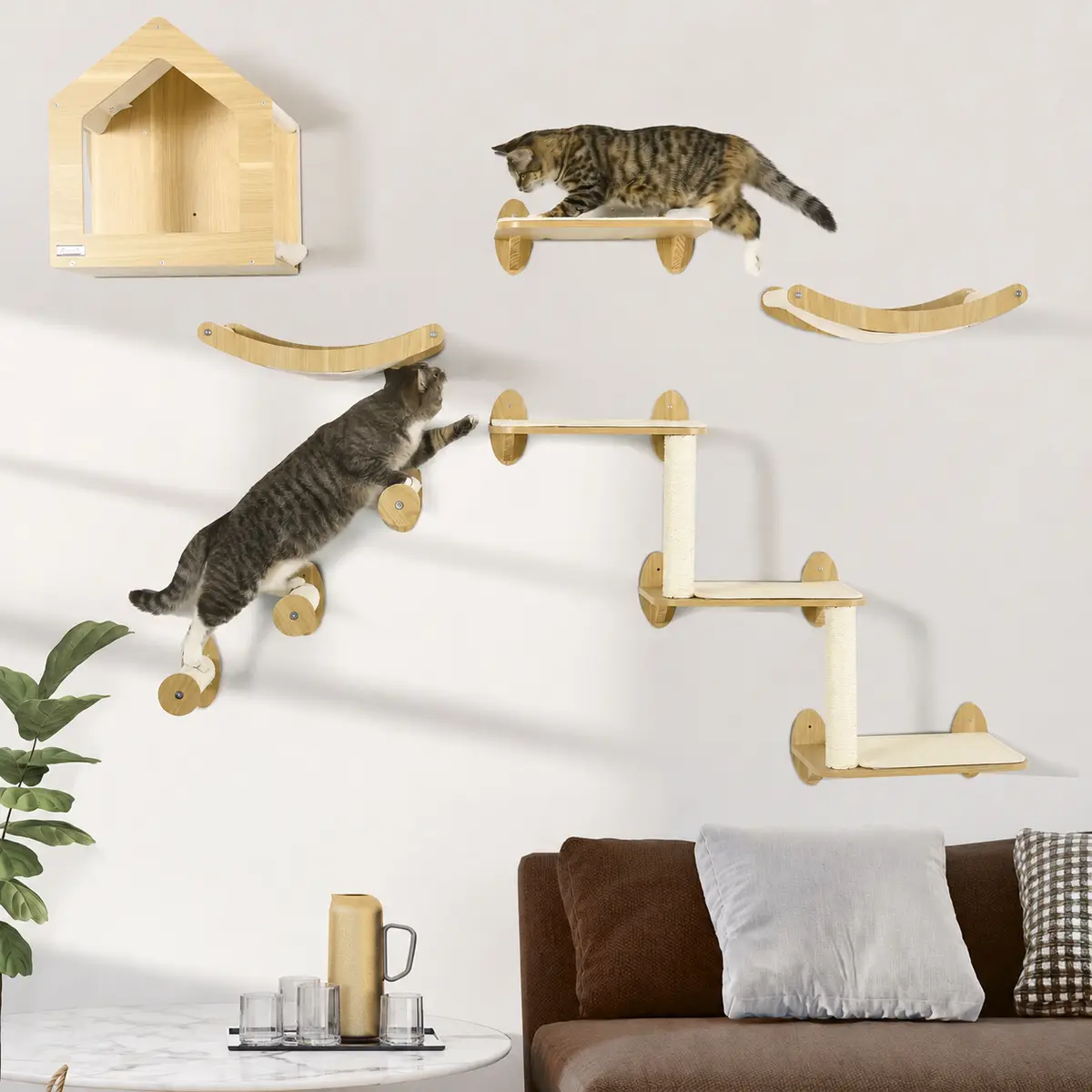
Shop cat shelves for walls: multi-piece wall-mounted sets with jump boards, nests and hammocks, wall shelves with sisal scratching posts and play balls, wall condos with washable cushions, modular climbing frames, half cat trees that stand against a wall, and a cat bookshelf cabinet. This page is for owners who want more climbing space without giving up floor space, and for multi-cat homes. Below is how to plan a route, mount shelves safely and match them to your cat.
Why cats love vertical space
Cats feel safest when they can watch a room from above. Shelves let a cat climb, rest and survey without being underfoot, and in multi-cat homes they add separate territory, so a nervous cat can escape a bossy one by going up rather than hiding under the bed.
Wall shelves also add exercise. Jumping between boards uses the same muscles as climbing a tree, which helps indoor cats stay fit. And because they mount on the wall, they suit small apartments where a full cat tree would take too much floor space.
Planning a climbing route
Think of shelves as a path, not as single pieces. Start low, near a piece of furniture or a half cat tree your cat can already reach, and step up in jumps of about 12 to 18 inches up and across. Larger multi-piece sets here, with four to eight pieces, make it easy to build a route across a wall.
Mix the pieces. A hammock or cushioned nest at the top gives a reason to climb, a scratching post along the way gives a place to stretch, and a ladder or step board helps older cats. Leave an easy way down too, since some cats climb up confidently and freeze at the top.
Mounting shelves safely
A shelf has to hold a cat landing at speed, not just a cat sitting still. Screw brackets into wall studs wherever possible, or use heavy duty anchors rated well above your cat's weight for drywall between studs. Use a level and a stud finder, and check every screw is tight before your cat's first jump.
Recheck the screws every month or two, as repeated landings can loosen them. Renters can look at half cat trees that stand against the wall and bookshelf cat furniture, which give height without drilling, though tall freestanding pieces should still be anchored to the wall against tipping.
Matching shelves to your cat
Large cats such as Maine Coons need deeper, wider platforms, ideally at least 10 to 12 inches deep, so they can turn and lie down without hanging over the edge. Check each piece's weight rating against your cat and add a margin for jumping.
Kittens and senior cats need smaller steps and ramps, and carpeted or textured surfaces for grip. For an older cat, keep the shelves lower and close together. Solid wood platforms are sturdy and easy to clean, and cushions should be removable and washable.
Encouraging your cat to use them
Place the first shelves near a window, so the reward for climbing is a view. Add treats, catnip or a favorite toy on the platforms, and play with a wand toy that leads your cat upward.
Give it time. Some cats are up the wall in minutes; others take a week. Never lift a reluctant cat onto a high shelf, since a fall from a shelf a cat did not choose can make it avoid the whole setup. Add the scratching post first, because most cats use it right away.
Are cat wall shelves safe?
Yes, when they are screwed into studs or into anchors rated well above your cat's weight, and checked regularly. Space them so your cat can jump comfortably, and give it an easy way back down.
How far apart should cat shelves be?
About 12 to 18 inches up and across between steps suits most adult cats. Reduce the gaps for kittens, seniors and cats with arthritis, and add a ladder or step board where needed.
Can renters use cat wall shelves?
Most wall shelves need drilling. Renters can use a half cat tree that stands against the wall or bookshelf cat furniture, anchored with a small strap, or ask the landlord before mounting.
How deep should cat shelves be for large cats?
Aim for at least 10 to 12 inches deep, with a wider platform or hammock at the top, so a large cat can turn and lie down without hanging off the edge.
How do I get my cat to use wall shelves?
Start them near furniture your cat already uses, put treats and catnip on the platforms, lead it up with a wand toy, and place the route near a window so the top has a view.