






Buying guides
Best Cat Wall Shelves: How to Build a Safe Climbing Route
The best cat wall shelves are screwed into studs or rated anchors, carry a weight rating well above your cat's weight, have a grippy carpeted or sisal surface, and are spaced so your cat can step or hop comfortably from one to the next. Plan a route with two ways down. Vertical space is one of the cheapest upgrades for an indoor cat.
By Matt GarnettUpdated November 14, 20263 min read2 sources
Why cats need vertical space
Cats like to climb, perch and watch from above. The Ohio State Indoor Pet Initiative lists places to climb and perch among the basic needs of an indoor cat, and suggests window perches so a cat can look out. Height gives a cat a safe vantage point and, in multi-cat homes, lets cats avoid each other without conflict.
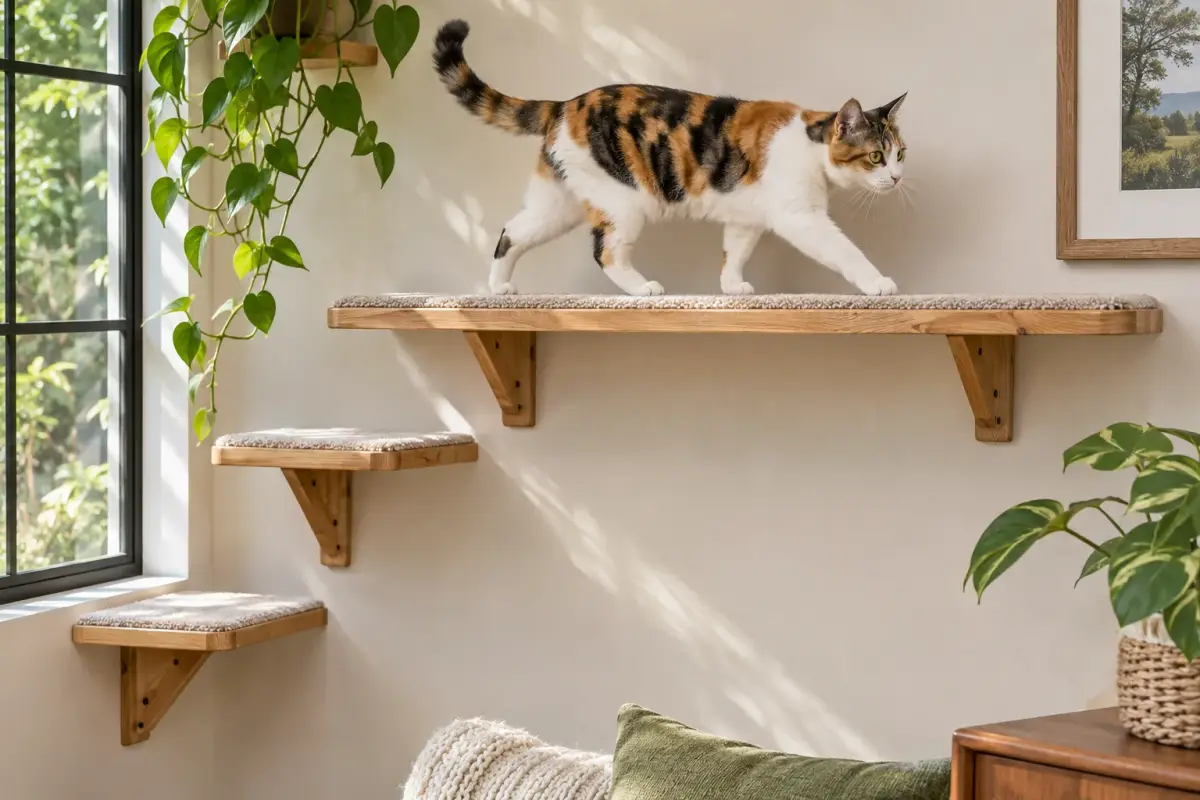
Wall shelves add that vertical territory without the floor space a large cat tree takes. A route of shelves, steps and a perch near the ceiling can turn a plain wall into exercise and a lookout.
What matters most: mounting and strength
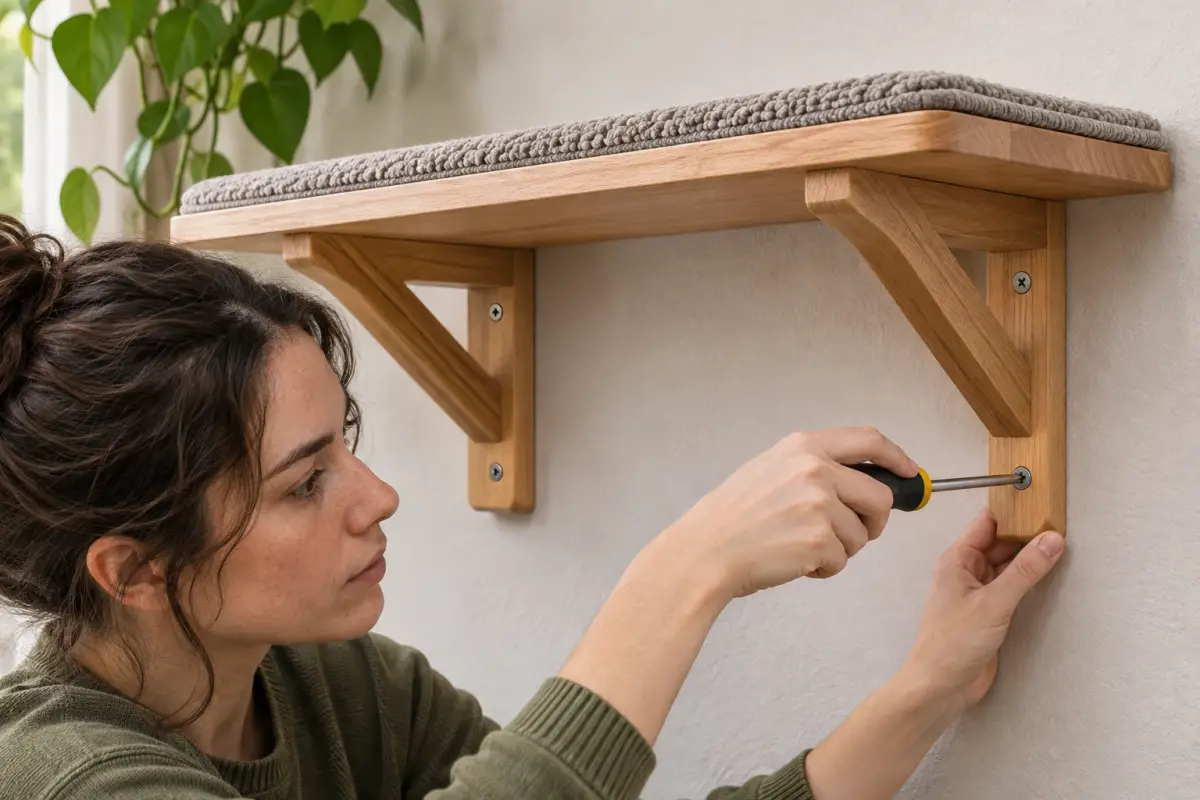
Safety depends on installation. Screw shelves into wall studs wherever possible; where you cannot, use anchors rated for well above the load. A cat landing on a shelf from a jump puts much more force on it than its resting weight, so choose shelves rated well above your cat's weight, and more for large breeds.
The surface should give grip: carpet, sisal or a non-slip mat on smooth wood. Rounded edges are kinder to paws and heads. Check that brackets are metal and the shelf does not flex when you press down hard on the far edge.
Wall furniture types compared
Simple shelves and steps are the building blocks. Wall-mounted perches and beds give a resting spot at height. Bridges and walkways, rope or slatted, link shelves across a wall. Wall-mounted scratching posts add a vertical scratch surface. Window perches attach to the sill or glass and give a view.
Modular systems let you start small and add pieces. Hammock-style perches suit lighter cats but sag under heavy ones. For seniors or less agile cats, use deeper steps closer together.
Planning the route
Space steps so your cat can move easily, roughly 12 to 18 inches apart vertically for most adult cats, closer for kittens and seniors. Start low, near a chair or cat tree, and make sure there are at least two ways down, so a cat cannot be trapped at the top by another cat.
Keep the route away from doorways where people walk under jumping cats, and away from shelves of breakables. Add a comfortable perch at the top, ideally near a window or with a view of the room.
Safety, care and when to ask your vet
Check fixings every few months, tighten loose screws and replace worn carpet. Watch your cat use the route at first and adjust spacing if it hesitates. Encourage use with treats and play rather than lifting your cat up.
A cat that stops jumping or climbing, or hesitates where it used to leap, may be stiff or sore. Ask your vet, because cats often hide arthritis and pain.
Before you install anything, think about who else lives in the home. Shelves above a crib, a desk or a fish tank invite accidents, and a cat that jumps down onto a dog's bed may cause friction. Build the route where landings are clear, soft and away from fragile objects, and add a cat tree at the base for an easy first step.
Wall furniture components and their roles
| Component | Role in the layout | Check before installation |
|---|---|---|
| Shelf or step | A landing or intermediate step | Usable depth and spacing |
| Wall perch or bed | An elevated resting area | Resting surface and mounting points |
| Bridge or walkway | A connection between landings | Span and connections at both ends |
| Wall scratching post | A vertical scratching surface | Mounting and reachable scratching area |
| Window perch | A resting area at the sill or glass | Exact attachment method |
| Modular system | Separate pieces added to a route | Compatibility of each addition |
Common questions
Are cat wall shelves safe?
Yes, when screwed into studs or rated anchors, rated well above your cat's weight and spaced so your cat can move between them comfortably. Check the fixings regularly.
How far apart should cat shelves be?
Roughly 12 to 18 inches apart vertically suits most adult cats. Place them closer for kittens, seniors and less agile cats, and always provide a second way down.
How much weight should a cat shelf hold?
Well above your cat's weight, because a landing cat exerts more force than a resting one. Choose a generous rating, especially for large breeds, and mount into studs.
Do cats like wall shelves?
Most cats enjoy climbing and perching up high, and shelves give them vertical territory and a view. Encourage use with treats and play rather than lifting your cat up.
Sources we checked
This guide is general information, not veterinary advice. If your pet is unwell or injured, contact your veterinarian.


