







Cats
Cat furniture
Little things. Happy cats.
34 items picked for everyday life with your pet, with shipping estimates on every item.
 A happy life, one little thing at a time.
All cats beds & furniture →Cat trees →Cat cave beds →Cat beds →Outdoor cat houses →Cat hammocks →Cat window perches →Cat wall shelves →Elevated cat beds →Cat houses →Heated cat beds →
↗Tracked US shippingEstimates on every item↶Returns & refundsHow it works♡Here to helpTalk to Giddy Pets
All cat furniture
Little essentials. Lots of love.


Cat scratching posts
20.9-Inch Sisal Cat Scratching Post, Wall or Floor Mount
- Options
- 4 to choose from
From $23.99


Cat exercise wheels
Cat Exercise Wheel, 31.5 in, with Carpet Track and Safety Lock
- Options
- 3 to choose from
From $81.99



Cat scratching posts
Corrugated Cardboard Cat Scratcher in Playful Character Shapes
- Options
- 5 to choose from
From $41.99


Cat furniture
Compact Sisal Cat Scratching Post with Mouse and Ball Toys
- Options
- 3 to choose from
$33.99


A little guidance
Help choosing cat furniture
Buying guides and care advice written for this range: what to measure, what matters and what to skip.
From our guides
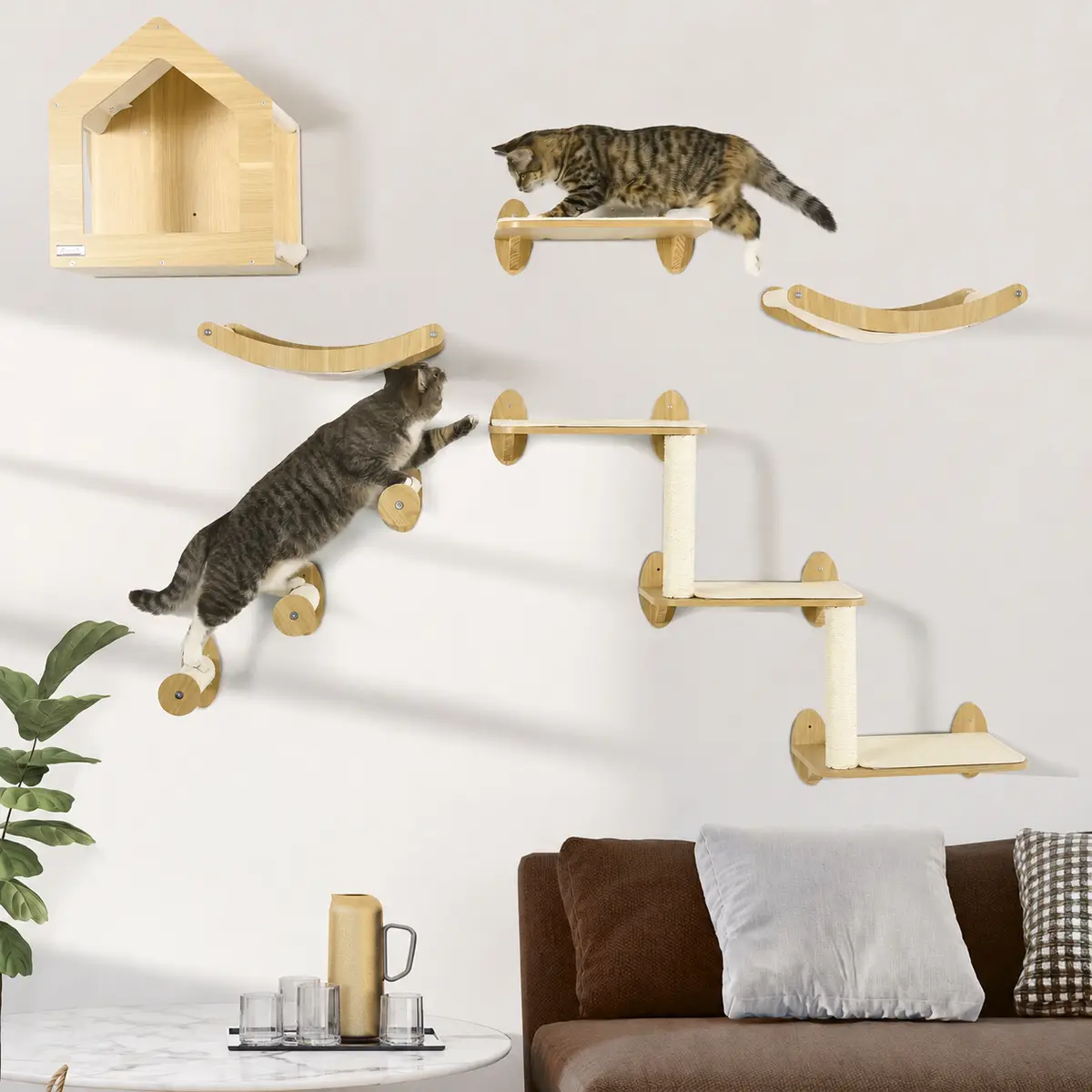
This page is the hub for cat furniture: wall-mounted cat shelves, climbing steps and hammock sets, cat houses built into nightstands and side tables, a bookshelf cabinet with cat spaces, multi-function scratchers, sisal towers with cubbies, indoor playpen enclosures and outdoor catios. It is for owners who want their cat to have height, hiding places and scratching spots that fit the way their home looks. For cat trees, see our cat tree pages.
What cats need from furniture
Cats think in three dimensions. They want high places to watch from, enclosed places to hide and sleep, and sturdy surfaces to scratch. A home that offers all three usually has fewer problems with cats scratching sofas, knocking things off counters or hiding under beds.
Good cat furniture gives those needs a place that suits you as well. The pieces on this page are chosen because they blend into a living room, bedroom or home office rather than sitting in the middle of the floor.
Wall-mounted shelves and climbing sets
Wall shelves, steps, jumping boards and hammocks turn an empty wall into a climbing route. Sets of four and eight pieces let you plan a path from the floor to a high perch, which is ideal in small apartments where floor space is tight.
Mount shelves into wall studs or with anchors rated for well above your cat's weight, because cats land hard. Space steps so your cat can reach each one comfortably, closer together for kittens and seniors, and add a non-slip surface on smooth boards.
Cat houses that double as furniture
Nightstands, side tables and wooden cat houses with a scratch-pad roof give a cat a hidden den inside a piece of furniture you would use anyway. A bookshelf cabinet with cat spaces mixes storage with cubbies. These suit cats who like to tuck away and owners who would rather not see a carpeted condo in the bedroom.
Check the opening size against your cat; large cats need a generous doorway and interior. Add a washable cushion inside to make the den more inviting.
Scratchers and sisal towers
Scratching is how cats maintain their claws, stretch and mark territory, so every home needs at least one good scratching surface. Sisal rope is the most durable and popular texture. Multi-function scratchers combine a scratching surface with a bed or a hidey hole.
Place scratchers next to where your cat sleeps and near furniture they already target, since cats like to scratch on waking and where they want to leave their scent. A tall post or tower must be heavy enough not to wobble.
Indoor enclosures and catios
Mesh playpens give an indoor cat a safe, roomy space for when you cannot supervise, or a place for a new cat to settle in. Outdoor catios let a cat enjoy fresh air, sunshine and birdwatching without the risks of roaming free.
For a catio, choose a waterproof cover, a secure latch and a place in partial shade. Bring your cat inside in very hot or cold weather, and always provide water. See our outdoor cat trees page for weatherproof towers.
Planning cat furniture in your home
Start where your cat already likes to be. A cat that sits on the windowsill wants a shelf or hammock by the window; a cat that hides under the bed wants a covered den. Give each cat in the home its own high spot, since cats prefer not to share their lookout.
Introduce new pieces with treats, catnip or a familiar blanket. If an older cat stops climbing or jumping to its favorite places, that can be a sign of joint pain, which is worth mentioning to your vet.
What is the best cat furniture for small apartments?
Wall-mounted shelves and climbing sets use vertical space without taking up floor, and cat houses that double as side tables save room.
How do I mount cat wall shelves safely?
Screw them into wall studs or use anchors rated well above your cat's weight, and check them regularly for loosening.
Do cats really use cat furniture?
Most do if it is placed where they already spend time and offers height, hiding or scratching. Introduce it with treats or catnip.
Are catios safe for cats?
A secure, covered catio lets cats enjoy the outdoors safely. Provide shade and water and bring your cat in during extreme weather.
How many scratching posts does a cat need?
At least one, and ideally one near where your cat sleeps and one near furniture it tends to scratch.