






Buying guides
Best Cooling Mat for Cats: How to Choose One Your Cat Will Use
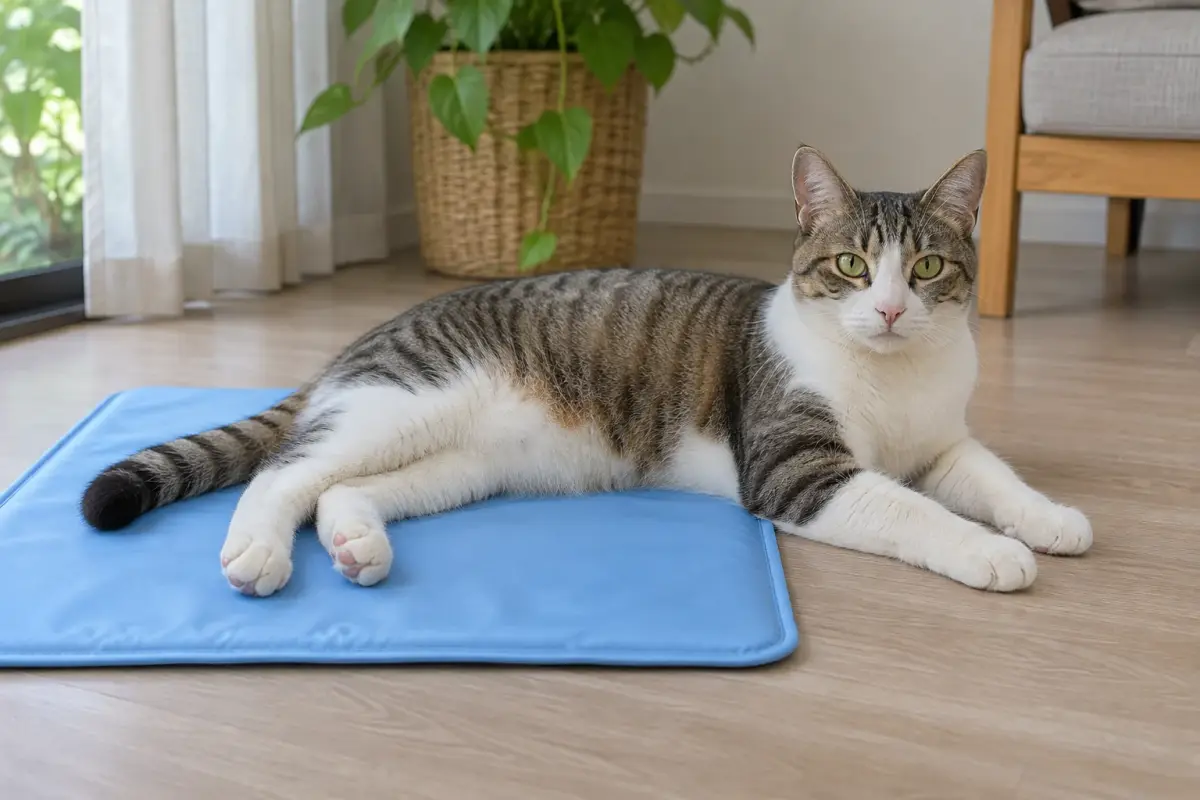
The best cooling surface for a cat is one it will actually lie on: a thin, quiet gel mat or a cool ceramic or stone tile placed where your cat already rests, or a raised mesh bed that lets air flow underneath. Cats are picky about textures, so placement matters as much as type. No mat replaces shade, water and a cool room.
By Matt GarnettUpdated November 13, 20263 min read2 sources
Do cats need a cooling mat?
Most healthy cats manage summer by finding cool spots: tile floors, bathtubs, shaded corners. A cooling mat simply gives them another option in rooms without a cool floor. It is most useful for long-haired, overweight, senior and flat-faced cats; the ASPCA notes that flat-faced breeds such as Persians are more prone to heat stroke because they cannot pant as effectively.
A mat is a comfort aid, not a safety system. The ASPCA advises plenty of fresh, clean water, shade and air conditioning in hot weather. Signs such as open-mouth breathing or panting, drooling, weakness or collapse in a cat are an emergency; move your cat somewhere cool and call your vet or an emergency vet immediately.
Cooling mat types compared
Pressure-activated gel mats feel cool when lain on and recharge when left alone. Choose a thin, quiet one, because many cats dislike crinkly surfaces, and check it has a tough cover that resists claws. Ceramic, granite or aluminum cooling plates stay cool naturally, have no filling to puncture, and many cats love them, though they are hard.
Raised mesh beds and hammocks let air flow under the cat. Cooling fabric beds and bamboo or linen mats feel cooler than plush, for example this breathable pet cooling mat. A damp towel on a tile floor, under supervision, is a simple alternative, and an ice-silk cooling pad for pets is a ready-made fabric option for cats that will not chew it. For cats that knead and claw, a plate or mesh bed is safer than gel.
The best type for each cat
For a Persian or other flat-faced cat, a cooling plate in an air-conditioned room. For a long-haired cat, a gel mat or plate plus regular brushing with a cat brush to remove dead undercoat. For a senior cat, a cooling surface with a soft edge or a low raised bed it can step onto easily.
For a kitten or a cat that chews and claws, skip gel and use a ceramic plate or mesh bed. For a multi-cat home, offer more than one cool spot so a shy cat is not pushed out.
Size and placement
Choose a mat big enough for your cat to stretch out, since hot cats lie flat and long. Most adult cats fit a mat around 16 by 20 inches; large breeds need more. Place it where your cat already naps on hot days, out of direct sun, which warms gel mats quickly.
Introduce it gently, sprinkling a little catnip or placing a familiar blanket nearby, and never force a cat onto it. Some cats ignore a mat for days and then claim it, so leave any new cooling cat bed out for a while.
Care, safety and lifespan
Wipe gel mats and plates with mild soap, and remove any gel mat that is punctured. If you think your cat has chewed gel, keep the packaging and call your vet. Check mesh beds for loose frames and torn fabric.
Keep fresh water in several places in summer, never leave a cat in a hot car or closed room, and keep blinds drawn in sunny rooms. Ask your vet how heat affects your cat if it is old, overweight or has heart or breathing problems.
This page is general information, not veterinary advice, and it cannot replace an examination by the vet who knows your pet.
Resting surfaces and cooling-pad construction
| Format | Physical construction | Inspection point |
|---|---|---|
| Gel mat | Gel inside a covered pad | Cover damage and exact operating directions |
| Ceramic,stone or metal plate | A hard surface without a soft filling | Edges and usable resting area |
| Raised mesh bed | Mesh supported above the floor | Mesh connections and frame rating |
| Fabric mat | Fabric laid as the resting surface | Material declaration and washing directions |
Common questions
Do cooling mats work for cats?
They can make resting more comfortable on hot days, especially for long-haired, older or flat-faced cats. They do not prevent heat stroke, so shade, water and a cool room still matter.
Are gel cooling mats safe for cats?
Generally yes, if the cover is tough and the mat is intact. Remove a punctured mat, and choose a ceramic plate or mesh bed for cats that claw or chew.
How do I get my cat to use a cooling mat?
Put it where your cat already rests on hot days, out of direct sun, with a familiar blanket nearby or a little catnip. Never force your cat onto it.
How can I keep my cat cool in summer?
Offer fresh water in several places, keep rooms shaded and air-conditioned, provide cool surfaces such as tile or a cooling mat, and brush long-haired cats regularly.
Sources we checked
This guide is general information, not veterinary advice. If your pet is unwell or injured, contact your veterinarian.


