






Buying guides
Best Cat Stairs for a Bed: How to Choose Safe, Stable Steps
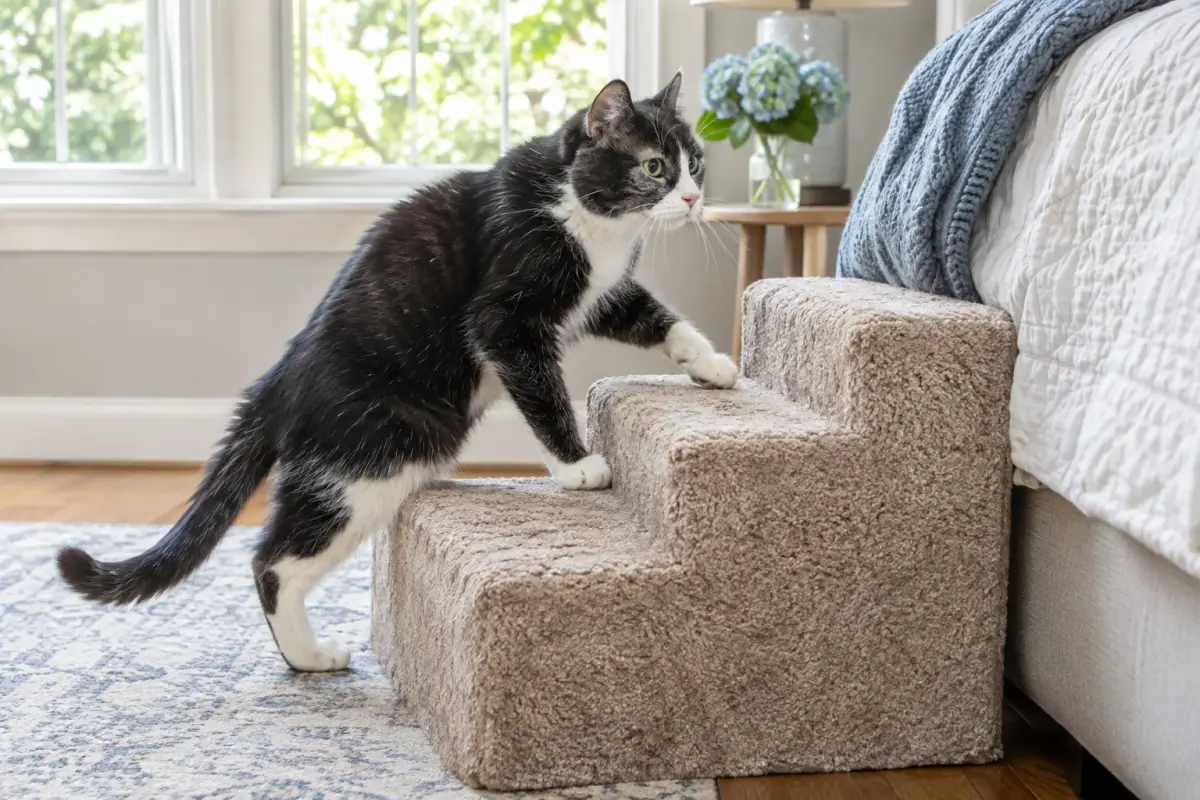
The best cat stairs for a bed are stable, carpeted or otherwise grippy, and built so each step is a small, easy hop rather than a leap. Measure from the floor to the top of your mattress first, then match the steps to that height. Cats with stiff joints need the gentlest rise of all. You can compare options in our cat steps.
By Matt GarnettUpdated November 14, 20264 min read2 sources
Why cats need steps to reach the bed
Most healthy cats can jump onto a bed without a thought, so steps are not for every household. They become useful when a cat hesitates, slides back down, or stops visiting a favorite sleeping spot. Cornell's Feline Health Center lists trouble reaching favorite places, avoiding a favorite resting spot and hiding instead among the signs of mobility trouble in older cats, and says arthritis becomes more common with age.
Steps also help kittens, small breeds and cats recovering from an illness, and they take strain off cats that would otherwise jump to a tall bed every night. If your cat has changed how it jumps, book a vet visit rather than assuming age is to blame. Steps can make life easier, but they do not replace finding out why the jump got harder.
Stairs, ramps or step stools: which type fits
Veterinary guidance names several options. VCA Animal Hospitals suggests stable step stools, ottomans, ramps or carpeted pet stairs so a cat can reach favorite spots such as windowsills and furniture. Stairs take less floor space than a ramp and suit a bed that is not very tall. A ramp has no steps at all, which some stiff cats find easier, but it needs a long run to stay gentle.
Many cat steps double as a scratching post or perch, which gives the furniture a second job. Our pet stairs with a scratch post and the pet stairs cat climbing tower are examples of that combined style. If you want something taller with more levels, a four-level cat step is built for a higher bed.
Matching step height to your bed
Start with a tape measure. Measure from the floor to the top of the mattress with the bedding on, in inches, and write it down. Then look at how many steps the stairs have and how tall each one is. The aim is for every step to be a small hop, with the top step close to the height of the mattress so your cat can walk across rather than scramble.
A tall bed with only two steps asks for a big jump at the end, which defeats the purpose. If the bed is higher than the stairs, choose a taller model or add a step stool at the base. A cat tree with four steps for high beds shows the multi-step style made for that situation. Check the stated dimensions on any product page against your own measurement before buying.
Traction, stability and width
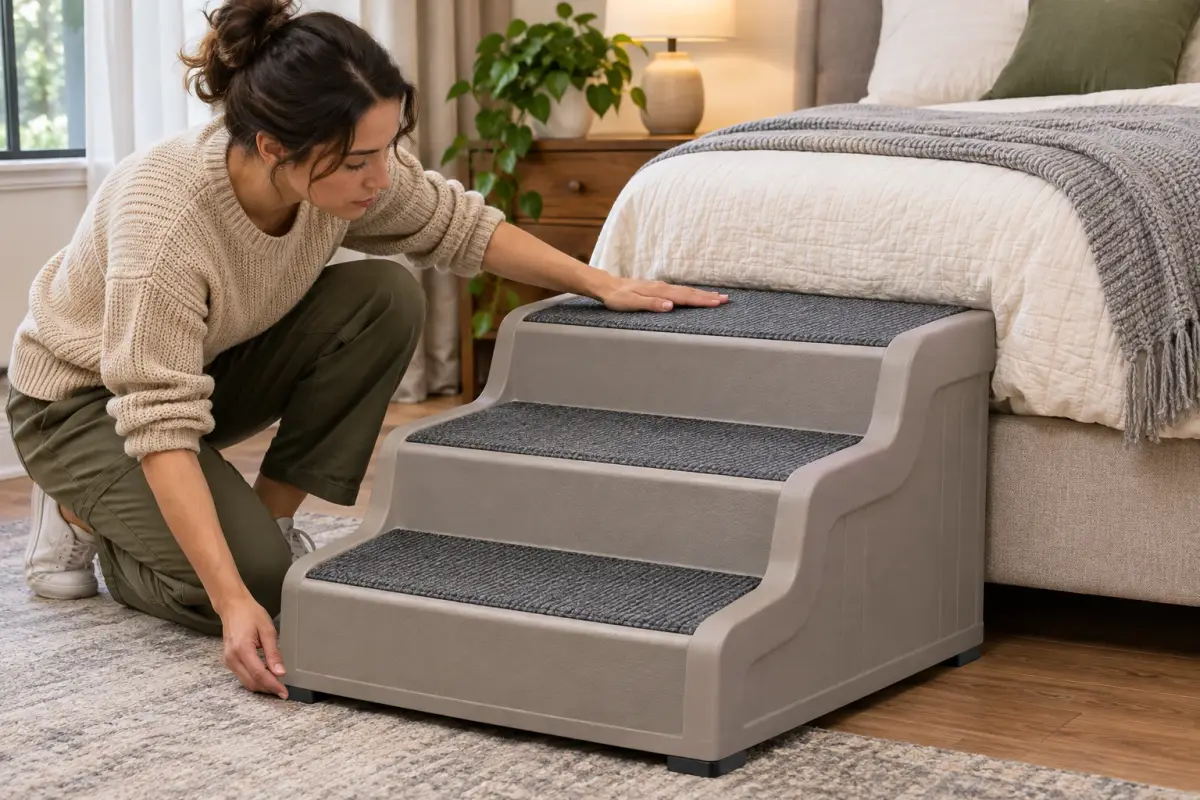
Slippery treads are the biggest hazard. Cornell advises covering steps or ramps with carpet to prevent slipping, and VCA recommends non-skid rugs, yoga mats or carpet runners on slippery floors. Look for treads with a soft, textured surface, or add a stick-on carpet strip yourself, and put the stairs on a mat if your floors are hard and smooth.
Stability matters just as much. A wobbly staircase teaches a cat to distrust it. Press down on each step and push the frame from the side before you let your cat try it. Make sure the stairs sit flat against the bed frame so they do not slide away at the top. Wide treads let a cat turn around and are kinder to a large or older cat than narrow ones.
Best choice for kittens, seniors and big cats
For a kitten, any low, stable stairs with a textured surface will do, and you can pick a simple design. For a senior or arthritic cat, the lowest rise and the widest steps are worth the extra footprint, and a ramp is worth considering. VCA also suggests low-sided litter boxes and a box on each floor to cut down on climbing, which fits alongside steps by the bed.
For a large cat, check the maker's stated weight limit against your cat's weight and choose a sturdier frame over a decorative one. For several cats, choose stairs wide enough for two to pass, or put one set on each side of the bed. A warm, supportive cat bed at the top of the climb gives your cat a reason to make the trip.
Introducing steps and when to see the vet
Place the stairs beside the bed and leave them there for a few days. Sprinkle a little of the cat's favorite treat on the lower steps, then on higher ones, and let your cat decide the pace. Never pick the cat up and place it on the steps, since a bad first experience can put it off for good. Be patient, because some cats take a week or more to trust a new piece of furniture.
If your cat still will not use the stairs, or has begun missing the litter box, hiding, or crying when it moves, see your vet promptly. Arthritis and other painful conditions are common and treatable, and early care helps. This page is general information, not veterinary advice, and it cannot replace an examination by the vet who knows your pet.
Common questions
How tall should cat stairs be for a bed?
Measure from the floor to the top of your mattress in inches, then choose stairs whose top step sits close to that height. Each step should be a small hop, so a tall bed needs more steps.
Are ramps better than stairs for older cats?
Some stiff cats find a ramp easier because there are no steps to lift each paw over, but a ramp needs a long, gentle run. Either way, cover it with carpet or a grippy surface.
How do I get my cat to use stairs?
Set the stairs beside the bed and leave them for a few days. Reward your cat with a treat on the lower steps first, then higher, and never force it onto them.
Do cats really need steps to get on a bed?
Healthy young cats usually do not. Steps help kittens, small cats and seniors, or any cat that hesitates, slips or has stopped using a favorite spot. A vet can check for pain.
Sources we checked
This guide is general information, not veterinary advice. If your pet is unwell or injured, contact your veterinarian.


