







Dogs
Cave dog beds
Cozy spots for long naps.
12 items picked for everyday life with your pet, with shipping estimates on every item.
 Their favorite place in the house.
All dogs beds & furniture →Dog crates →Dog blankets →Elevated dog beds →Dog couches & sofa beds →Dog cooling mats →Dog beds →Orthopedic dog beds →Dog houses →Dog mattresses →Donut dog beds →Dog couch covers →Dog crate beds →
↗Tracked US shippingEstimates on every item↶Returns & refundsHow it works♡Here to helpTalk to Giddy Pets
All cave dog beds
Little essentials. Lots of love.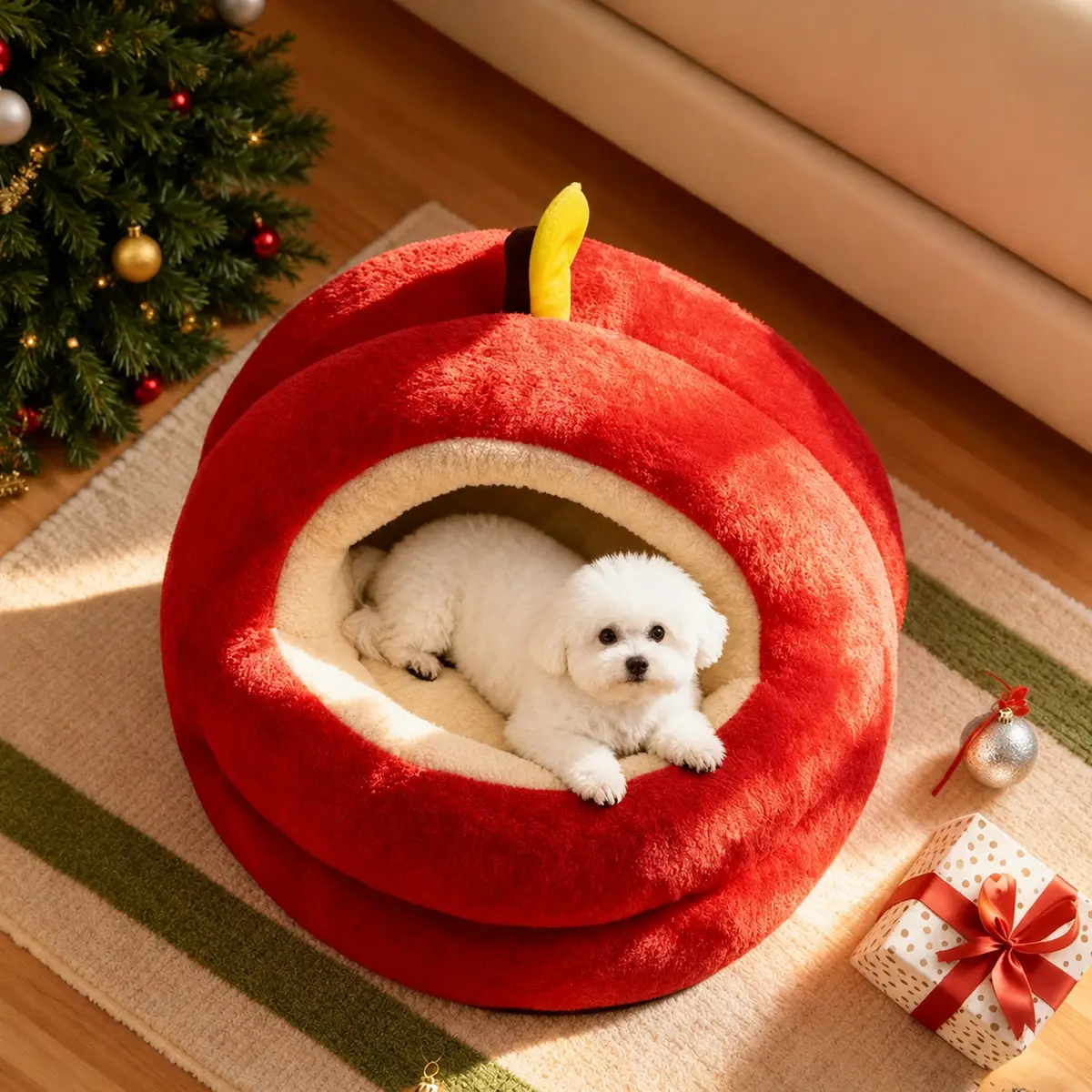





Cat cave beds
Shark-Shaped Pet Cave with Plush Body and Padded Base
- Options
- 6 to choose from
From $32.99
A little guidance
Help choosing cave dog beds
Buying guides and care advice written for this range: what to measure, what matters and what to skip.
From our guides
- Best Dog Cave Beds: What Actually Matters →
- Best Bedding for Guinea Pigs: What Is Safe and Easy to Clean →
- Best Bolster Dog Beds: What Actually Matters →
- Best Calming Dog Bed: What Helps an Anxious Dog Settle →
- Best Dog Bed Covers: What to Look for Before You Buy →
- Best Dog Bed for Chewers: How to Choose a Chew-Resistant Bed →
This page holds covered beds for dogs who like to burrow: plush cave beds with a hooded top, mushroom and apple-shaped caves, an enclosed igloo pet house, a covered cave bed for small dogs and cats, and an extra large indoor dog house bed with memory foam. It is for dogs who dig under blankets, sleep tucked into the back of the couch or feel the cold, and for shy dogs who want a den.
Why some dogs love caves
Many dogs like to sleep with something over them. Terriers, Dachshunds and other breeds developed to go to ground often burrow under blankets by instinct, and small, short-coated dogs like Chihuahuas and Italian Greyhounds burrow to keep warm. A cave bed gives them that covered nest without stealing your duvet.
Covered beds also feel safe. Shy, anxious and rescue dogs often settle better in a den where they can see out but feel hidden, especially in busy homes.
Styles in this range
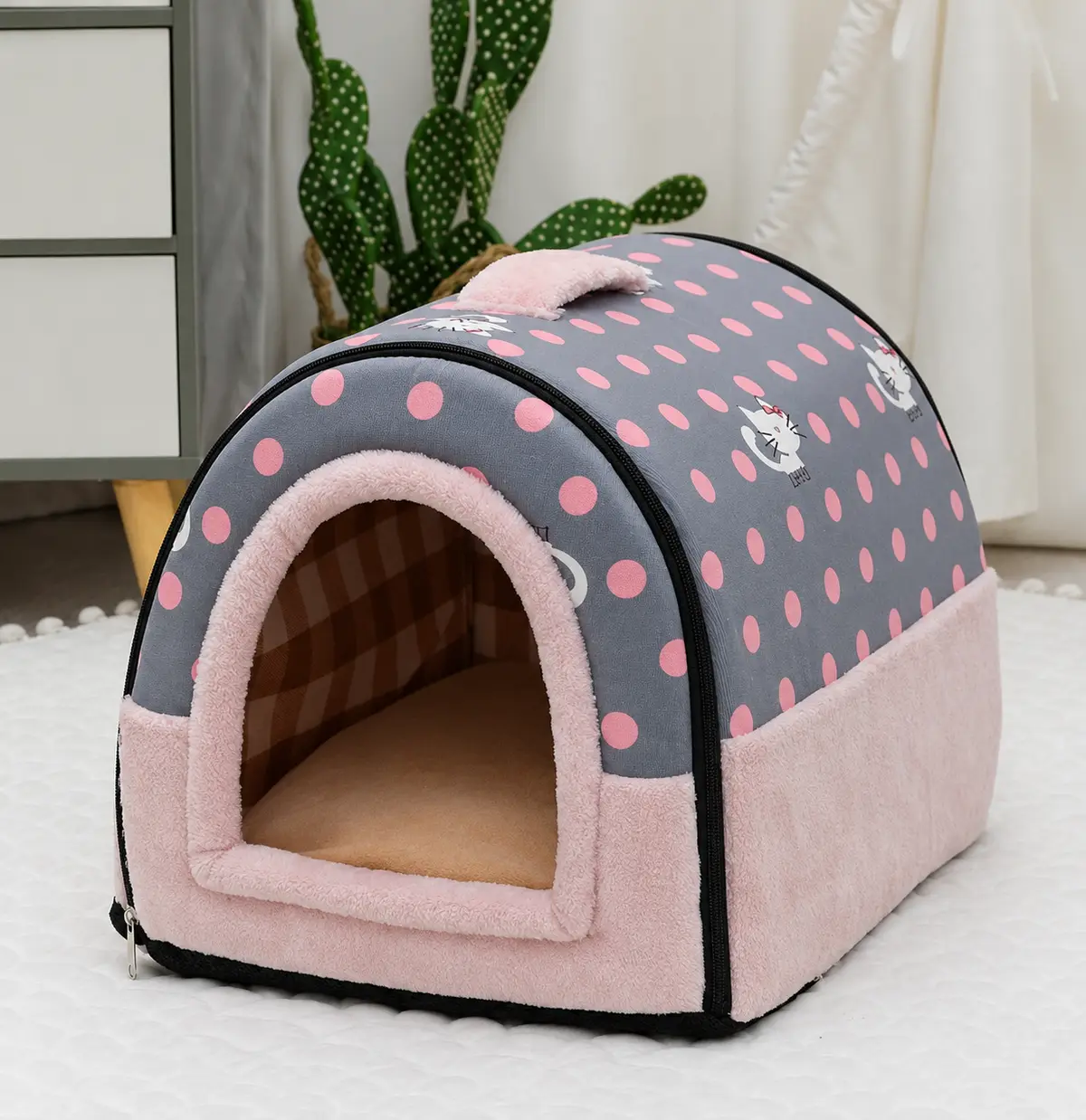
Plush cave beds have a soft cushion base and a hooded top that folds over to form a pocket. Mushroom and apple-shaped caves have a fixed roof and a round doorway, giving a cozy enclosed room. An igloo house is fully enclosed and works well for small dogs and cats who like to hide.
The extra large dog house bed has a memory foam base under a house-shaped cover. It suits bigger dogs who still want a den, and the foam supports joints.
Choosing the size
Measure your dog curled up asleep and add a few inches. A cave should be snug enough to feel enclosed but big enough that your dog can turn around and settle without squashing the roof. Check the doorway too; your dog should walk in with the head lowered slightly, not squeeze.
Most cave beds are made for small and medium dogs. For a large dog, look at the extra large house bed and its interior dimensions.
Warmth and comfort
Cave beds trap body heat, which is ideal in cold homes and winter, and for seniors and short-coated dogs who feel the cold. In hot weather, the same design can get too warm, so fold back a hooded top or offer an open bed as well, and let your dog choose.
Never cover a cave bed with extra blankets that block the air flow, and watch flat-faced breeds, which overheat more easily, for heavy panting.
Cleaning
Choose a bed with a removable, machine-washable cover where possible, and wash it every week or two. Hair and dander collect inside a covered bed more than an open one. Shake the bed out outdoors between washes.
If the roof loses its shape after washing, reshape it while damp and air dry. A foam base should be spot cleaned and aired rather than soaked.
Introducing a cave bed
Put the bed where your dog already likes to sleep and add a familiar blanket or T-shirt. Toss a treat or a favorite toy inside. Most burrowers move in within a day; others take a week.
If your dog has suddenly started hiding or burrowing much more than usual, along with being off food, shaking or reluctant to move, mention it to your vet, since it can be a sign of pain or illness.
Cave beds for puppies and crates
A small cave bed gives a new puppy a den that feels like the litter. Put it in a quiet corner or inside a large crate, add a blanket that smells of home, and the puppy has one safe place to retreat to while it settles in.
Check the cushion and cover for loose threads and seams a teething puppy can chew, and choose a bed with a washable cover, since puppies have accidents. If your puppy starts chewing the bed, swap it for a sturdier pad until the teething stage passes.
Covered-bed openings and shells
| Format | Physical arrangement | Measure separately |
|---|---|---|
| Fold-over hood | A soft top creates a pocket above a cushion | Opening and usable resting area |
| Fixed shaped roof | A roof surrounding a round doorway | Doorway and internal floor |
| Igloo | An enclosed body with an entrance | Entrance height and width |
| House-shaped cover | A taller cover over a base | Inside space and base thickness |
Do dogs like cave beds?
Many do, especially burrowing breeds like Dachshunds and terriers, small short-coated dogs and shy dogs that like a den.
What size cave bed does my dog need?
Measure your dog curled up and add a few inches. Your dog should turn around inside and walk through the door easily.
Are cave beds too hot for dogs in summer?
They can be. Fold back the hood or offer an open bed too, and let your dog choose where to sleep.
Are cave dog beds safe?
Yes, as long as air can flow freely. Do not pile blankets over the opening, and watch flat-faced breeds for overheating.
Can cats use dog cave beds?
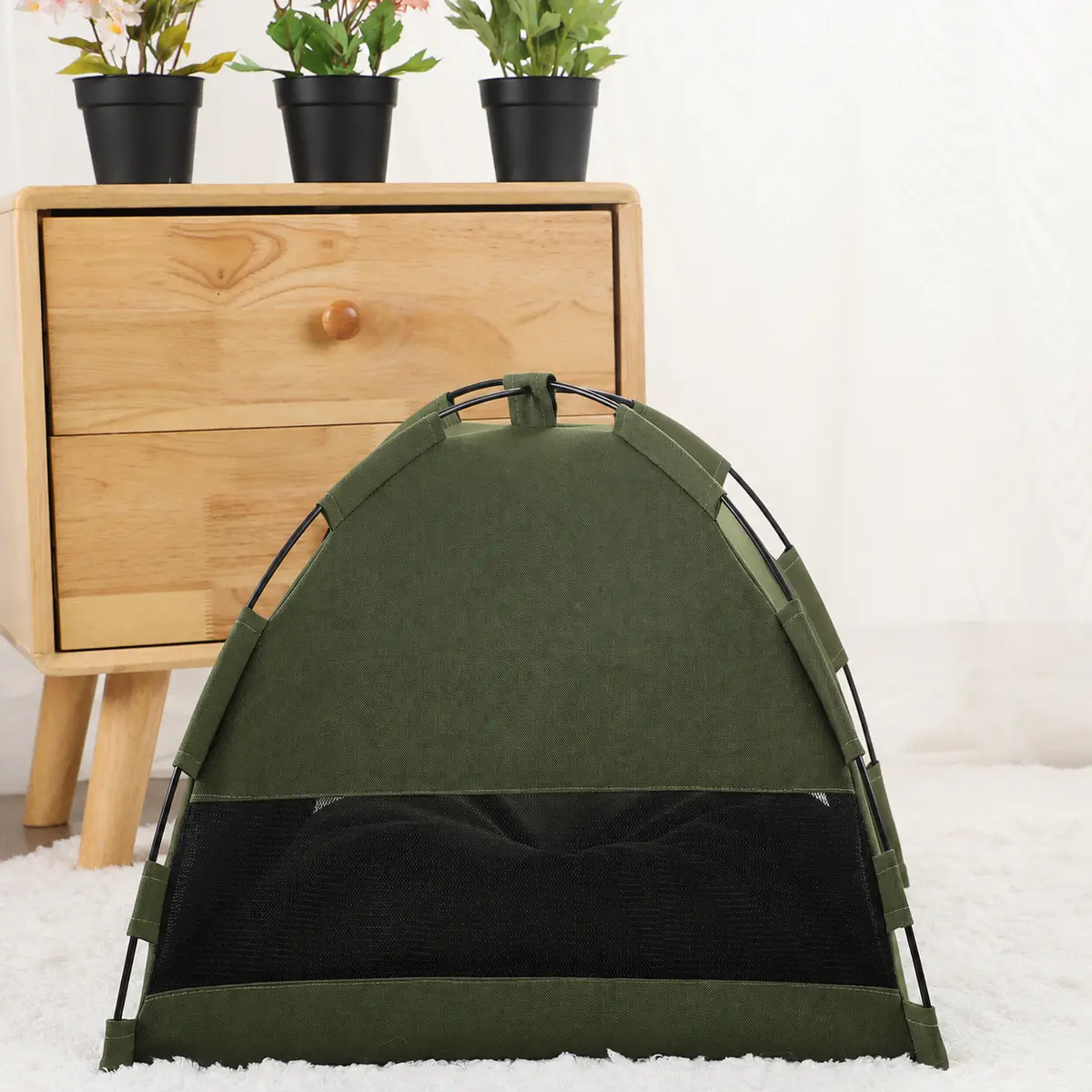
Yes, small cave and igloo beds suit cats and small dogs, and many cats love an enclosed bed.