Buying guides
Best Dog Cave Beds: What Actually Matters
A good dog cave bed matches your dog's size, sleeping style and chewing habits. Three things decide it: enough room to turn and stretch inside the hood, a washable fabric that suits your dog's temperature, and a build your dog cannot shred. Browse our cave dog beds with those three checks in mind.
By Matt GarnettUpdated November 13, 20264 min read2 sources
Why some dogs love a cave bed
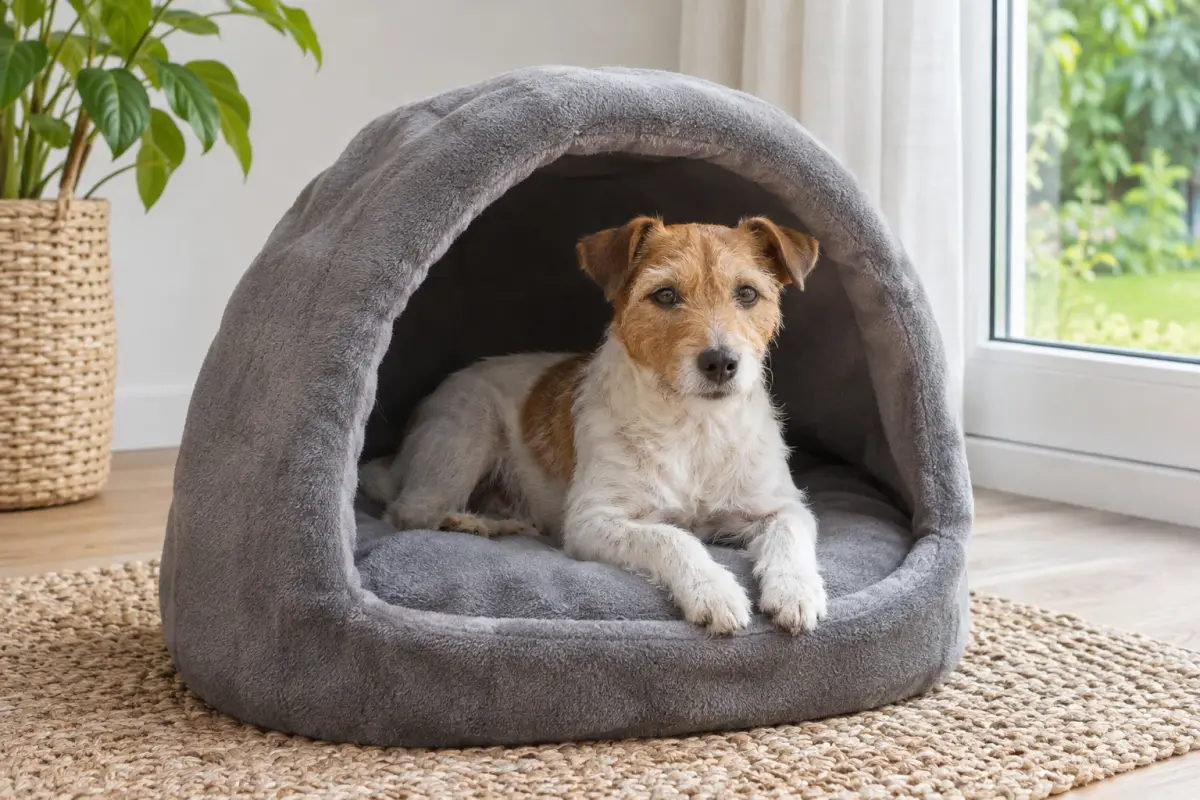
The AKC says dogs may be drawn to enclosed spaces because their ancestors slept in burrows, and that a dark, cozy spot under a blanket can mimic the feeling of a natural den. A hooded or cave-style bed gives that same sheltered feeling without sharing your covers, which is why many burrowing dogs take to one quickly.
Feeling hidden can also feel safe. The AKC notes that covers can make a dog feel hidden from danger, and that an anxious dog may hide during storms or fireworks. A cave bed is not a treatment for fear, but it can give a worried dog a predictable retreat while you work on building confidence.
Which dogs suit a cave bed, and which do not
Cave beds tend to suit small and medium dogs that burrow, nest or like warmth, including short-coated dogs that feel the cold. The AKC notes that burrowing breeds may enjoy a blanket as an outlet, which can also protect couches and bedding from scratching. Many cats and small dogs will happily share the same style.
They are a poor match for some dogs. Dogs prone to overheating may find a fully enclosed bed too warm, and the AKC warns that under heavy covers a dog may struggle to breathe or overheat. Dogs that chew their bedding should not have a bed with a loose hood, since swallowed fabric can cause choking or an intestinal blockage.
Size, opening and structure
Measure your dog curled up and stretched out, then compare both with the bed's inside dimensions, not just the label. The dog should be able to turn around, lie in a natural position and move in and out without squeezing. If your dog sleeps stretched out, pick a larger bed or an open-sided style. An extra-large cave-style dog bed is an example of a design made for bigger dogs.
A hood that holds its shape lets your dog see out and keeps air moving. A hood that collapses on the dog can feel like being trapped. Look at the opening height and whether the sides are supported, and check that the base is thick enough to stay put on a hard floor.
Types compared
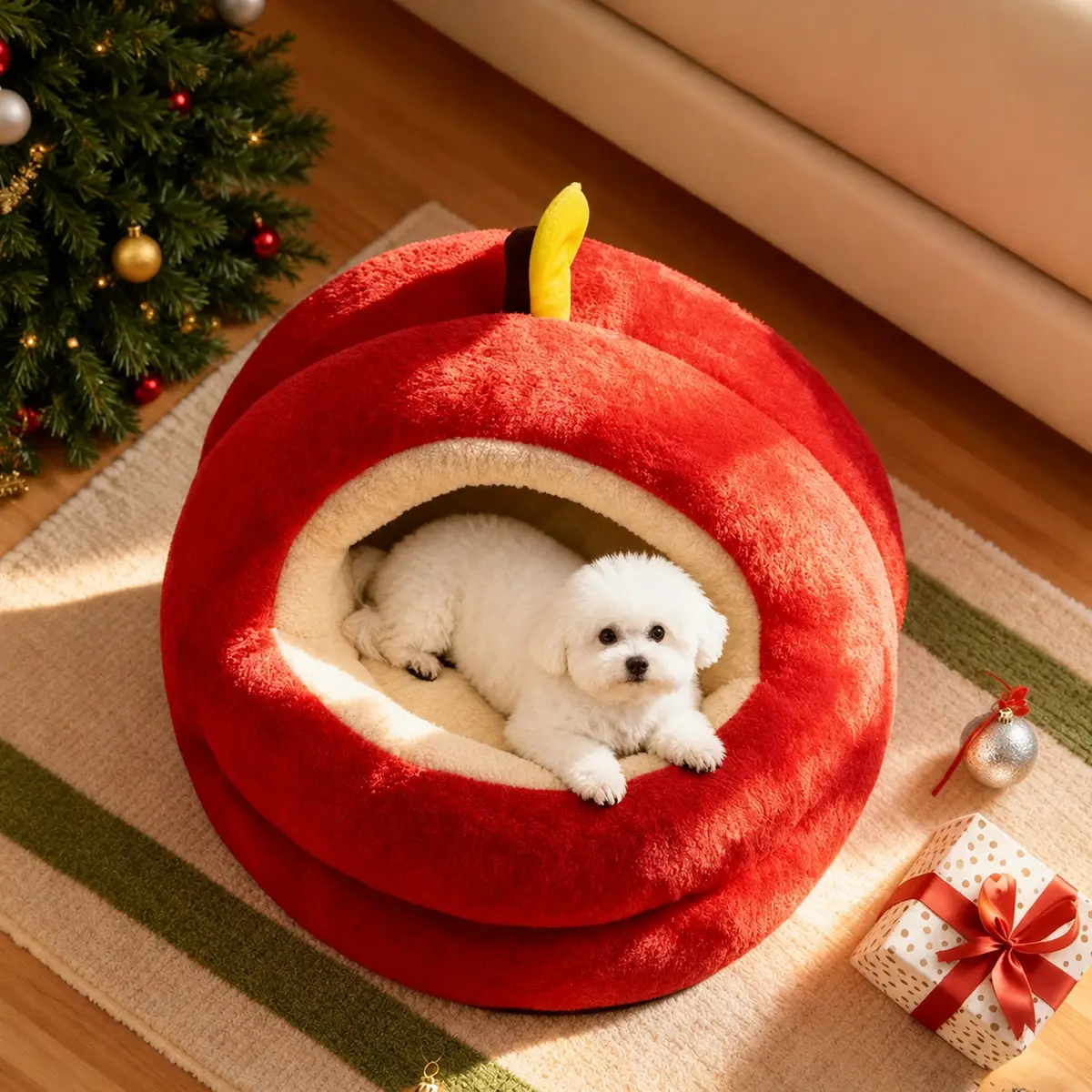
A hooded plush bed has a sewn-in cover and suits dogs that like to burrow. A cozy cave pet bed and an apple-shaped cave bed are examples of this soft, enclosed style. A tent-style bed with a frame and an open front gives more airflow and visibility, as in a winter tent-style pet bed.
A bolstered or open-sided bed suits dogs that run warm or want a clear view. For senior dogs or dogs with sore joints, the AKC mentions orthopedic beds as an alternative when a dog does not like blankets or chews them, so a cave bed is not always the best fit. Check the entry height for older dogs.
Fabric, warmth and washing
The AKC advises choosing fabric you can machine-wash and letting bedding dry completely, since damp bedding can grow mold and mildew. Light, breathable fabric suits dogs prone to overheating, while thick fleece suits cold or sore-jointed dogs. Choose a removable, washable cover so you can clean it easily.
Avoid loose knits, which snag on nails and teeth, and avoid tassels and fringes that invite chewing. Only run a heated bed or blanket under supervision, and replace torn or holey bedding right away so your dog cannot get tangled.
What to avoid and when to see a vet
Skip beds with small decorations, toggles or loose stuffing, and do not use heavy covers or tightly tucked fabric that could trap a dog. If your dog chews or sucks on bedding, the AKC suggests a different style, since this can be a stress response. See your vet if chewing or hiding is new, or if your dog seems fearful or uncomfortable.
Browse calming dog beds if your main goal is a settled retreat, and come back to our cave dog beds once you know your dog's size and habits. This page is general information, not veterinary advice, and it cannot replace an examination by the vet who knows your pet.
Covered and open bed layouts
| Layout | Body construction | Space to check |
|---|---|---|
| Hooded plush | A sewn-in fabric cover over the bed | Entrance and usable interior |
| Tent-style | A frame around an open-front resting area | Frame clearance and opening |
| Bolstered or open-sided | Raised edges without a roof | Usable center and entry edge |
| Foam alternative | An open support surface | Actual material and usable dimensions |
Common questions
Do dogs like cave beds?
Many do, especially dogs that burrow, nest or like warmth. The AKC links this to a denning instinct, so a hooded bed can feel like a safe den, but not every dog enjoys being enclosed.
What size cave bed should I buy for my dog?
Measure your dog curled and stretched out and compare with the bed's inside dimensions. Your dog should be able to turn around and lie naturally, so size up if you are between sizes.
Are cave beds safe for dogs that chew?
Be careful. Swallowed fabric can cause choking or an intestinal blockage, so remove the bed if your dog is eating it. A different style, such as an orthopedic bed, may suit chewers better.
Can a cave bed help an anxious dog?
It can give a worried dog a sheltered place to retreat, but it does not treat anxiety. If fear is severe or new, see your vet, who can check for medical causes and suggest next steps.
How do I wash a dog cave bed?
Follow the maker's instructions, use a gentle pet-friendly detergent and let the bed dry completely, because damp bedding can grow mold and mildew. A removable cover makes this much easier.
Sources we checked
This guide is general information, not veterinary advice. If your pet is unwell or injured, contact your veterinarian.