Health & vet care
Why Does My Cat Throw Up After Eating?
A cat that throws up right after eating may be regurgitating food that never reached the stomach, bringing up a hairball, or reacting to something more serious. One occasional episode in a bright, hungry cat is often minor. Repeated vomiting, vomiting with lethargy or blood, or any episode after a suspected toxin needs a vet. Read on to tell the types apart.
By Matt GarnettUpdated November 14, 20265 min read3 sources
What it usually means
When a cat brings up food soon after a meal, there are a few common explanations. It may be regurgitation, where food comes back up before reaching the stomach. It may be true vomiting, which comes from the stomach or beyond. Or it may be a hairball, since VCA says cats swallow hair while grooming and vomit hairballs from time to time.
Eating very quickly is a commonly suggested explanation when a meal reappears soon after it goes down, but it is not the only one, and none of the veterinary pages reviewed for this article single it out. Because the same-looking mess can come from a minor habit or a medical problem, how often it happens and what else you see matter more than guessing the cause.
Vomiting or regurgitation?
VCA says vomiting typically involves abdominal contractions and effort, while regurgitation typically happens quickly, without those contractions, and is usually associated with problems affecting the esophagus. Merck describes regurgitation as a passive motion that does not require effort, and says the material is typically undigested and may be tube-shaped.
Watch what happens next time if you can do so safely. A cat that heaves, drools or retches first is vomiting. A cat that simply lowers its head and the food slides out, sometimes just after eating or drinking, is regurgitating. Tell your vet which you saw, because it points them toward different causes, and a short phone video can help.
When to call your vet today
Cornell Feline Health Center says a cat that vomits more often than once a week should be seen, and VCA says that a cat that otherwise seems well but keeps vomiting for more than one to two days needs veterinary care. Merck says to consult your vet if vomiting happens more often than once or twice daily or comes with other signs.
Call the same day if the episodes are becoming regular, if your cat is eating less, losing weight or drinking more, or if it brings up food again and again after meals. VCA also says a cat that vomits hairballs more than once a month should be checked, so frequent hairball-style vomiting is worth a call too.
When it is an emergency
VCA says to seek veterinary care immediately if your cat is vomiting and has lethargy, blood in the vomit, or you suspect it swallowed a foreign object or a toxin. Cornell lists weakness, decreased appetite and blood in the vomit as reasons for prompt evaluation. Do not wait to see whether it passes.
If you think your cat has eaten something poisonous, call your vet or an emergency clinic right away. You can also call ASPCA Animal Poison Control at (888) 426-4435 or Pet Poison Helpline at (855) 764-7661 (a fee may apply). Take the packaging or a photo of what your cat ate with you.
What you can safely do at home
If your cat is bright, has no red flags and the episode was a one-off, keep fresh water available at all times and watch closely. VCA's advice for a cat that vomits but is otherwise well is a bland, easily digested diet given in small portions frequently, with no other food in the meantime, but ask your vet before changing anything, especially for kittens, seniors or cats with health problems.
Do not give human medicines or home remedies, because many are dangerous to cats. Keep a note of when each episode happens, how long after eating, what it looks like and what your cat ate, because those details help your vet. Remove any chance of your cat swallowing string, plants or small items while you work out the cause.
What your vet will likely check
Your vet will ask about timing, whether it looks like vomiting or regurgitation, diet, hairballs, and anything your cat could have swallowed. They will examine your cat and may recommend tests. Merck lists causes of vomiting that include digestive disease, kidney or liver failure, pancreatitis, parasites, infections, drugs, foreign objects, food allergy and tumors.
If regurgitation is the pattern, VCA says it is usually tied to esophagus problems, so the work-up may focus there. Treatment depends entirely on the cause, which is why an examination is better than trial and error at home.
Prevention and feeding setup
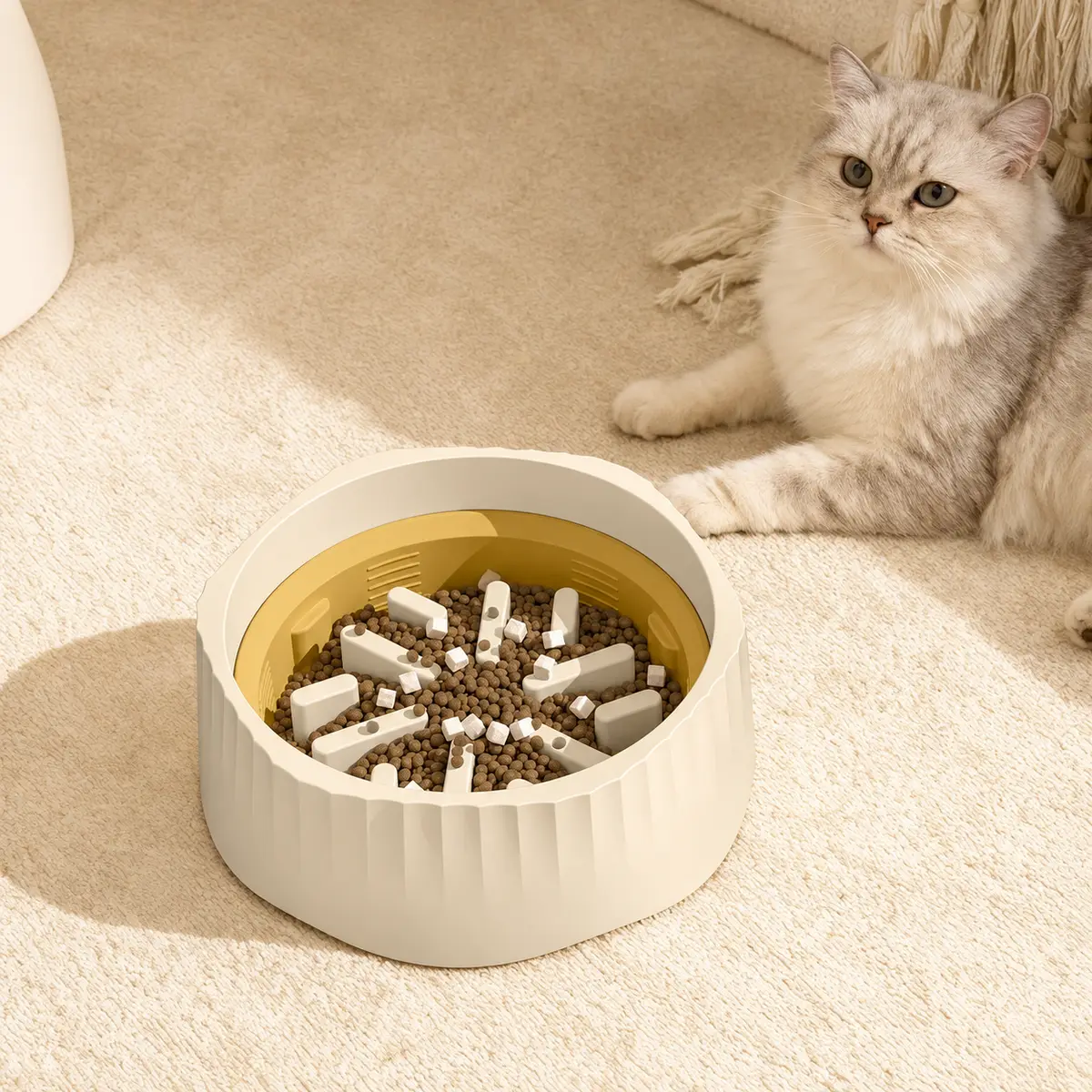
Regular brushing helps with hairballs, and Merck notes that longhaired breeds are at greater risk. Offer meals at consistent times and keep the bowl area calm. If your vet agrees your cat is simply eating too fast, a slow feeder for cats is one way to change the pace, but it will not treat an underlying illness.
Our guide to choosing cat bowls covers bowl width and depth. If your cat is also not eating well, read why a cat is not eating, and for general vomiting advice see why a cat is throwing up. Once your vet has ruled out illness, you can browse our slow-eating cat bowls.
This page is general information, not veterinary advice, and it cannot replace an examination by the vet who knows your pet.
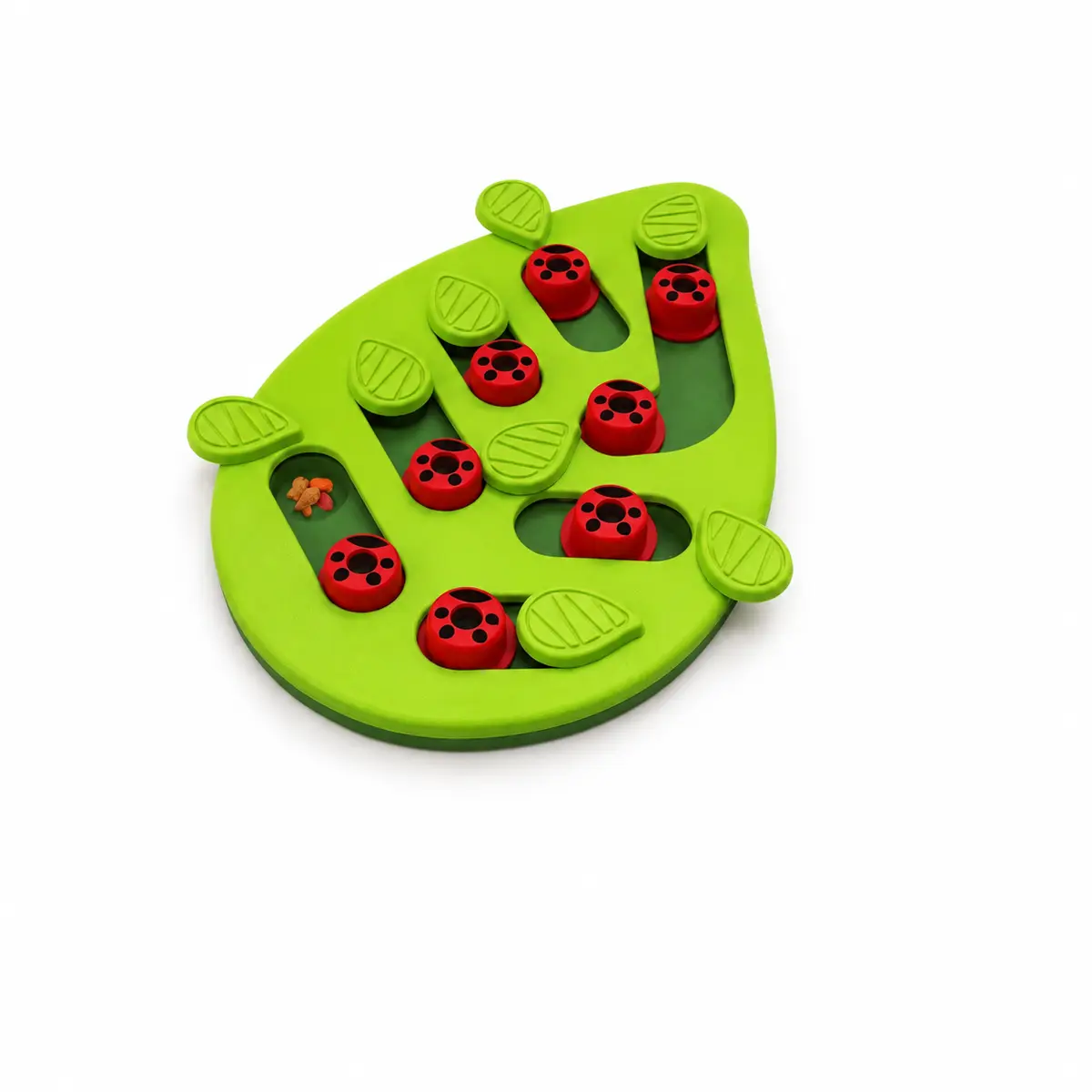
Splitting the daily ration into smaller meals with an automatic cat feeder, or using a puzzle feeder, can slow a cat that gulps its food.
Common questions
Is it normal for a cat to throw up after eating?
An occasional episode in an otherwise bright cat can be minor, but regular vomiting is not normal. Cornell says a cat that vomits more than once a week should be seen by a vet.
Why does my cat throw up undigested food?
Undigested food that comes up quickly without retching is usually regurgitation, which VCA links to problems affecting the esophagus. Tell your vet what you saw, since it points to different causes than true vomiting.
Can a hairball make my cat throw up after eating?
Yes, cats swallow hair while grooming and vomit hairballs from time to time, according to VCA. If it happens more than once a month, VCA says to contact your vet.
How long should I wait before calling the vet?
Do not wait if your cat is lethargic, vomits blood or may have swallowed a toxin. Otherwise VCA says a cat that keeps vomiting for more than one to two days needs veterinary care.
Sources we checked
This guide is general information, not veterinary advice. If your pet is unwell or injured, contact your veterinarian.