






Buying guides
Best Cat Bowls: How to Choose Food and Water Dishes for Your Cat
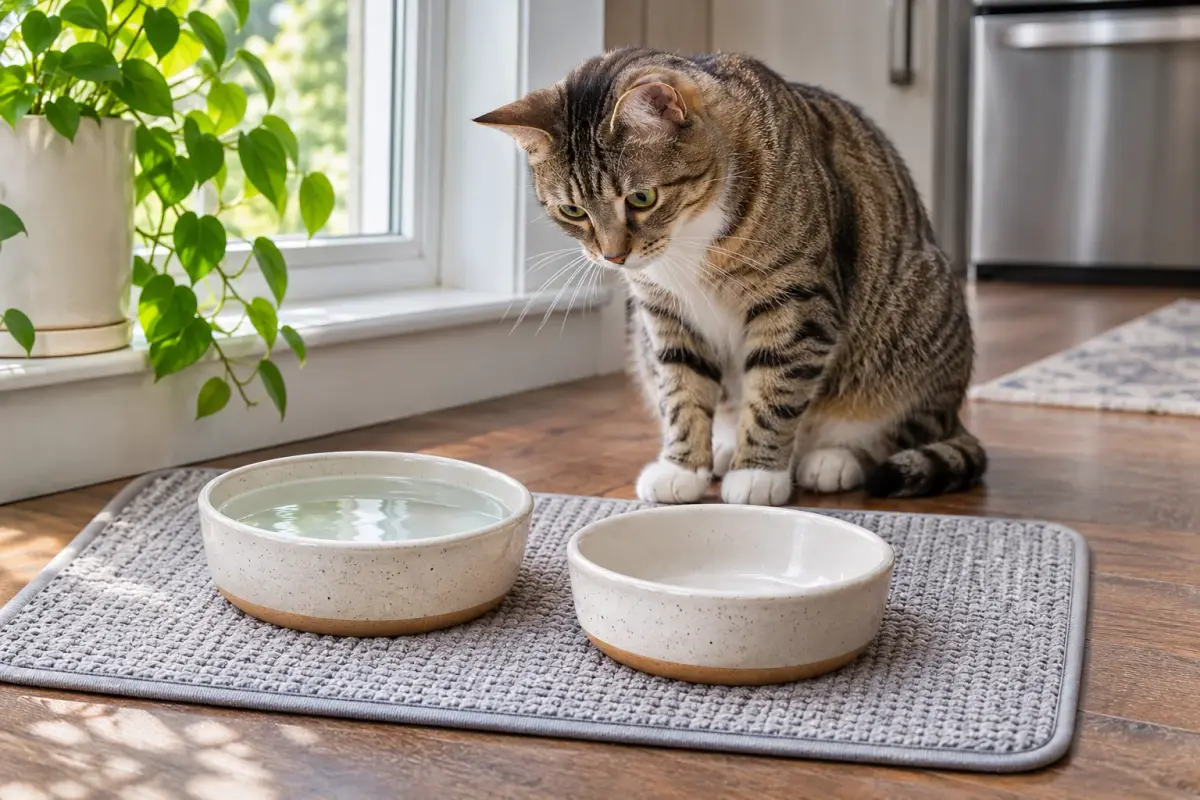
The best cat bowl is wide, shallow and easy to clean. A wide dish lets your cat eat without its whiskers brushing the sides, a shallow one suits a flat face, and stainless steel or glazed ceramic resists scratches that hold bacteria. Water bowls should be wider still and kept away from food. Raised bowls and slow feeders help some cats, but they are add-ons to those basics.
By Matt GarnettUpdated November 14, 20264 min read2 sources
What matters most: width and depth
Cats' whiskers are sensitive, and many cats dislike deep, narrow cat bowls that press on them. PetMD notes Maine Coons, which have the longest whiskers of any domestic breed, prefer extra-wide food and water bowls. A cat that scoops food out onto the floor, eats only the middle, or hesitates at the bowl may be telling you it is too narrow.
As a guide, choose food dishes at least 5 to 6 inches across and no more than about 1.5 inches deep, and water bowls wider still. Flat-faced breeds such as Persians do best with very shallow dishes or plates.
Materials compared
Stainless steel is durable, dishwasher safe and does not scratch easily, which makes it the most hygienic everyday choice. Glazed ceramic is heavy and stable, so it does not slide, and looks good; replace it if it chips or cracks, as cracks hold bacteria. Glass is easy to clean but breakable.
Plastic bowls are light and cheap but scratch, and scratches harbor bacteria; some cats develop chin acne that improves when plastic bowls are replaced. Silicone and melamine sit in between. For most cats, steel or ceramic is the better long-term buy.
Raised bowls and slow feeders
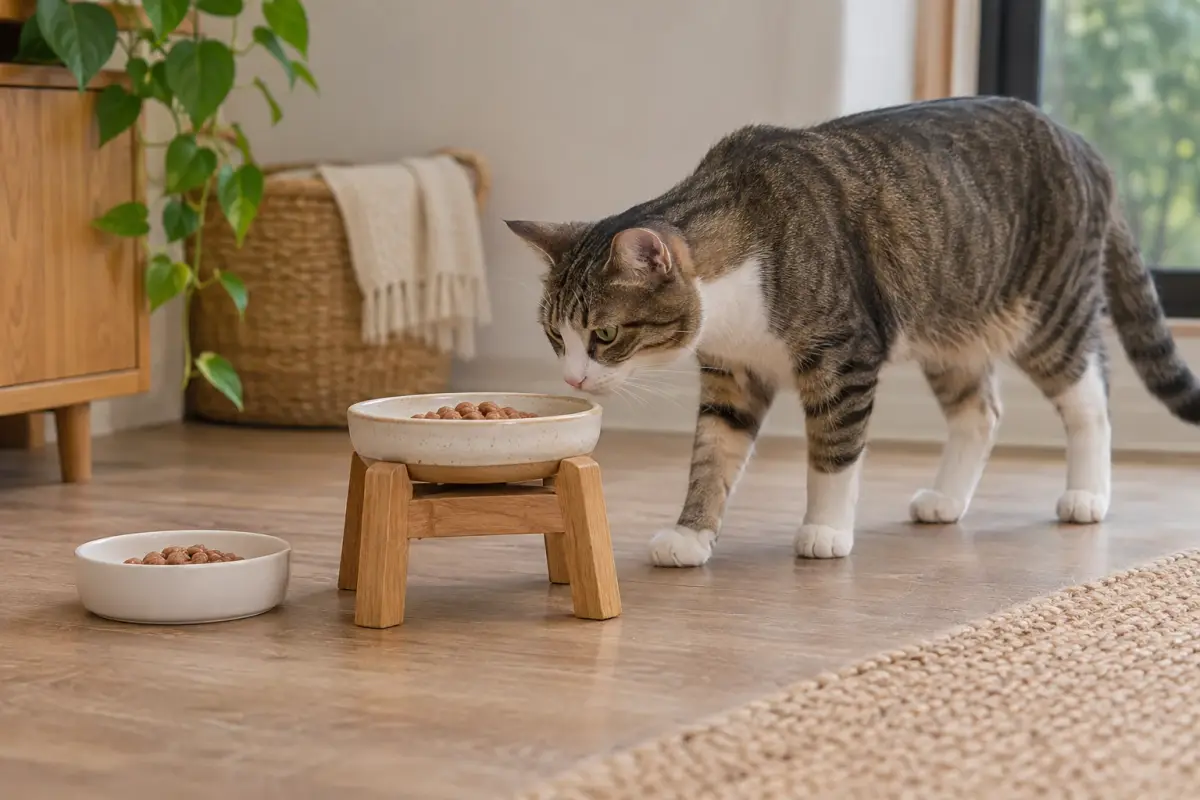
Raised or tilted bowls lift the dish a few inches so the cat does not need to crouch as low. They can be more comfortable for older cats with stiff necks or joints and for large cats, and the tilt helps flat-faced cats reach food. They are not necessary for every cat.
Slow feeders and puzzle feeders use ridges or compartments to make a cat work for each bite, which helps fast eaters that vomit after meals and adds enrichment for indoor cats. Choose one shallow enough that whiskers are not squashed, and introduce it alongside a regular bowl at first.
Best type for each cat
For most adult cats, a wide, shallow steel or ceramic food dish and a separate wide water bowl. For flat-faced breeds, a tilted, very shallow dish. For large cats, an extra-wide bowl and heavy base. For senior cats, a slightly raised bowl, with food and water available in more than one place, as Cornell suggests for older cats.
For fast eaters, a shallow slow feeder. For multi-cat homes, a bowl for each cat, spaced apart, since many cats prefer not to eat side by side. For cats that drink little, wide bowls in several places, or a fountain, may encourage more drinking.
What to avoid
Avoid deep, narrow bowls, double bowls that put water right next to food, and bowls so light they slide across the floor. Avoid scratched plastic and chipped ceramic. Avoid leaving wet food out for many hours, especially in warm weather.
Avoid assuming a reluctance to eat is fussiness. A cat that stops eating for more than a day, eats much less, or drinks much more than usual should see a vet promptly, because these can be early signs of illness.
Cleaning and lifespan
Wash food bowls after every meal and water bowls at least daily, with hot soapy water or in the dishwasher. A slimy film on the inside is bacteria, and many cats will drink less from a bowl that smells or tastes off. Refill water with fresh water rather than topping up.
Stainless steel bowls last for years. Replace ceramic at the first chip or crack and plastic as soon as it is scratched. If one needs swapping, our cat bowls are the place to look. Place bowls in a quiet spot away from the litter box, where your cat can eat without being startled.
This page is general information, not veterinary advice, and it cannot replace an examination by the vet who knows your pet.
Cat bowl materials and inspection points
| Material | Physical difference | Inspection point |
|---|---|---|
| Stainless steel | Light metal dish; some designs add a base ring | Movement on the floor and access for washing |
| Glazed ceramic | Heavier dish with a glazed surface | Chips or cracks in the glaze |
| Glass | Clear, rigid bowl | Cracks and the risk of breakage |
| Plastic | Lightweight molded dish | Scratches and wear on the food-contact surface |
Common questions
What are the best cat bowls for whisker fatigue?
Wide, shallow dishes or plates that let your cat eat without its whiskers touching the sides. PetMD recommends extra-wide food and water bowls for long-whiskered breeds such as Maine Coons.
Are elevated cat bowls better?
They can help older cats with stiff joints, large cats and flat-faced breeds, especially when tilted. Many healthy adult cats are fine with a bowl on the floor. Choose wide and shallow whatever the height.
What is the best water dish for cats?
A wide, shallow stainless steel or ceramic bowl, placed away from food and the litter box, cleaned daily and refilled with fresh water. Some cats drink more from a fountain or from bowls in several rooms.
Are plastic cat bowls bad?
Plastic scratches easily and scratches hold bacteria, which some vets link to chin acne in cats. Stainless steel or glazed ceramic is easier to keep clean and lasts much longer.
Do slow feeder bowls work for cats?
They slow fast eaters and can reduce vomiting after meals, and they add mental stimulation. Choose a shallow design and introduce it gradually. If vomiting continues, talk to your vet.
Sources we checked
This guide is general information, not veterinary advice. If your pet is unwell or injured, contact your veterinarian.


