Buying guides
Best Elevated Cat Bowls: What to Look For Before You Buy
The best elevated cat bowl is stable, wide and shallow enough for your cat to eat without crowding, low enough to reach comfortably, and made of a material you can wash every day. Browse our elevated cat bowls to compare styles. For most cats a raised bowl is a comfort choice, not a medical fix, so talk to your vet if your cat brings food back up.
By Matt GarnettUpdated November 14, 20264 min read3 sources
What matters most in a raised cat bowl
Stability comes first. A cat leans into its bowl while eating, so a stand that rocks, slides on a hard floor or tips when a heavy cat pushes the rim is a poor buy at any height. Look for a wide base, non-slip feet and a bowl that sits firmly in its holder rather than loosely on top.
Then look at the dish itself. Pick one that is wide and shallow enough for your cat to reach the food without pressing its face against the sides, and keep the raised part modest. The goal is a bowl your cat can eat from with its head only slightly lifted, not one it has to stretch up to reach.
The main types compared
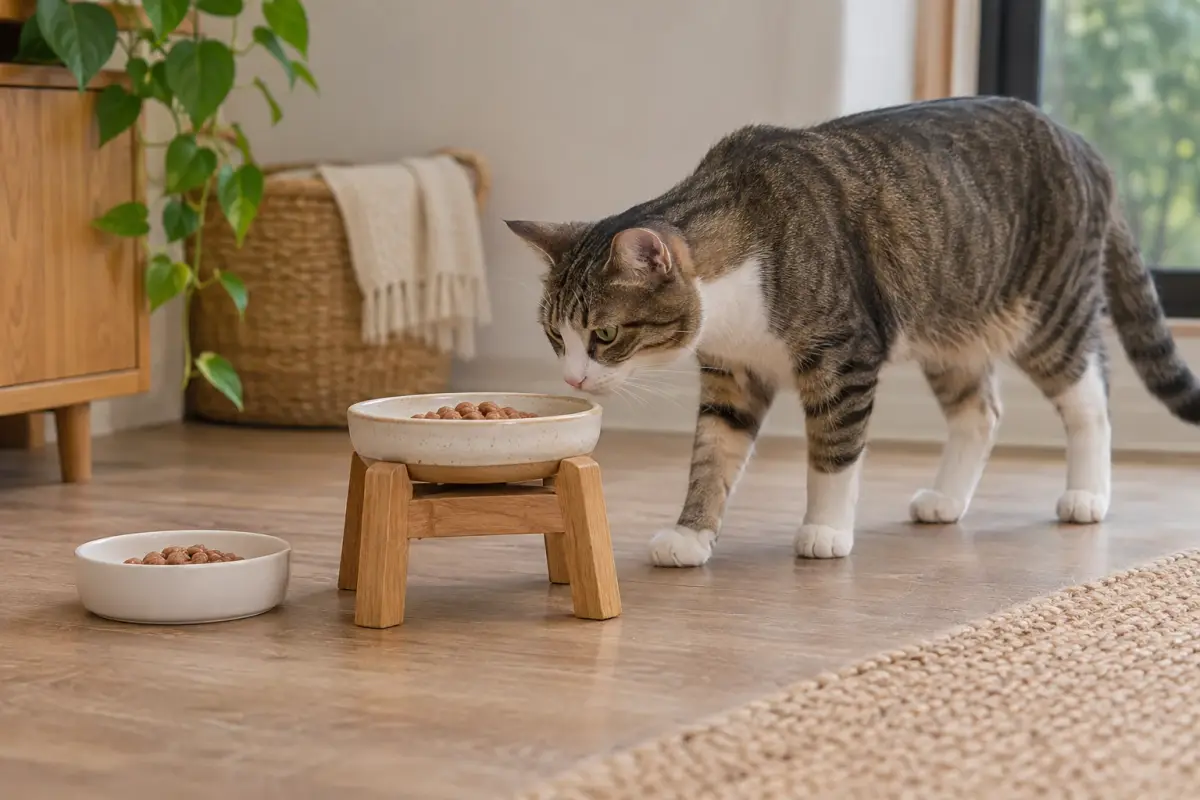
A fixed stand holds a standard dish a short way off the floor, and it is the simplest and most stable design. An adjustable-height cat bowl lets you change the height as a kitten grows or as an older cat gets stiffer, which suits a household that expects its needs to change.
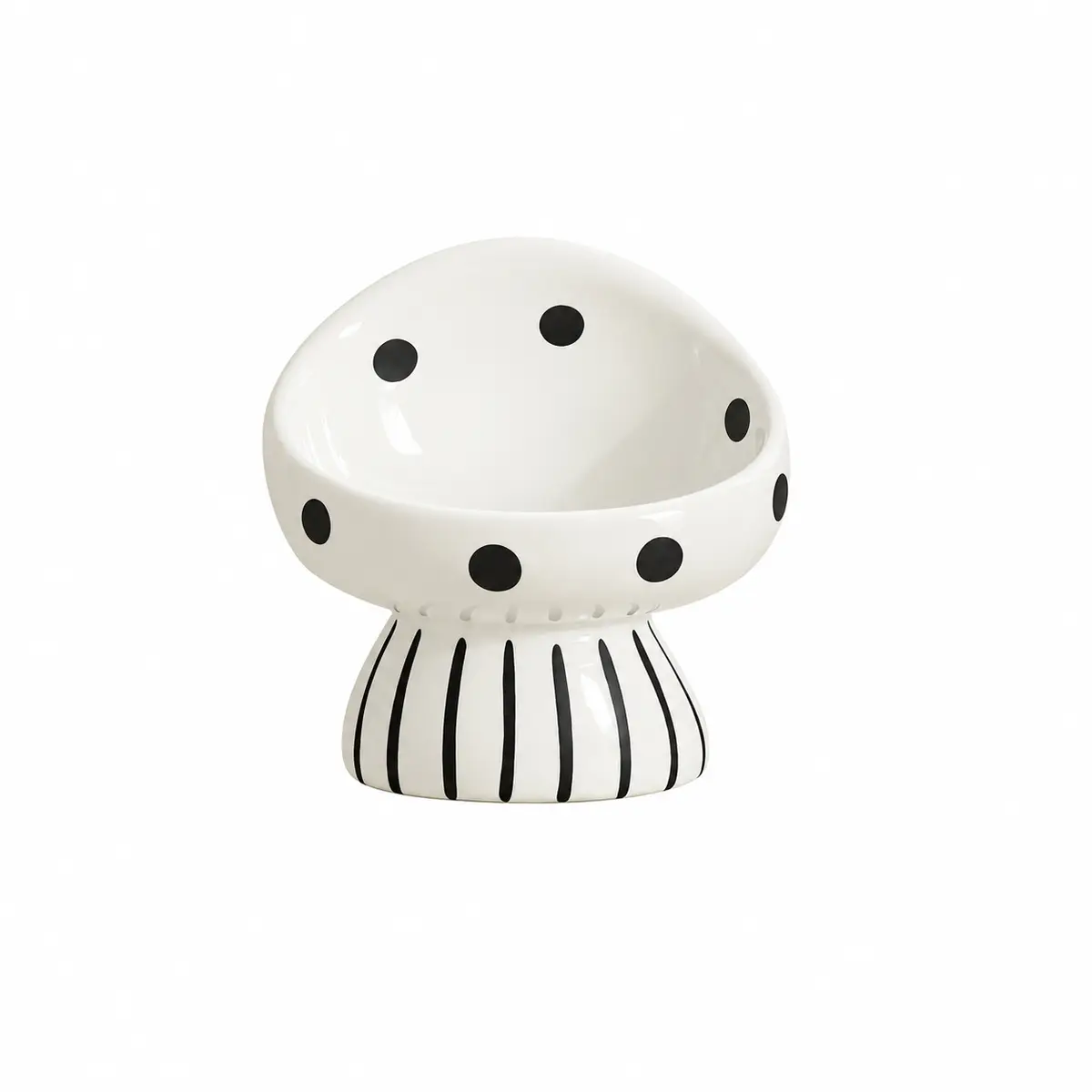
Some designs combine a raised base with a tilted dish, such as a tilted ceramic bowl on a raised stand, which angles the food toward the front of the bowl. A pedestal style like a raised ceramic mushroom-shaped cat bowl has a single base under the dish, so check that it is heavy enough not to tip. If you like the look of pottery, our ceramic cat bowls cover the flat-to-the-floor versions too.
Does your cat actually need a raised bowl?
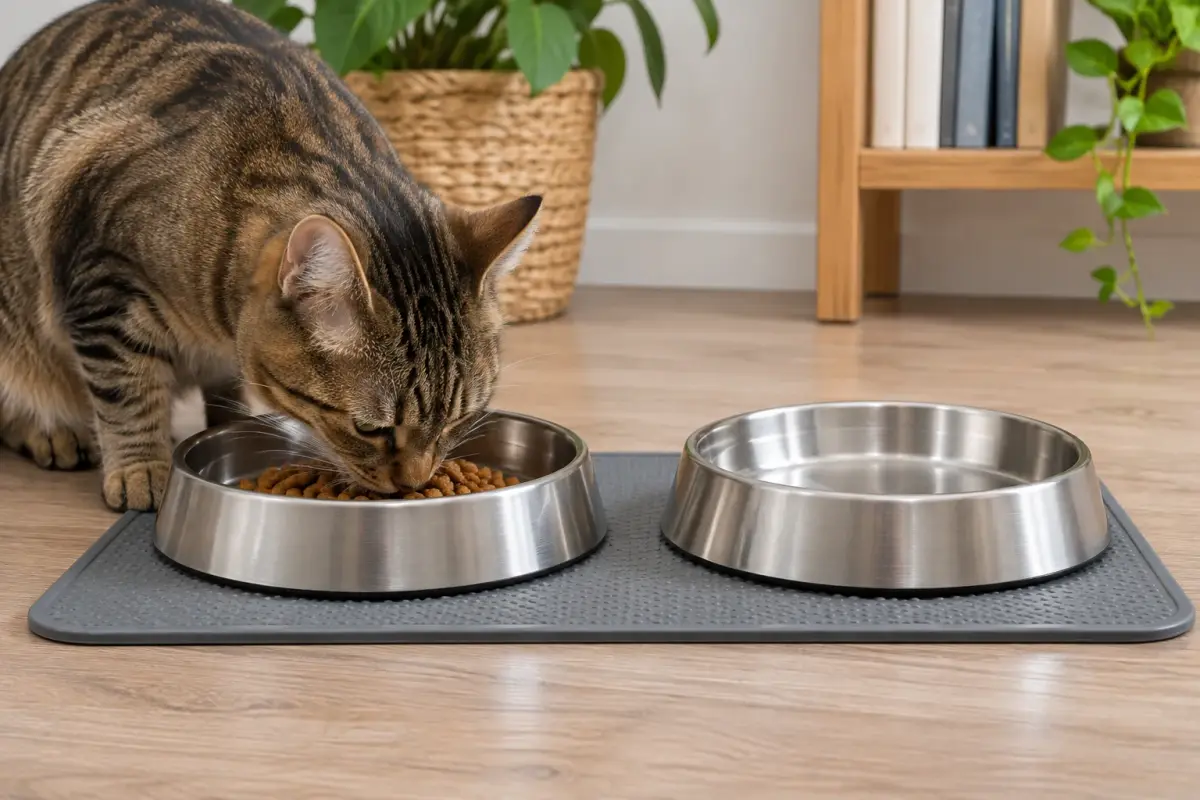
Most healthy cats eat comfortably from a bowl on the floor, and none of the veterinary pages reviewed for this guide recommend raised bowls for cats in general. The ASPCA's general cat care advice focuses on fresh, clean water at all times and a diet suited to your cat's life stage, with no mention of bowl height.
Where height does matter is in specific medical cases. Merck Veterinary Manual says a cat with small esophageal diverticula should eat in an upright position, with the forelegs raised higher than the rear legs, such as on a ramp or platform, and stay that way for a short time after eating. VCA says a pet with megaesophagus should be fed in an upright position about 45 to 90 degrees to the floor. Those are vet-directed setups for diagnosed problems, and an ordinary raised bowl is not the same thing.
Best type for each cat
For a kitten or a small adult, choose a low raised bowl, or an adjustable one you can start at its lowest setting. For a senior cat with stiff joints, a slightly higher bowl can feel easier on the neck, and a non-slip base matters more because a wobbling stand is worse for a cat that already moves carefully.
For a fast eater, a raised bowl does not slow the meal on its own, so look at slow-feeding designs instead. For a flat-faced cat, pick a shallow dish with a gentle slope so the food stays within reach. In a multi-cat home, choose heavier stands and set up one bowl per cat so nobody guards a feeding spot.
What to avoid
Avoid tall stands that make your cat reach upward, because a bowl set too high can make eating harder instead of easier. Avoid plastic dishes with scratches that are hard to clean, and avoid stands where the bowl is glued in place and cannot be removed for washing.
Do not choose a raised bowl as a fix for regurgitation, frequent vomiting or weight loss. Merck describes regurgitation as food or fluid coming back up before it has reached the stomach, and the causes can include problems with the esophagus that need a vet to sort out. A new bowl will not treat them, and waiting delays the answer.
Cleaning, lifespan and when to call your vet
The ASPCA says to wash and refill a cat's water bowls daily, and a dish that lifts out of its stand makes that easy for the food bowl too. Check the stand and the bowl joint for trapped food, and replace any dish that has chips or deep scratches, because they are hard to clean thoroughly.
Call your vet if your cat regurgitates food, vomits, loses weight or seems to struggle to swallow. The ASPCA says to take a cat to the vet if loss of appetite, diarrhea, vomiting or lethargy continues for more than two days. When you are ready to compare designs, browse our elevated cat bowls, or read our guide to choosing cat bowls for the basics of width, depth and materials.
This page is general information, not veterinary advice, and it cannot replace an examination by the vet who knows your pet.
Raised bowl bases and adjustments
| Base or dish design | What changes | Check before choosing |
|---|---|---|
| Fixed stand | A dish sits at one height | Dish height and base footprint |
| Adjustable stand | The height can be changed | Adjustment range and locking method |
| Raised tilted dish | The food area angles toward the front | Tilt,opening and usable depth |
| Pedestal dish | A single base supports the bowl | Stability and the base width |
Common questions
Are elevated cat bowls better for cats?
For most healthy cats there is no clear advantage, and the veterinary sources reviewed here do not recommend raised bowls in general. They help in particular medical cases, and only when a vet says so.
How high should an elevated cat bowl be?
Low enough that your cat can eat with its head only slightly lifted. A bowl set too high makes eating harder, and an adjustable stand lets you change the height as your cat grows or ages.
Do raised bowls stop a cat vomiting after meals?
Not reliably. Vomiting and regurgitation have many causes, some of which need a vet to diagnose, so a raised bowl is not a treatment. Talk to your vet if your cat brings food back up.
What material is best for an elevated cat bowl?
Choose a bowl you can wash daily without scratching it, such as glazed ceramic or stainless steel. The stand matters just as much, so look for a wide, non-slip base that keeps the bowl steady.
Sources we checked
This guide is general information, not veterinary advice. If your pet is unwell or injured, contact your veterinarian.