Buying guides
Best Stainless Steel Cat Bowls: What to Look For
The best stainless steel cat bowl is wide and shallow, has a smooth inside with no seams, and sits on a base that does not slide. Steel is non-porous and does not scratch the way plastic does, so it is easier to keep clean. Browse our stainless steel cat bowls once you know whether you want a single dish or a double.
By Matt GarnettUpdated November 14, 20264 min read2 sources
Why choose stainless steel for a cat bowl
The main reason is hygiene. VCA Animal Hospitals notes that scratches and irregular surfaces in plastic dishes make them more prone to bacterial contamination, and plastic has been associated with chin acne in some cats. Switching to a smooth, non-porous dish such as stainless steel or glass may help, and VCA recommends washing dishes daily.
Steel also survives. It will not crack, chip or hold odors, and it can be washed hot without warping. That makes it a sensible default for a cat that is prone to chin spots, for a multi-cat home where bowls are washed often, and for anyone who wants a bowl that outlasts the cat's kitten phase.
What matters most in a steel bowl
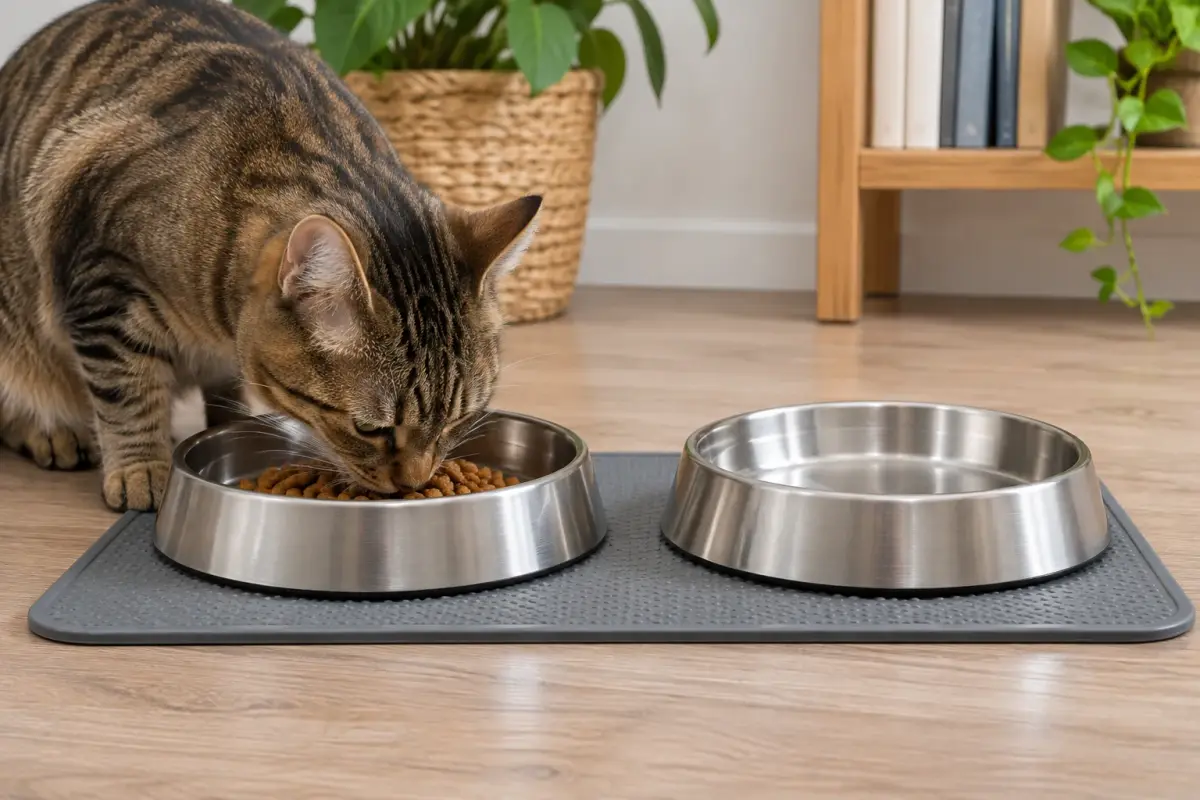
Shape is the first thing to check. A cat is usually happier eating from a wide, shallow dish than a deep, narrow one, and a flat-sided bowl is easier for a short-nosed cat to reach into. Look for a smooth interior with no rolled seams where food can pack in, and a rim that is not sharp.
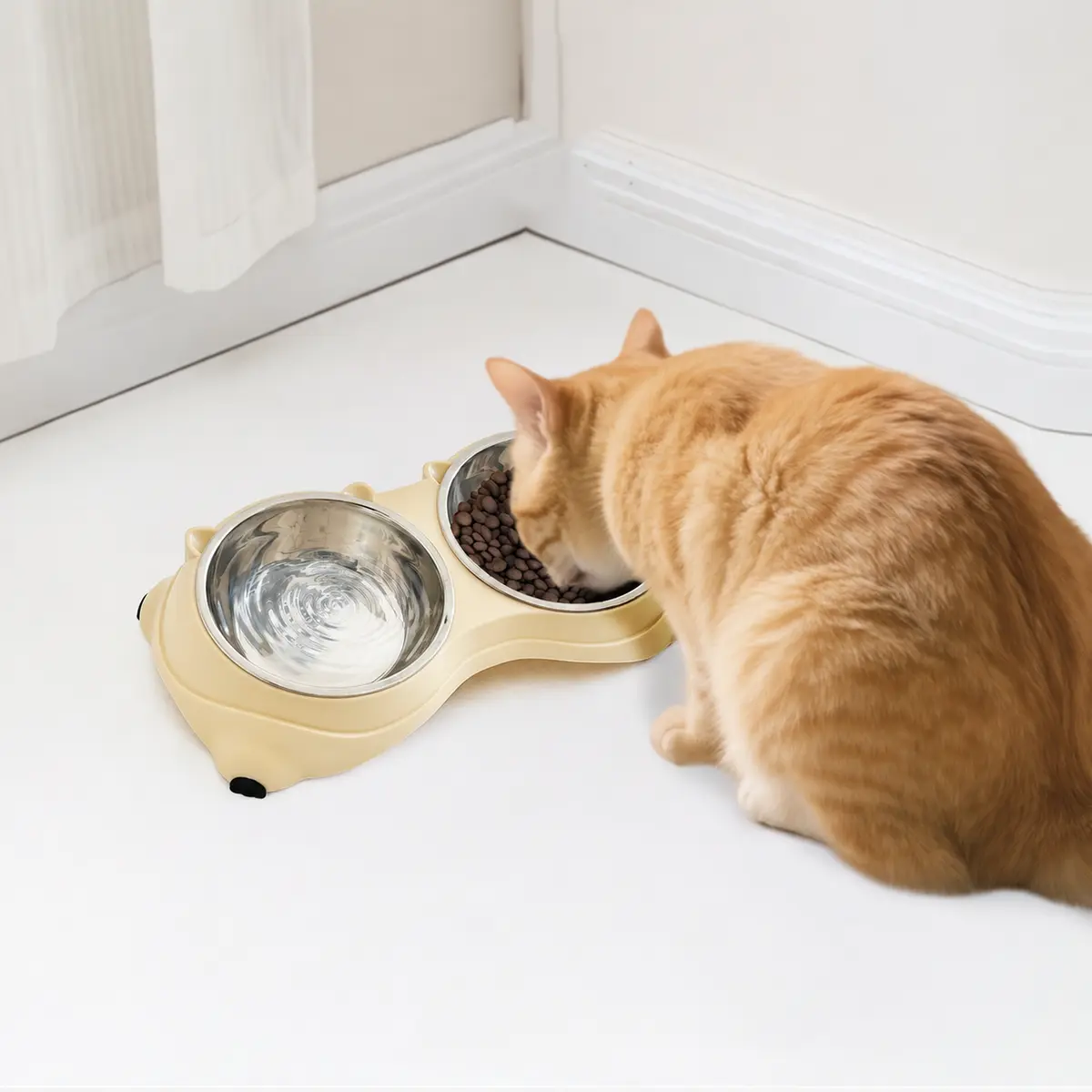
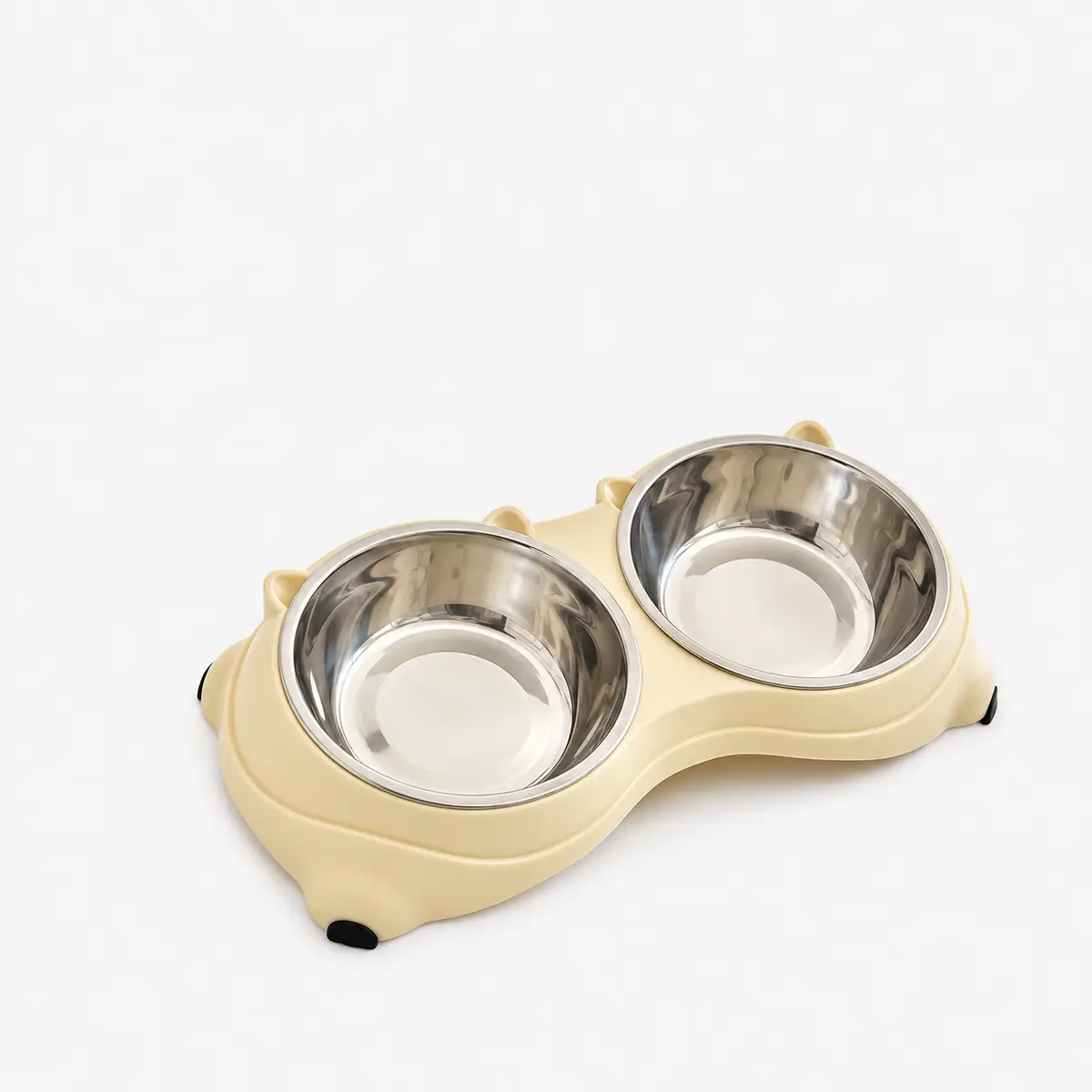
Weight and base come next. A light steel bowl slides across a tile floor and clangs when a cat nudges it. A non-slip base solves that, such as the rubber ring on this anti-slip double cat bowl. Check how the bowl comes apart too, since a detachable design makes it easy to wash every part.
Single, double and elevated designs compared
A single bowl keeps things simple and lets you place food and water apart. VCA's environmental needs guidelines say each resource should have its own location, separate from the others, and give the example of keeping the food away from the litter box. A double tray keeps the bowls together. Choose separate bowls if you want to put food and water in different locations.
A double bowl holds food and water side by side. It is tidy, but many cats prefer to drink away from where they eat, and VCA says a cat should have at least two options for each resource. If you use a double, put a second water bowl elsewhere. For cats that gulp, a slow feeder changes the pace, and a wider cat water bowl suits cats that dislike a narrow rim.
Best stainless bowl for each cat
For a cat with chin acne or blackheads, choose a smooth, shallow steel or glass dish and wash it every day, as VCA advises. Replace any plastic bowl that is scratched or stained. For a kitten or small cat, pick a low rim that is easy to step up to, and for a heavy eater, choose a heavier or non-slip base so the bowl stays put.
For a multi-cat home, give each cat its own bowl and spread them out rather than lining them up. VCA says each cat should have access to its own resources. For an older cat that struggles with neck or joint stiffness, a slightly raised steel bowl may be easier. For wider help with materials and shapes, our guide to cat bowls compares steel with ceramic and glass.
What to avoid
Avoid very thin steel with sharp rolled edges, bowls with deep ridges that trap food, and designs with decorative paint inside the bowl. Avoid placing food right beside the litter box or water right beside the food, since many cats refuse a bowl that is badly placed.
Avoid assuming steel alone solves a skin problem. VCA says chronic, hard or crusty lesions, sore skin, and swelling of the lips or chin all need a vet, because a dental infection can look like chin acne. A new bowl is a cheap first step, but it is not a treatment.
Cleaning, lifespan and when to call your vet
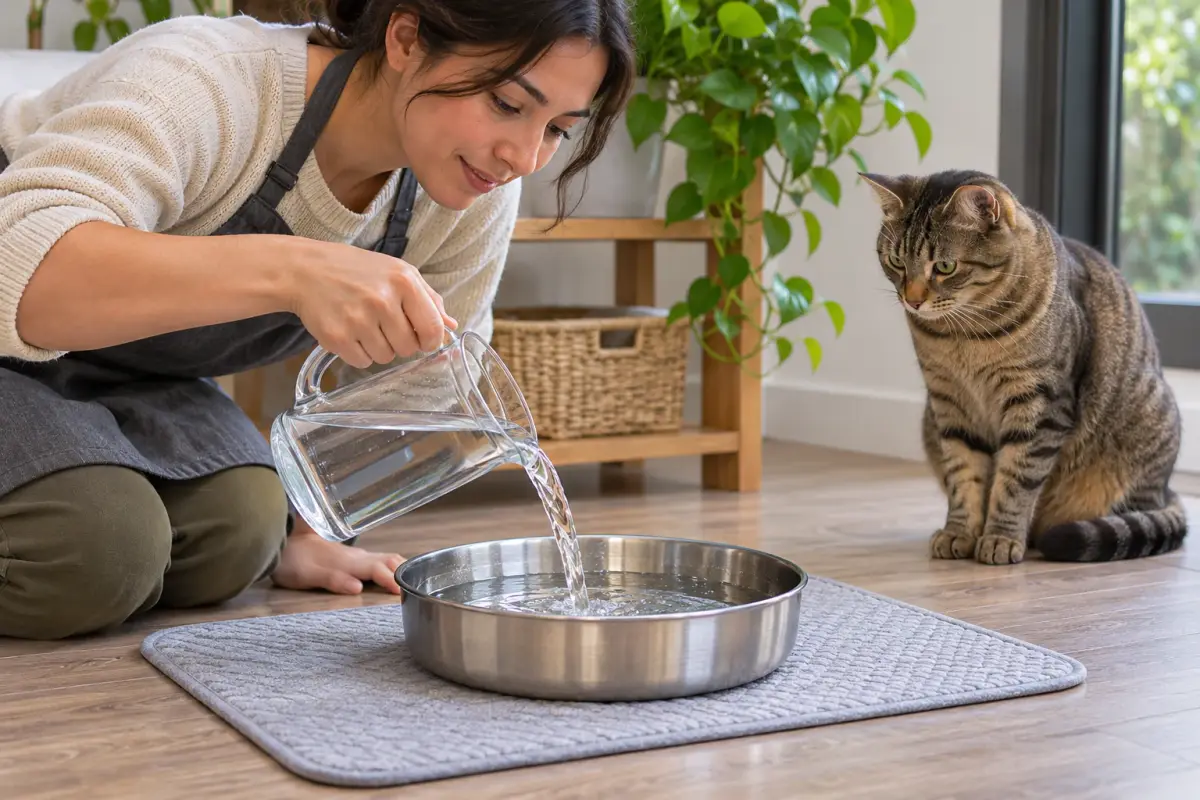
Wash the bowl daily with hot soapy water and rinse well, and refill water every day. Check the underside and any rubber base for trapped residue each week, since gunk collects where a ring meets the steel. Replace a bowl that is dented, pitted or rusted.
See your vet if your cat's chin stays red or crusty after a week or two of better hygiene, if the area is sore or swollen, or if your cat stops eating or drinking. When you are ready to choose, browse our stainless steel cat bowls and match the shape to your cat.
This page is general information, not veterinary advice, and it cannot replace an examination by the vet who knows your pet.
Bowl arrangements and placement
| Arrangement | Where bowls sit | Practical check |
|---|---|---|
| Single bowl | One separate vessel | Place and clean it independently |
| Double bowl | Two vessels together in one base | Whether each insert lifts out and a separate water location is available |
| Slow-feeder insert or bowl | Food meets ridges or obstacles | Exact shape and cleaning access |
| Wide water bowl | A broader drinking opening | Opening width and stable placement |
Common questions
Are stainless steel bowls better than plastic for cats?
Steel is smooth and non-porous, so it does not scratch and hold bacteria the way plastic can. VCA notes plastic dishes may be linked to chin acne, and suggests glass or stainless steel as alternatives.
Can stainless steel bowls cause problems for cats?
Steel itself is not a common problem, but a bowl that slides, is too deep, or is left dirty can put cats off. Wash it daily and ask your vet if your cat's chin or mouth looks sore.
How often should I wash a stainless steel cat bowl?
Wash it every day with hot soapy water and rinse well, and refill water daily. VCA recommends daily washing of dishes, especially for cats that are prone to chin acne.
Should cat food and water bowls be next to each other?
Many cats prefer water away from food. VCA says each resource should have its own location, so a separate water bowl placed elsewhere in the room is a good idea even if you use a double bowl.
Do I need a non-slip base on a cat bowl?
It helps. A light steel bowl slides on hard floors and makes noise, which can put some cats off. A rubber ring or weighted base keeps the bowl in one place while your cat eats.
Sources we checked
This guide is general information, not veterinary advice. If your pet is unwell or injured, contact your veterinarian.