






Care & how-to
Why Do Cats Have Whiskers?
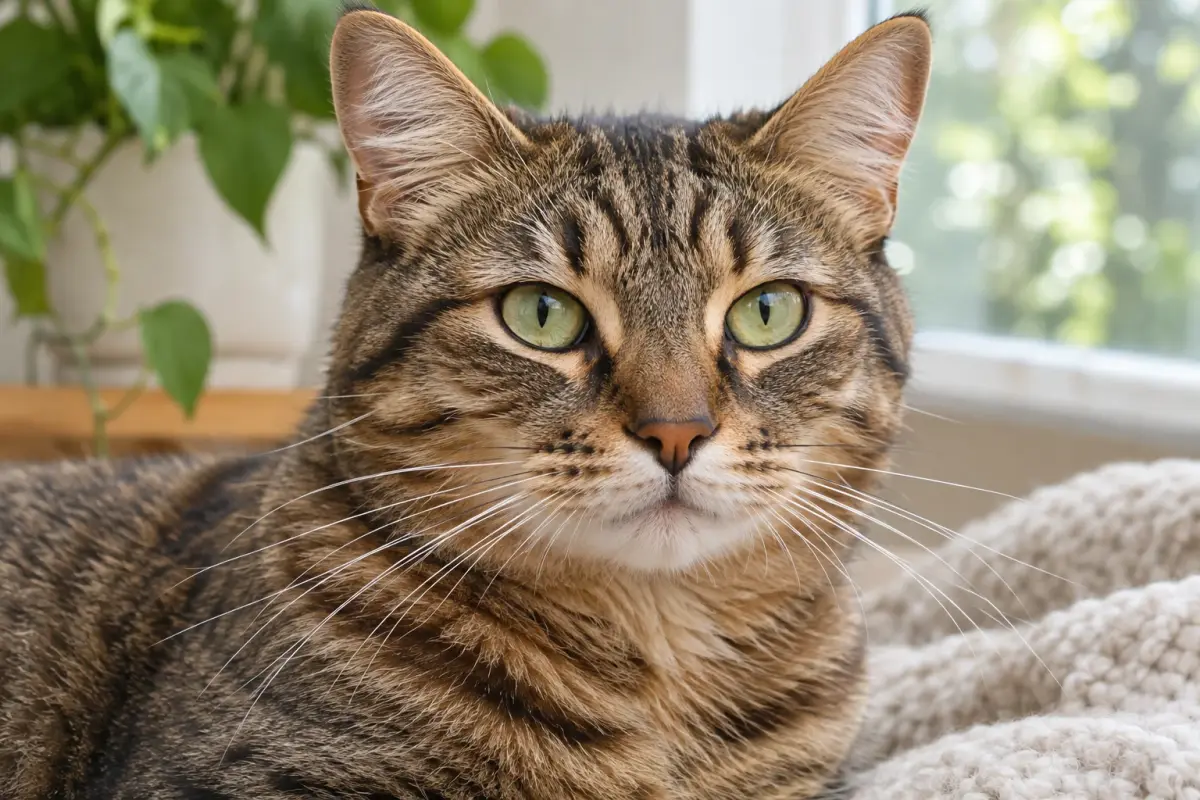
Cats have whiskers because they are highly sensitive touch sensors. VCA explains that whiskers sit in deep follicles packed with nerves and blood vessels, letting a cat feel tiny changes in air currents, judge whether it can fit through a gap, find its way in low light and protect its eyes. They also show mood. Whiskers should never be trimmed or pulled.
By Matt GarnettUpdated November 13, 20264 min read2 sources
What whiskers are
Whiskers, properly called vibrissae, are not ordinary hairs. VCA describes them as coarser and thicker than the rest of the coat, with roots about three times deeper. The follicle at the base is full of nerves and blood vessels, which is what makes whiskers so sensitive to touch and movement.
Most people notice the long whiskers on the muzzle, usually around 12 arranged in rows on each side, though the number varies by breed. Cats also have shorter whiskers above the eyes, on the chin, near the ears and on the back of the front legs. Each set helps the cat sense what is close to that part of the body.
For the everyday feeding area, compare cat bowls by shape rather than assuming that every cat needs the same dish.
How cats use them
Whiskers work a bit like radar. VCA says they pick up subtle changes in air currents, helping a cat judge the size, shape and movement of nearby objects. That matters in dim light, when cats hunt, and up close, because cats do not focus well on things right under their nose. The whiskers on the front legs help sense prey that has been caught.
Whiskers also help with balance and space. Because the muzzle whiskers spread roughly as wide as the body, a cat can test whether it will fit through a gap before committing. Whiskers above the eyes trigger a blink if something brushes them, protecting the eyes when a cat pushes through grass or bushes.
What whiskers say about mood
Watch the whiskers along with the ears and tail. VCA notes that a relaxed, curious or happy cat holds its whiskers loosely out to the side or slightly forward. When a cat is focused on something interesting, such as a toy or a bird at the window, the whiskers often fan forward.
A frightened or defensive cat may pull its whiskers flat back against the face, while a cat preparing to defend itself may hold them taut and pointed forward. Reading whiskers is a quick way to tell whether a cat wants contact or space, especially in a cat you do not know well.
Whiskers and the senses together
Whiskers do not work alone. Cats combine their touch information with excellent hearing, a strong sense of smell and eyes adapted for low light. A cat moving through a dark room uses all of them together, which is why they rarely bump into things even at night.
This also helps explain some quirks. A cat may pat at food before eating it, or sniff and walk away from a deep bowl, partly because what they feel and smell up close matters more than what they see at that distance. Older cats with vision loss rely even more on whiskers and touch, so keeping furniture in the same place helps them.
Caring for your cat's whiskers
Never cut, trim or pluck your cat's whiskers. VCA warns that this may reduce your cat's awareness of its surroundings and cause confusion, and pulling them is painful because of the nerve-rich roots. Groomers and children should both know to leave them alone.
Whiskers shed and regrow naturally, so finding one on the floor now and then is normal. VCA suggests flatter, wider food and water dishes so the whiskers do not repeatedly brush the sides, which some cats find off-putting. If your cat suddenly loses many whiskers, or has broken whiskers along with skin problems or overgrooming, mention it to your vet.
The cat bowl guide compares shapes, including the wide-dish collection; a different bowl is not a treatment for a cat that has stopped eating.
This page is general information, not veterinary advice, and it cannot replace an examination by the vet who knows your pet.
Common questions
What happens if you cut a cat's whiskers?
Cutting whiskers does not hurt, but it removes an important sense. VCA warns that it can reduce awareness and cause confusion, so the cat may misjudge spaces and feel less secure. Whiskers grow back, but they should never be trimmed.
Do cat whiskers grow back?
Yes. Whiskers shed and regrow naturally, just like other hair, so finding the odd whisker is normal. If many fall out at once, or your cat has skin problems around the face, ask your vet to take a look.
Why does my cat have whiskers on its legs?
The short whiskers on the back of the front legs help a cat sense what is directly beneath or in front of its paws, such as prey it has caught or the ground while climbing. They are a normal part of feline anatomy.
Should I buy a special bowl for my cat's whiskers?
Some cats eat more comfortably from wide, shallow dishes that do not press on their whiskers, and VCA suggests flatter dishes. You do not need a special product, but if your cat paws food out or leaves food at the edges, try a plate.
Sources we checked
This guide is general information, not veterinary advice. If your pet is unwell or injured, contact your veterinarian.


