






Buying guides
Best Kitten Food: How to Choose What Your Kitten Needs
The best kitten food is complete and balanced for growth, or for all life stages, under AAFCO standards. Kittens need more protein and calories than adult cats, fed as three or four small meals a day. Wet, dry or both can work; what matters is the growth statement on the label and a maker that can show how it formulates and tests its food.
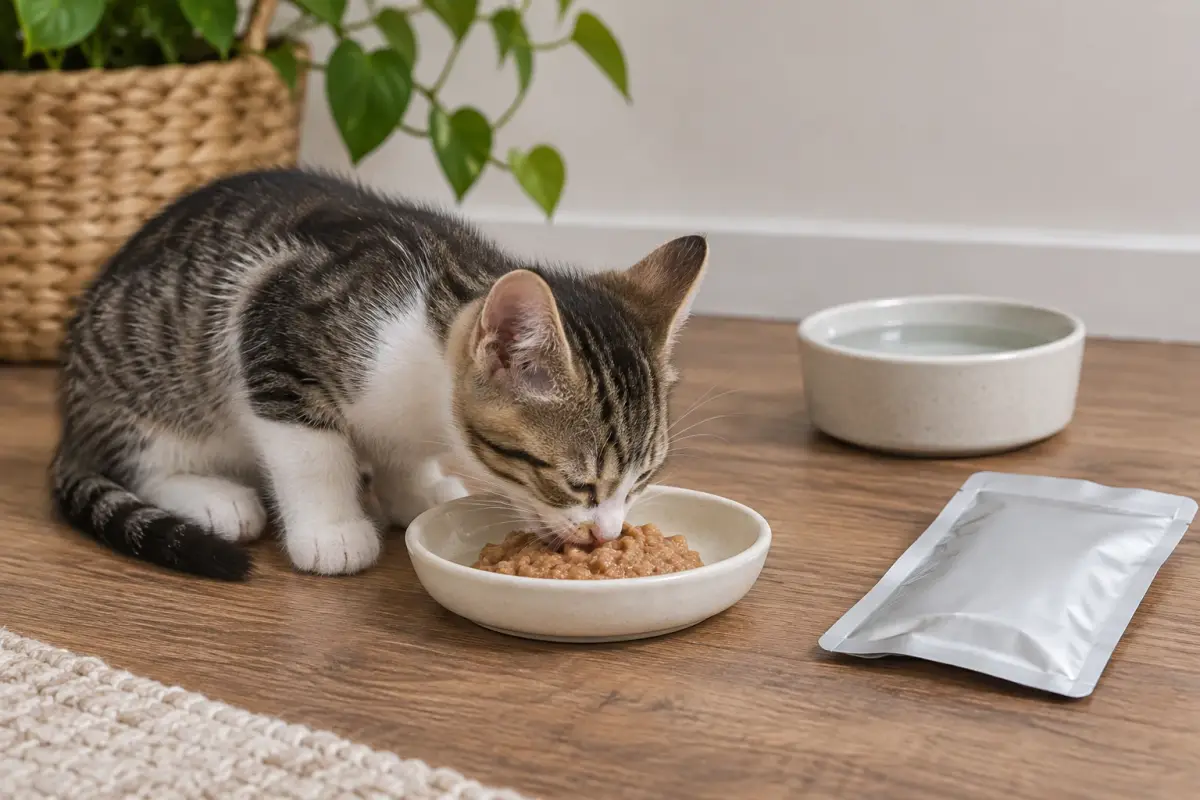
By Matt GarnettUpdated November 14, 20263 min read3 sources
What matters most: a growth statement on the label
VCA Animal Hospitals puts it plainly: look for an AAFCO statement that the food provides complete and balanced nutrition for growth or for all life stages, and do not use a food without one as your kitten's main diet. Adult maintenance formulas are built for a cat that has stopped growing and can fall short for a kitten.
VCA also notes that kitten foods carry more protein than adult foods to support rapid growth, and that adding vitamin or mineral supplements on top of a complete food is not something to do without your vet's agreement. Too much of some minerals can be as much of a problem as too little in a growing animal.
Wet vs dry kitten food
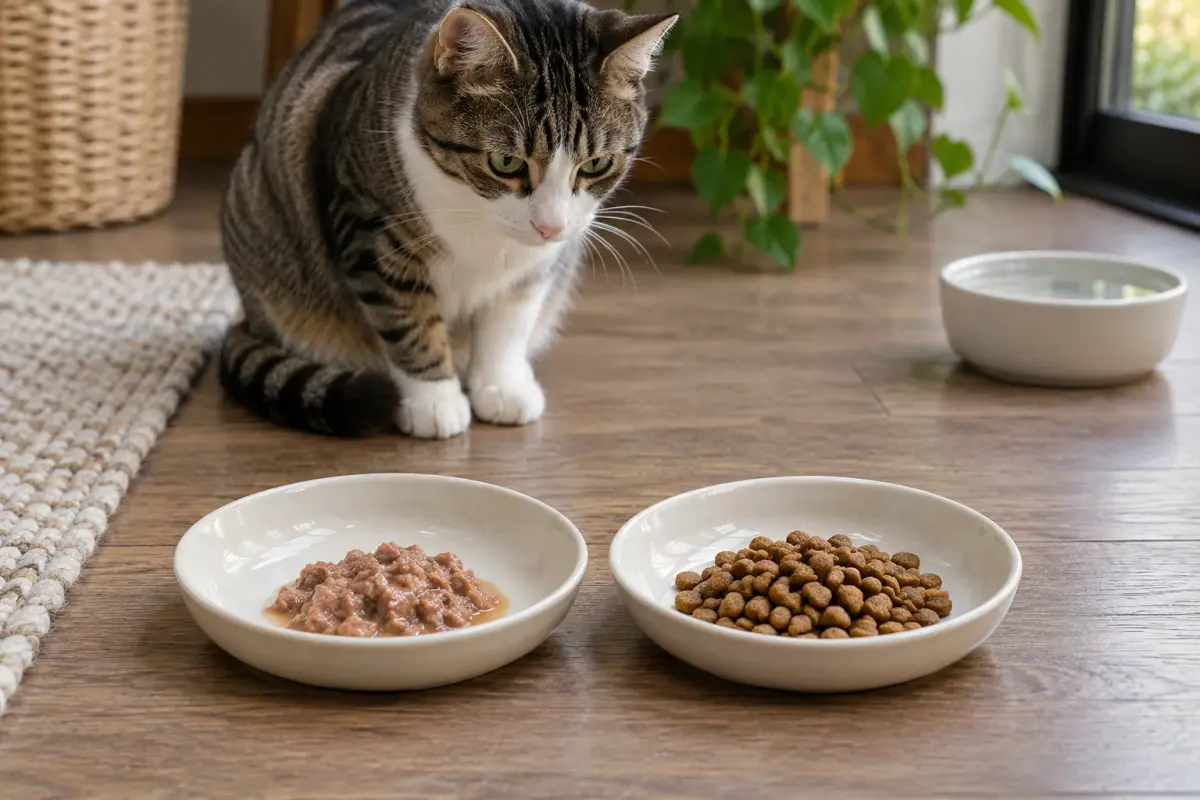
Kittens can eat either wet or dry food by about 6 to 8 weeks of age, according to VCA. Wet food adds water to the diet, which many owners like for cats long term, and it is often easier for very young kittens to eat. It costs more per calorie and spoils if left out, so remove uneaten portions after 20 to 30 minutes.
Dry food is economical, keeps in a bowl and works in puzzle feeders, which suits a kitten that loves to hunt. Many households feed both. If you mix formats, keep both complete and balanced for growth, and split the day's calories between them rather than adding one on top of the other.
Best approach for each situation
For a newly adopted kitten, start with the food the shelter or breeder used and change gradually; VCA suggests a 7-day transition from mostly old food to all new food. For a picky eater, try a different texture, such as pate versus chunks, before changing the whole diet, and warm wet food slightly to room temperature.
In a multi-cat home, a kitten and adult cats eating from the same bowl means the adults eat calorie-rich kitten food and the kitten may eat less than it needs. Feed separately, or use a microchip feeder that opens only for the right cat. For a kitten with diarrhea, vomiting or no appetite for a day, call your vet rather than switching foods.
Questions to ask a cat food maker
The WSAVA Global Nutrition Committee suggests asking whether the company employs a qualified nutritionist, who formulates its diets, what quality control it applies to ingredients and finished products, and whether it does or publishes nutrition research. Those answers say more than the front of the bag.
Words such as natural, holistic, premium or human-grade are not nutritional standards. Raw diets carry bacterial risks for kittens and for the people preparing them, and home-made diets are difficult to balance for growth. If you want either, involve a board-certified veterinary nutritionist.
How often to feed and when to switch to adult food
VCA recommends dividing a kitten's daily food into three or four small meals or more, and prefers measured portions over leaving food out all day, which helps prevent kittens growing into overweight cats. Use the bag as a starting point and adjust to body condition: you should feel ribs under a light covering of fat.
Most kittens move to adult food at around a year. Growth slows near 30 weeks and most kittens reach adult size around 40 weeks, but large breeds such as Maine Coons can keep growing longer. Spaying or neutering lowers energy needs, so ask your vet whether to adjust portions afterward.
This page is general information, not veterinary advice, and it cannot replace an examination by the vet who knows your pet.
Common questions
What should I look for in kitten food?
Look for an AAFCO statement saying the food is complete and balanced for growth or all life stages. After that, choose a texture your kitten eats well and a maker that can explain who formulates and tests its food.
Is wet or dry food better for kittens?
Both can be complete and balanced. Wet food adds moisture and suits very young kittens; dry food is economical and works in puzzle feeders. Many owners feed a mix of both successfully.
How many times a day should a kitten eat?
VCA suggests splitting the daily amount into three or four small meals or more. Measured meals help prevent kittens from becoming overweight cats later on.
When should a kitten switch to adult cat food?
Most kittens switch at around 12 months. Large breeds may stay on growth food longer. Change gradually over about a week, and ask your vet about timing after spaying or neutering.
Sources we checked
This guide is general information, not veterinary advice. If your pet is unwell or injured, contact your veterinarian.


