






Care & how-to
How Much and How Often to Feed a Kitten
Feed a kitten a complete kitten or all-life-stages food, split into three or four meals a day until about six months, then two or three meals until a year. Kittens need far more calories per pound than adults, so follow the label's kitten feeding chart for your kitten's current weight, weigh it every week or two, and adjust so it grows steadily without getting round.
By Matt GarnettUpdated November 9, 20264 min read4 sources
How often to feed a kitten, by age
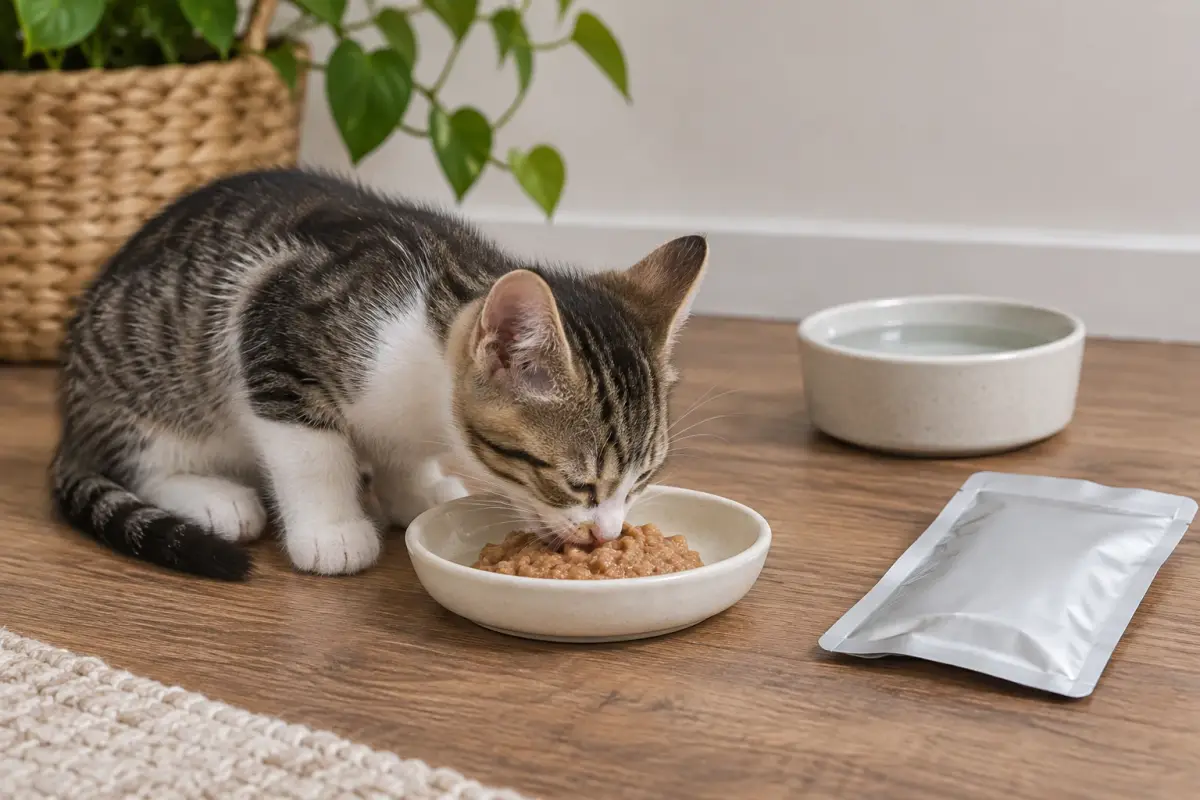
From weaning at around eight weeks to about six months, feed three to four meals a day. Cornell Feline Health Center recommends about three meals a day until six months, and VCA suggests splitting the daily portion into three to four or more small meals. A kitten's stomach is small and its energy needs are high, so little and often works best. Set out each meal in its own cat bowl so you can see exactly what is left.
From six months to a year, move to two or three meals a day; Cornell says twice daily is generally best in this period. By around a year most cats are eating like adults, once or twice a day. Very young kittens still with their mother, or orphaned kittens, need a vet's guidance on bottle feeding.
How much to feed a kitten
Kittens need roughly two to three times the calories per pound of an adult cat. The Merck Veterinary Manual gives a growth figure of about two and a half times the resting energy requirement, compared with about 1.2 times for a neutered adult. In practice, that means a 4 lb kitten may eat nearly as much as a small adult cat.
Use the kitten feeding chart on your food, matched to your kitten's current weight and age, as the starting point. Re-check the chart every couple of weeks as your kitten grows, because the right amount changes quickly. Measure each meal so you know what your kitten is actually eating.
Wet food, dry food or both
Kittens can do well on wet food, dry food or a mix, as long as the label carries an AAFCO statement that the food is complete and balanced for growth or for all life stages. Cornell and VCA both recommend checking for that statement. Our kitten food buying guide goes through how to choose one.
VCA suggests introducing a variety of textures and shapes while cats are young, which can make them more willing to accept changes later. Wet food adds water, and many owners feed wet meals morning and evening with measured dry food in between. Pick up uneaten wet food after about 30 minutes. Use a bowl you can wash easily, such as a plain cat bowl or an adjustable cat bowl, and wash it between meals; more are in our cat bowls collection.
Portion feeding vs free feeding
VCA recommends portion feeding kittens rather than leaving food out all day. Free choice feeding raises the risk of a kitten becoming overweight, and portions can be adjusted to how fast your kitten is growing. Weigh your kitten every week or two and compare with a growth chart or ask your vet.
A growing kitten should look lean and lively, with ribs easy to feel but not visibly sticking out. A round belly after a meal is normal; a kitten that is round all the time may be eating too much.
Switching to adult food, and spay or neuter
Keep kittens on a growth or all-life-stages food until they are done growing, typically around 12 months. VCA suggests starting to mix in adult food at about 10 months and finishing the change by a year. Larger, slower-maturing breeds may stay on kitten food a little longer; ask your vet.
Calorie needs drop after spay or neuter, and many cats begin to put on weight around then. Watch body shape closely in the weeks after surgery and reduce the portion if your kitten starts to look round. Avoid giving kittens cow's milk; VCA notes most lose the ability to digest lactose by about 12 weeks.
When to call your vet

Call your vet the same day if a kitten stops eating, vomits repeatedly, has diarrhea for more than a day, seems weak or is losing weight. Kittens have little reserve and can become dehydrated and ill quickly. Bring a fresh stool sample to routine visits, since intestinal parasites are common and affect growth.
Your vet can also give you a target weight range and tell you whether your kitten is growing at the right pace.
This page is general information, not veterinary advice, and it cannot replace an examination by the vet who knows your pet.
Common questions
How many times a day should a kitten eat?
Feed three to four meals a day from about eight weeks to six months, then two to three meals until around 12 months. Small, frequent meals suit a kitten's small stomach and high energy needs.
How much wet food should a kitten eat a day?
It depends on your kitten's weight and the calories in the food. Follow the kitten feeding chart on the can for the current weight, split it into three or four meals and reweigh every week or two.
Can you overfeed a kitten?
Yes. Kittens need plenty of food, but free feeding can lead to excess weight. VCA recommends measured portions adjusted to growth, so weigh your kitten regularly and check that it stays lean.
When should a kitten switch to adult cat food?
Most kittens move to adult food around 12 months. VCA suggests mixing in adult food from about 10 months and completing the switch by a year, unless your vet advises otherwise.
Sources we checked
This guide is general information, not veterinary advice. If your pet is unwell or injured, contact your veterinarian.


