






Care & how-to
Chicken Molting: When It Happens and How Long It Lasts
Chicken molting is the yearly loss and regrowth of feathers. It usually begins as days shorten in fall, and most hens stop laying while it lasts. The Merck Veterinary Manual describes a natural molt as typically lasting 3 to 4 months, though Mississippi State Extension says fast late molters can finish in two to three. This guide covers when hens molt, the order feathers fall, how to tell a molt from illness, and how to keep the flock comfortable.
By Matt GarnettUpdated November 13, 20265 min read2 sources
What molting is and why it happens
Mississippi State Extension puts it simply: each year chickens molt, or lose the older feathers, and grow new ones. It is a normal reset, not an illness, and it explains the sudden drift of feathers around the coop that alarms new keepers. Most hens stop laying until the molt ends, although the same source notes that some keep laying and simply molt for longer.
The trigger is daylight. The Merck Veterinary Manual explains that backyard hens under natural light stop laying as the days shorten and then molt. That is also why a hen under supplemental coop lighting behaves differently: Merck says such birds lay for about a year before molting, and continuous lighting removes the daylight cue that restarts laying afterward. If you light the coop, expect a less predictable molt calendar.
When do chickens molt?
For most flocks the main molt arrives in late summer or fall, once days are visibly shorter. Mississippi State Extension separates hens into early and late molters. Late molters lay for 12 to 14 months before they molt, while early molters may begin after only a few months of production. A pullet in her first year may only lose some neck and tail feathers, which the same source calls a partial molt.
Which type you have shows up in the flock's habits. According to Mississippi State, late molters are generally the better layers and look ragged while they molt, because they shed quickly; early molters lose a few feathers at a time and usually look smoother and better groomed. Body weight, condition, nutrition and management all affect how long and how often a hen molts.
How long molting lasts and the order feathers fall
Duration depends on the bird. Merck gives 3 to 4 months, sometimes longer, for backyard hens. Mississippi State says early molters, which drop only a few feathers at a time, may need four to six months, while late molters take about two to three months. Hens do not all follow the same schedule, so one in your flock can look bare while another has barely started.
Feathers fall in a set order: head, neck, breast, body, wings and finally tail. In the wing, the primary flight feathers drop before the secondaries. Mississippi State says a new primary reaches half its length after two weeks, two-thirds after three weeks and full length six weeks after the old feather is lost. Allow six weeks for the first group of primaries, and two weeks for each further feather or group, to estimate how much longer a hen has to go.
Laying during a molt
Expect eggs to stop or drop sharply. A hen is rebuilding a whole coat, and her body prioritizes that over eggs. Merck notes that after an unusual molt, even top egg producers reach only about 70 percent of their former production in the next laying period, so a flock rarely snaps straight back. Our guide to why hens stop laying covers the other common causes, so you can rule out illness or short days.
A useful check from Mississippi State Extension: a hen with a fully pigmented beak has not laid for at least four weeks. If a hen looks ragged and her beak is yellow-bleached at the base, she is probably still laying and is not molting. If production has not returned within a few months of fresh feathers, talk to a veterinarian who treats poultry.
How to help hens through a molt
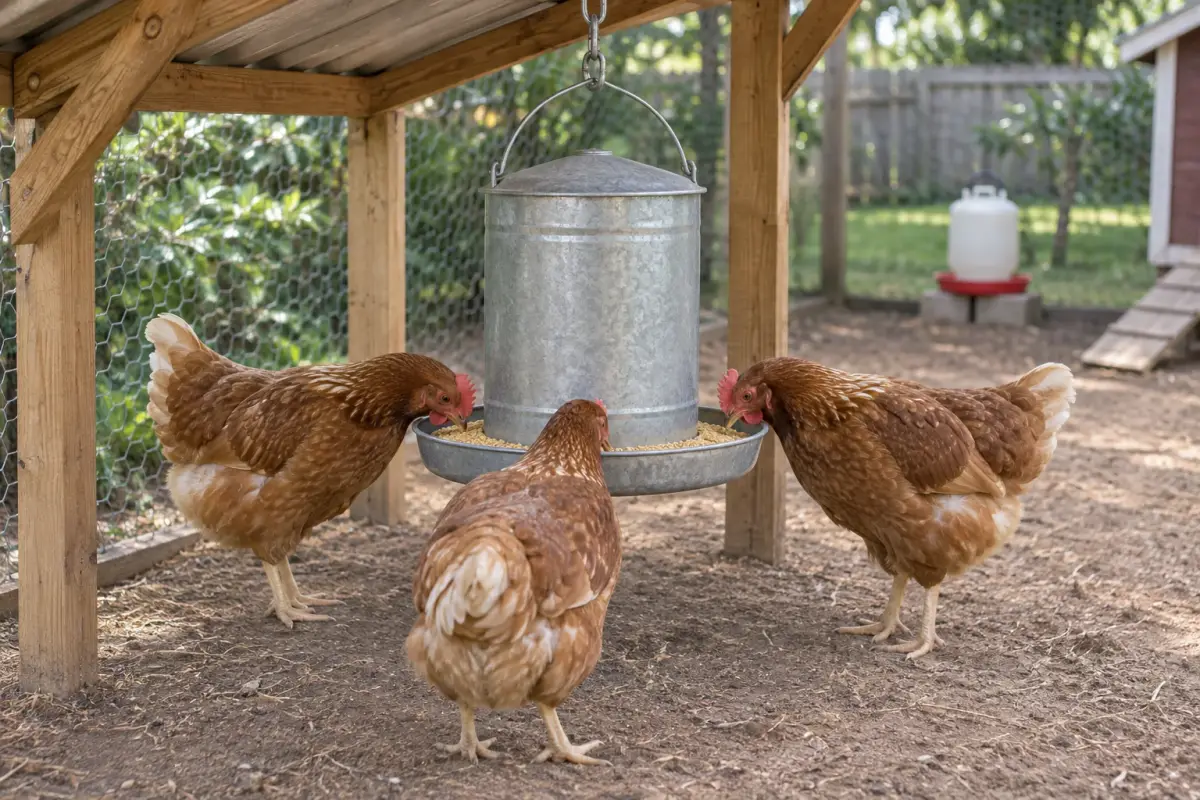
Keep the basics steady. Rebuilding feathers is demanding, and Mississippi State lists nutrition and management among the factors that shape the molt, so keep a complete feed in front of the flock and fresh water available; chicken feeders and waterers that stay clean and dry make that easier. Ask a poultry veterinarian or your county extension office about any change in feed rather than guessing, and limit treats so they do not displace the main ration.
Go easy on handling and on the flock's social stress. New feathers, called pin feathers, are sensitive while they grow, and bare skin draws pecks from flock mates. Space helps: a secure run with room and perches lets a molting hen move away from bullies, as in a combinable wooden chicken run with perches or a large covered chicken run. Browse all chicken runs, or see our pecking order guide. Keep an eye on cold snaps too, since a half-feathered hen loses insulation, and see our page on chickens in winter.
When it is not a molt: call a veterinarian
A normal molt is symmetrical and the skin underneath looks clean. Call a veterinarian who treats poultry if you see bare patches with red, scabbed or bleeding skin, visible mites or lice, a hen that is lethargic, thin or not eating, or feather loss that stops short of regrowth after weeks. Isolated bare backs on one or two hens can also point to over-mating or pecking rather than molt, and a bleeding hen should be separated from the flock right away.
If the whole flock drops feathers at once in spring or midsummer, or a hen loses feathers while still laying heavily, ask a veterinarian rather than assuming. This page is general information, not veterinary advice, and it cannot replace advice from a veterinarian who treats poultry.
Common questions
When do chickens molt?
Most hens molt once a year, usually in late summer or fall as daylight shortens. Mississippi State Extension notes that early molters can begin after only a few months of laying, while late molters lay 12 to 14 months first.
How long does a chicken molt last?
The Merck Veterinary Manual says typically 3 to 4 months, sometimes longer. Mississippi State Extension gives about two to three months for fast late molters and four to six months for early molters.
Do chickens stop laying eggs when molting?
Most do. Mississippi State Extension says most hens stop laying until the molt ends, though some keep their laying rate and simply molt for longer. Merck adds that after an unusual molt, even top producers reach only about 70 percent of former output.
In what order do chickens lose feathers?
Mississippi State Extension lists the order as head, neck, breast, body, wings and then tail. In the wing, the primary flight feathers drop before the secondary feathers.
Is my chicken molting or sick?
A molt is gradual and symmetrical with clean skin beneath. Red, scabbed or bleeding skin, visible mites, lethargy or weight loss are not normal molt signs, so call a veterinarian who treats poultry.
Sources we checked
This guide is general information, not veterinary advice. If your pet is unwell or injured, contact your veterinarian.


