






Care & how-to
How Cold Can Chickens Tolerate? Winter Care Basics
There is no single outdoor temperature that establishes safe winter conditions for every chicken. Breed, age, health, shelter, wind, and moisture all matter. Protect the flock from wet weather and drafts, keep ventilation working, provide unfrozen drinking water, and watch the birds. Plan any supplemental heat with a poultry professional and appropriate equipment rather than relying on an outdoor thermometer alone.
By Matt GarnettUpdated November 11, 20264 min read3 sources
Assess the actual birds before the cold arrives
Minnesota Extension explains that heavier winter-hardy breeds generally manage cold better than smaller birds or birds with large combs and wattles. Wisconsin also highlights differences in feathering and the problems that snow or ice can create for crested or feather-footed birds. A mixed flock may therefore need more than one management arrangement.
Discuss vulnerable birds with a poultry veterinarian before severe weather, especially if any are unwell or have difficulty accessing normal resources. This guide concerns winter management of a flock; it does not replace brooding arrangements for young chicks. Keep age and health information available when asking for advice.
Keep weather protection and ventilation working together
Repair openings that allow wind-driven rain or snow to reach the birds, but do not seal the coop into an airtight box. Utah State University describes ventilation as a way to remove moisture and stale air. Air exchange and protection from a direct draft are different design needs.
Check the coop from inside during bad weather. Look for damp surfaces, wet bedding, and places where a leak has developed rather than assuming a repair made in summer still works. Compare the Chicken Coops and Chicken Runs collections with shelter, ventilation, and maintenance access in mind when reviewing the overall arrangement.
Keep bedding and resting areas dry
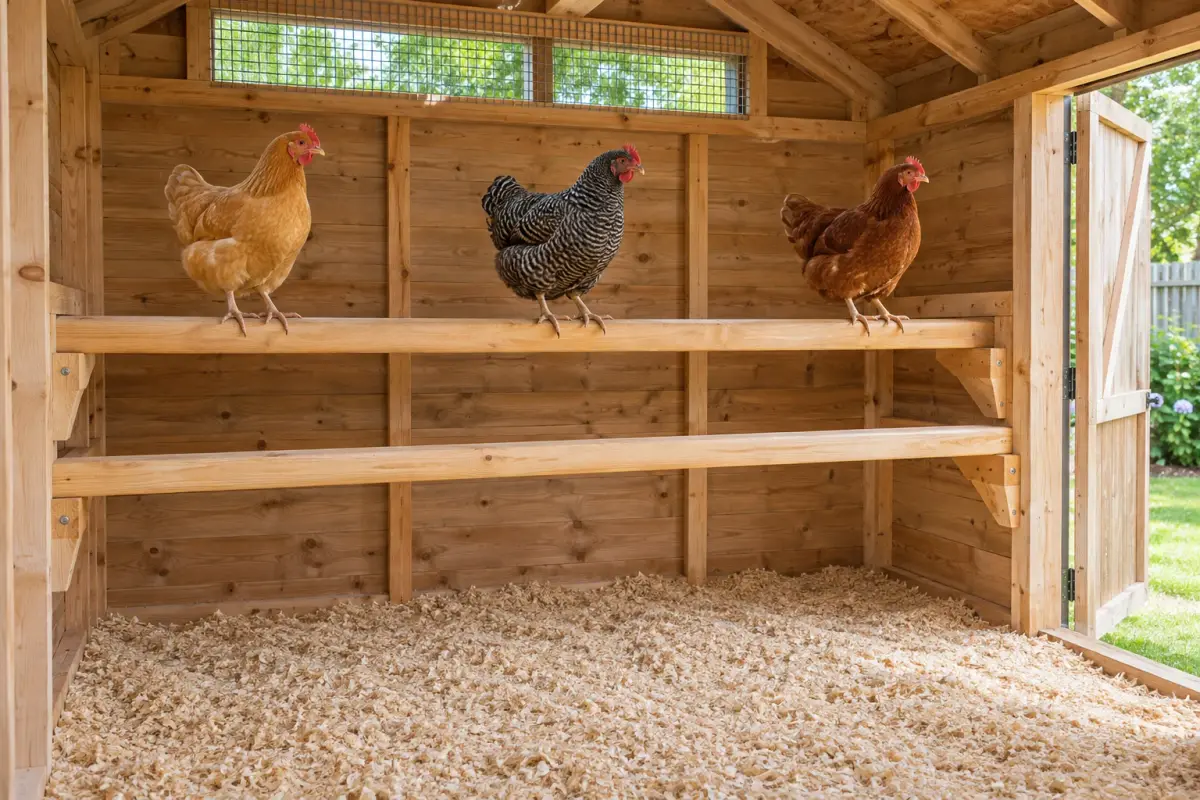
Wisconsin Extension explains that wet litter can produce irritating ammonia and that damp conditions can contribute to respiratory problems. Inspect high-use areas, including beneath roosts and around water containers. Remove obviously wet material and address the source of moisture instead of simply covering a persistent leak.
Provide resting space that birds can use without overcrowding or being blocked by dominant flock members. Keep the route to roosts manageable for the particular birds. During daily care, check whether smaller or less confident individuals actually reach the resources provided; the presence of equipment does not establish equal access.
Make drinking water a repeated daily check
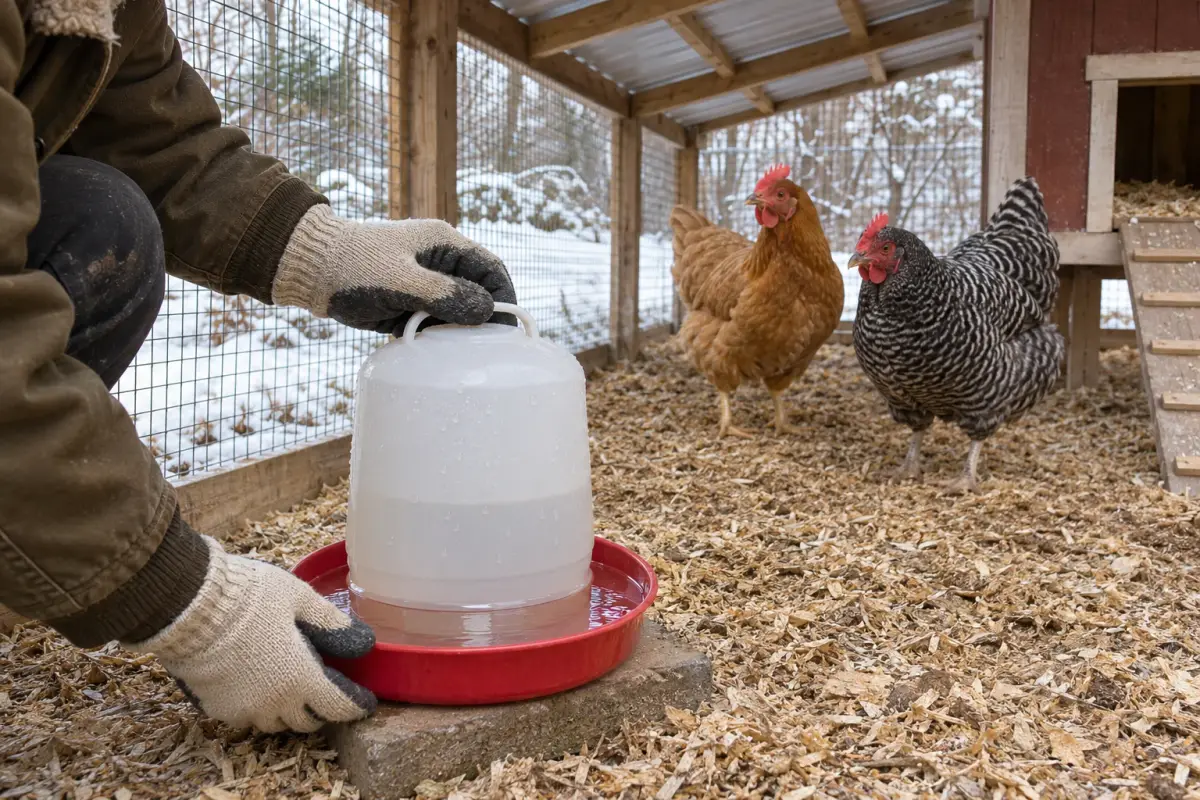
Unfrozen, clean water is essential even when the weather makes maintenance inconvenient. Check the water itself, the delivery point, and whether birds can reach it. A full reservoir is not useful if the drinking surface or outlet has frozen, and a container can be tipped or emptied between visits.
Plan a reliable routine for checking and replacing water, with backup equipment available. If using an electrically heated product, follow its intended use and installation instructions. Keep electrical equipment protected from birds, water, and combustible bedding, and use a qualified electrician for a permanent installation rather than improvised wiring.
Decide about heat with the flock and fire safety in mind
Extension winter guidance discusses supplemental heat alongside flock size, housing, and cold exposure. Avoid a blanket claim that every adult flock always needs heat or that no flock ever does. Assess temperatures where the birds rest and seek advice appropriate to the actual shelter and local winter conditions.
Use equipment intended and approved for the setting, following the manufacturer’s installation and clearance requirements. Dust, bedding, damage, or a knocked-over heater can create serious fire risk. Do not sacrifice ventilation to retain warmth or run a light continuously as an improvised answer to every winter-care problem.
Watch for cold stress and other changes
Huddling, puffed feathers, or a bird repeatedly holding a foot against its body can suggest that conditions need attention, but one posture does not establish a diagnosis. Review shelter, moisture, access to food and water, and the behavior of the whole flock. Keep an appropriate balanced ration available instead of substituting a series of warming treats.
Call a poultry veterinarian about suspected frostbite, persistent poor eating, unusual inactivity, or a bird that cannot remain comfortable despite management changes. Collapse, inability to stand, or marked breathing difficulty needs urgent advice. Describe the bird’s condition and housing rather than waiting to find a supposed universal minimum temperature online.
This page is general information, not veterinary advice, and it cannot replace advice from a veterinarian who treats poultry.
Common questions
How cold can chickens tolerate?
Tolerance depends on the birds and the conditions, including health, feathering, wind, and moisture. Assess the actual coop and flock rather than treating a single outdoor temperature as a safety guarantee.
How can I keep chickens warm in winter?
Provide dry, weather-protected housing, suitable resting space, working ventilation, an appropriate balanced diet, and unfrozen water. Discuss supplemental heat and vulnerable birds with a poultry professional before severe weather.
Do chickens need heat in winter?
Some arrangements require additional heat, but the decision depends on the flock and shelter. Use advice for the actual conditions and equipment intended for poultry settings, with careful attention to fire safety.
Should I close all coop vents during cold weather?
No. Ventilation remains necessary to remove moisture and stale air. Protect birds from direct drafts while maintaining air exchange, and investigate wet bedding or condensation rather than sealing the coop shut.
Sources we checked
This guide is general information, not veterinary advice. If your pet is unwell or injured, contact your veterinarian.


