






Care & how-to
Chicken Coop Bedding and Cleaning: A Practical Routine
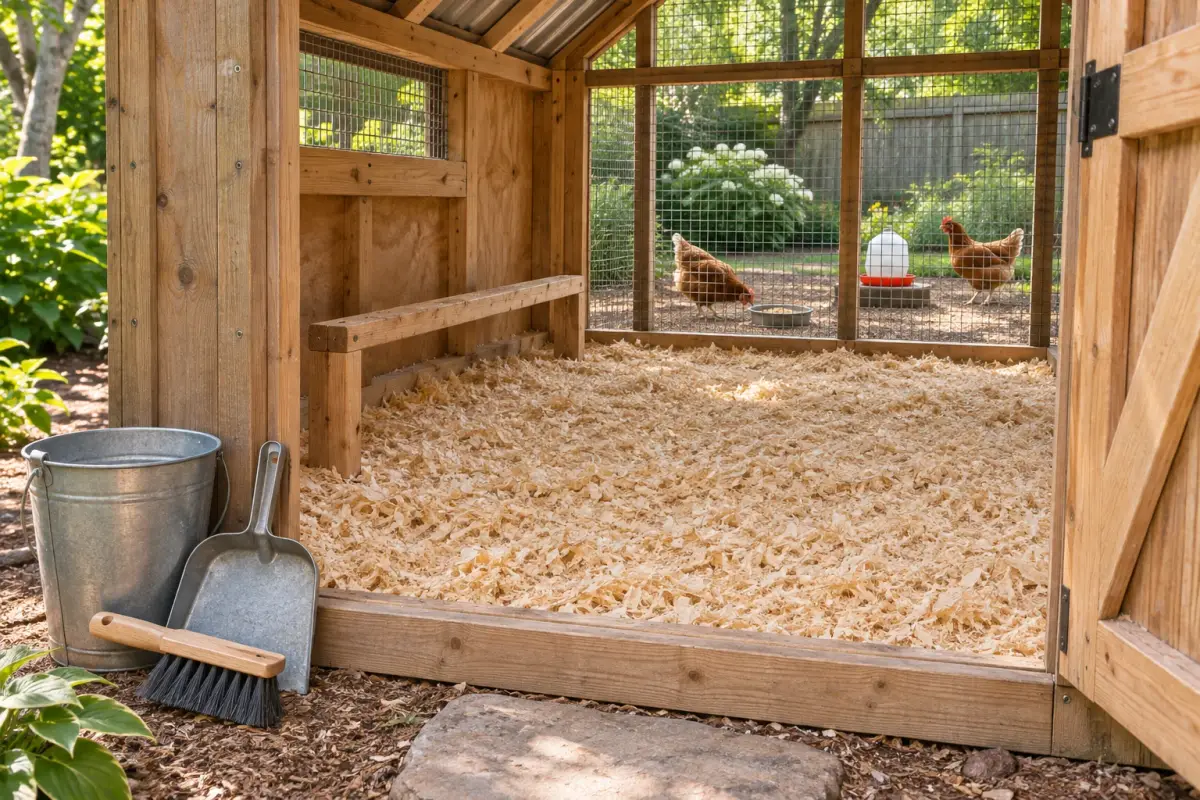
Good chicken coop bedding should absorb moisture, remain manageable, and be free of mold or harmful contamination. Pine shavings are one established option. Remove wet or caked areas promptly and clean before disinfecting, because organic debris can reduce a disinfectant’s effectiveness. A deep-litter arrangement still needs active management; it does not replace inspection, ventilation, or an eventual thorough cleanout.
By Matt GarnettUpdated November 11, 20264 min read4 sources
Choose bedding for the conditions in your coop
Cooperative Extension describes useful litter as absorbent, reasonably quick to dry, and free of contaminants such as pesticides or metal. It identifies pine shavings as a common preferred material while discussing several alternatives. Availability alone does not establish that an unfamiliar recycled material is suitable around birds.
Check what a product actually contains and whether it is intended for the use you have in mind. Avoid uncertain material that may include treated wood, sharp fragments, or contamination. Keep a note of the product if birds begin ingesting it or develop problems after a change, and discuss that history with a poultry professional.
Inspect wet spots before they become a larger problem
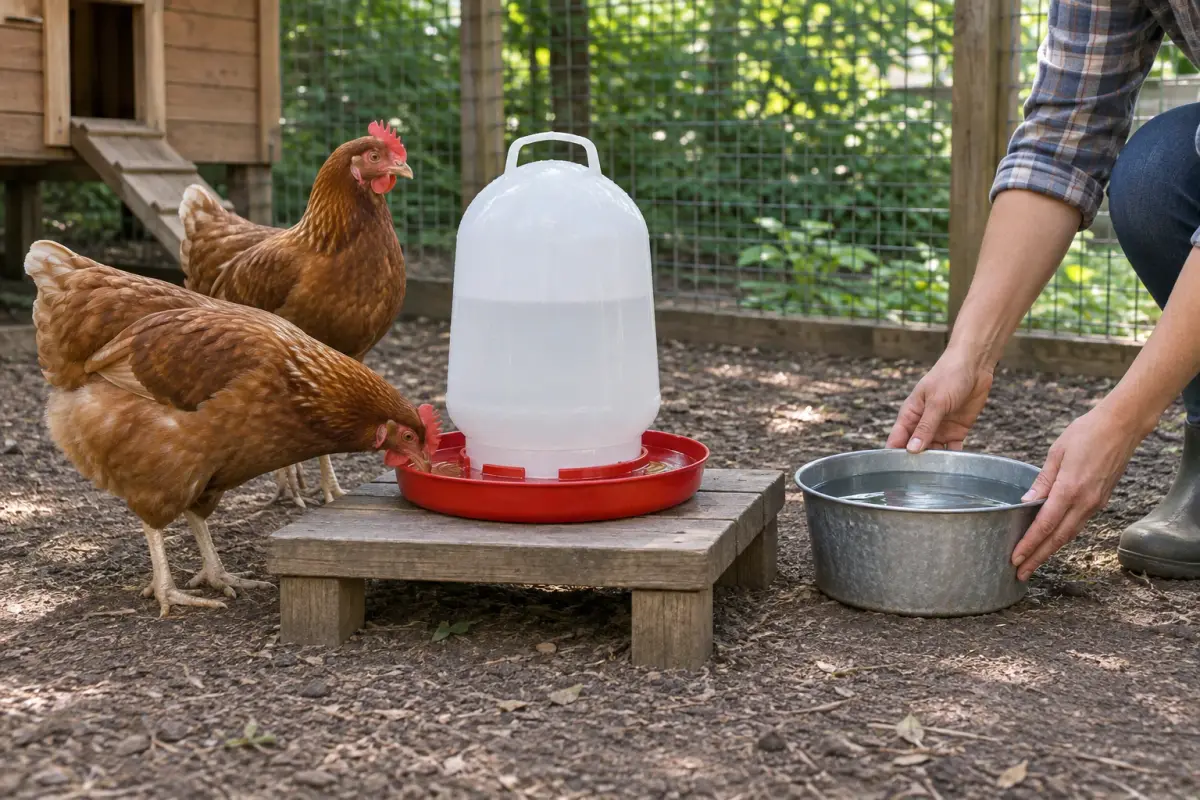
Merck describes wet litter around drinkers and links poor litter conditions with welfare problems, including footpad damage. Check beneath water containers, around entrances, and under resting areas. Find the source of moisture rather than repeatedly adding clean bedding over a leaking drinker.
Remove caked or obviously wet material and maintain a dry, comfortable resting surface. Review airflow at the same time: ventilation helps remove moisture, while a draft directed at birds can create a different problem. Persistent dampness, condensation, or irritating air deserves a housing review rather than a stronger fragrance to hide the smell.
Prepare a safe arrangement before a thorough cleanout
Plan where the birds will remain securely while work takes place, with appropriate shelter, food, and water available. Keep them away from cleaning equipment and chemical products. Remove feeders and drinkers for separate cleaning and protect stored feed from dirty water, debris, and accidental chemical contact.
Consider how you will move bedding and manure without repeatedly carrying waste through clean areas. Keep tools used for poultry care separate from household food preparation. Ask a poultry professional about additional precautions if disease is suspected, since routine cleaning and an outbreak response may require different arrangements.
Clean first, then use an appropriate disinfectant
Cooperative Extension emphasizes removing organic material before disinfection because debris can interfere with a disinfectant’s action. Clear used litter and visible contamination, then clean surfaces and equipment using a method appropriate for their materials. Do not assume a quick spray over dirty bedding has disinfected the coop.
Use a product labeled for the intended setting and follow its instructions for preparation, contact time, rinsing, ventilation, and return of birds. Do not mix cleaning chemicals or improvise a stronger concentration. Allow the cleaned area and equipment to dry appropriately before replacing fresh bedding and restoring the birds’ normal arrangement.
Understand what deep litter still requires
Minnesota Extension describes a winter deep-bedding approach involving management of the soiled layer, fresh material, and a later thorough cleanout. That is an active system, not permission to leave all manure and moisture untouched. Whether it is manageable depends on the coop, ventilation, flock, and daily attention.
Remove wet problem areas and reassess if the bedding becomes persistently damp, heavily caked, or difficult to maintain. Discuss an uncertain setup with an extension poultry specialist. Do not rely on decomposition to correct a leak or assume that an increasingly deep layer proves the system is working well.
Build cleaning access into the housing plan
Compare the Chicken Coops and Chicken Runs collections against practical access to corners, resting areas, doors, and equipment. A layout you can inspect and maintain is easier to manage than one that leaves waste or dampness hidden. Include outdoor drainage and the route used to remove soiled material.
Contact a poultry veterinarian about sore feet, skin damage, breathing changes, poor eating, or unusual inactivity. Those signs do not identify bedding as the only cause, so describe the whole arrangement and recent changes. Marked breathing difficulty, collapse, or several suddenly ill birds requires urgent advice.
This page is general information, not veterinary advice, and it cannot replace advice from a veterinarian who treats poultry.
Common questions
What makes good chicken coop bedding?
It should absorb moisture, dry reasonably well, and be free of mold and harmful contamination. Pine shavings are an established option, but the material and management must suit the actual coop.
Should I disinfect before removing dirty litter?
Remove litter and organic debris and clean surfaces first. Cooperative Extension explains that organic material can reduce disinfectant effectiveness, so spraying over a dirty surface is not equivalent to cleaning and disinfection.
Does the deep litter method mean never cleaning the coop?
No. It still requires inspection, moisture management, removal of wet problem areas, and a later thorough cleanout. Seek advice if the system remains damp, caked, or difficult to maintain.
How often should I clean a chicken coop?
Inspect it routinely and remove wet or caked material promptly. The need for a thorough clean depends on the flock, housing, and conditions; suspected disease requires advice beyond an ordinary household calendar.
Sources we checked
This guide is general information, not veterinary advice. If your pet is unwell or injured, contact your veterinarian.


