






Care & how-to
Predator-Proof Chicken Coop: Review the Whole Enclosure
Reducing predator access means checking the complete chicken enclosure: doors, latches, openings, roof or run cover, and the ground boundary. A product called a predator-proof coop still needs inspection, correct installation, and a reliable closing routine. University extension emphasizes preventing access rather than reacting after an attack. Consider local risks and obtain poultry or wildlife guidance when you are unsure which part of the setup needs improvement.
By Matt GarnettUpdated November 11, 20264 min read3 sources
Start with the complete boundary
Poultry extension identifies dogs, foxes, raccoons, weasels, and birds of prey among animals that can threaten a flock. Different animals approach an enclosure differently, so a barrier aimed only at a large dog may leave other access routes. Inspect the structure as a connected boundary rather than judging one panel in isolation.
Walk around the enclosure and look above and below the obvious doors. Check joints, corners, gaps around fitted equipment, and transitions between the coop and run. Keep notes and photographs of weak points so repairs address the actual route rather than a general impression that the structure feels solid.
Make doors and routine access dependable
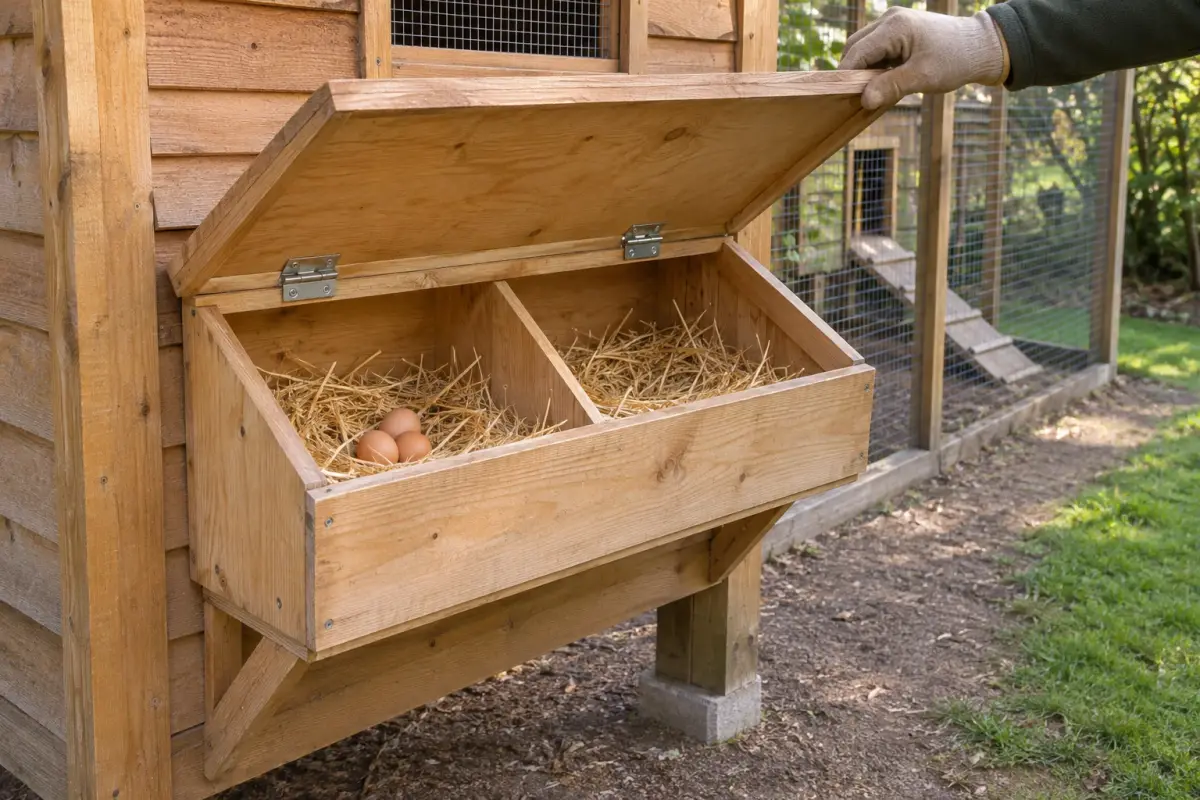
The extension predator guide recommends secure housing at night with doors closed and locked. An otherwise strong structure does not protect birds if a helper forgets the final latch or a door cannot close over accumulated bedding. Include cleaning and egg-collection entrances in the inspection rather than checking only the bird door.
Agree on who closes the flock and who checks that every bird is inside. If you use an automatic door, verify operation and count the birds instead of assuming the mechanism completed the routine. Have a workable plan for power failures, obstructions, travel, and a helper who is unfamiliar with the setup.
Review mesh and overhead protection
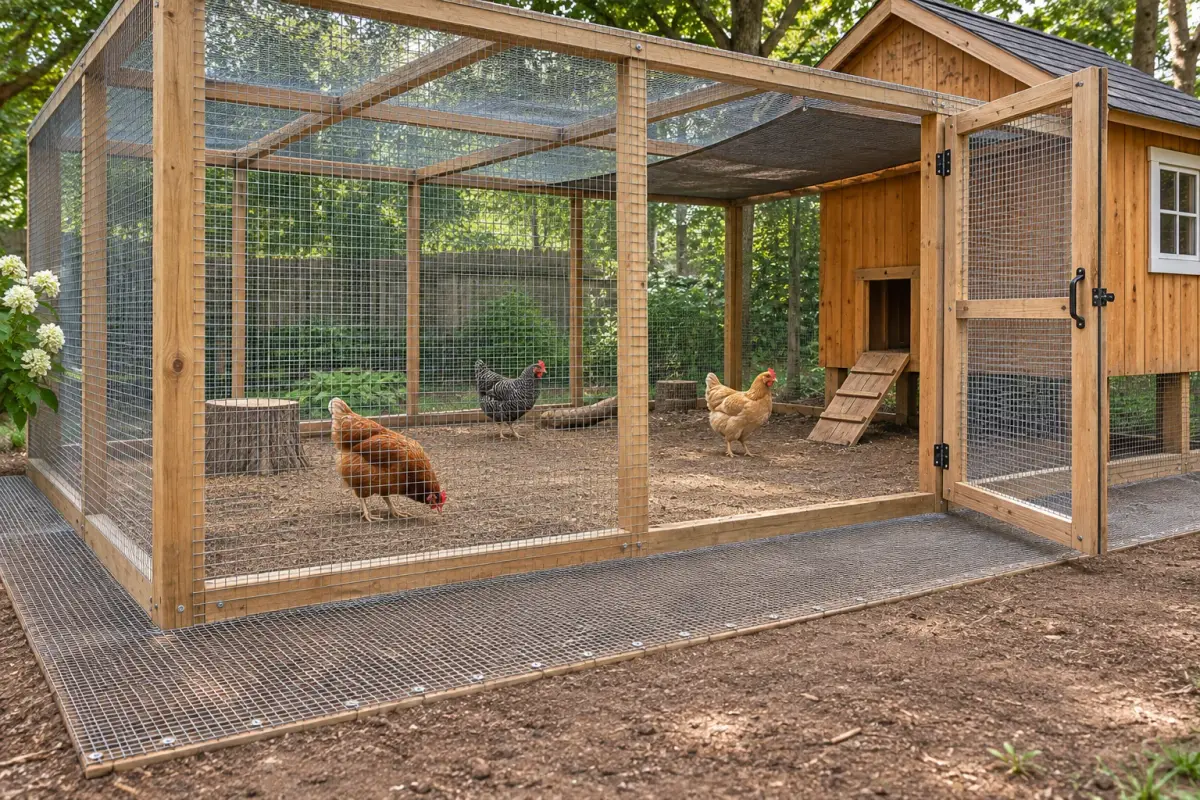
The housing guide recommends secure heavy-gauge mesh over openings. The predator guide also discusses a covered run where birds are exposed to aerial predators and warns that loose or weak spots matter. A cover needs to be suitable for the actual hazard and attached securely to the rest of the enclosure.
Ask an experienced poultry or wildlife professional about material and opening size for the predators in your area. Do not assume lightweight chicken wire excludes every animal or that an overhead visual deterrent provides the same protection as a maintained physical barrier. Recheck attachments after weather damage and normal wear.
Do not overlook digging and ground-level gaps
University housing guidance describes extending a buried wire boundary outward to discourage digging beneath an enclosure. The exact installation must suit the ground, drainage, structure, and hazards on your property. Inspect the base closely rather than assuming that a wall touching the soil prevents access below it.
Discuss a practical ground barrier with someone qualified to assess the site. Keep edges secure so the installation does not create sharp projections or a trapping hazard for birds and people. Reinspect after erosion, digging, mowing, or moving a portable enclosure, because the original boundary can change.
Reduce accessible feed and prepare for a close call
Poultry extension biosecurity guidance includes preventing access by rodents and other animals. Store feed securely and clean spills rather than leaving a persistent attraction beside the flock. Keep waste and carcass handling part of the management plan, and do not leave a dead bird available while waiting to investigate an incident.
If an attack occurs, move survivors into a secure appropriate area without placing yourself in danger. Contact a poultry veterinarian about injuries, especially bleeding, weakness, breathing difficulty, or collapse. Ask for help identifying access routes, but do not treat the pattern of injuries alone as certain proof of one predator.
Make inspection part of choosing and maintaining housing
Compare Chicken Coops and Chicken Runs against doors, material, coverage, usable space, and the installation the site actually requires. Keep ventilation and cleaning access in the plan while improving security. Sealing a house so tightly that air quality deteriorates creates another welfare problem.
Revisit the routine after flock changes, storms, a damaged latch, or any close call. Consult local wildlife professionals about appropriate responses to persistent wildlife problems and check applicable rules directly before any control action. Physical exclusion and dependable daily care remain central even when additional professional measures are needed.
This page is general information, not veterinary advice, and it cannot replace advice from a veterinarian who treats poultry.
Common questions
Is a predator-proof label enough to protect chickens?
No label replaces inspection, installation, and maintenance. Check doors, joints, mesh, roof coverage, and ground access as one boundary, then make secure closing and regular reinspection part of the daily routine.
Does chicken wire stop every predator?
Do not assume it does. University guidance calls for suitable secure mesh and attention to weak points. Ask about material and openings appropriate to local predators rather than choosing a barrier from its name alone.
Why do I need to check the ground under a run?
Some predators dig beneath barriers or exploit gaps at the base. A suitable ground installation and regular checks matter, especially after erosion, digging, or moving the enclosure to another location.
What should I do after a predator attack?
Secure surviving birds and contact a poultry veterinarian about injuries. Seek urgent advice for bleeding, weakness, collapse, or breathing difficulty. Investigate and repair the access route before relying on the same enclosure again.
Sources we checked
This guide is general information, not veterinary advice. If your pet is unwell or injured, contact your veterinarian.


