






Care & how-to
Chicken Coop Size: How Much Space Do Chickens Need?
For an initial adult-flock estimate, University of Minnesota Extension recommends at least 3 to 5 square feet of indoor space per chicken. Treat that as a planning starting point, then consider bird size, layout, outdoor access, and periods when the flock must remain indoors. The floor-area total alone does not show whether every bird can reach food, water, nests, and resting space comfortably.
By Matt GarnettUpdated November 11, 20264 min read3 sources
Use a floor-area estimate as the beginning of the plan
Multiply the planned number of adult birds by the indoor space allowance you are using, then draw the proposed layout. For example, six chickens at 5 square feet each gives 30 square feet of indoor floor area. This arithmetic is an initial space estimate, not a complete design or a guarantee that the finished coop suits the flock.
Extension recommendations differ with the production setting and the assumptions behind them. State the source and conditions when comparing figures rather than presenting a single number as universal. Allow room to reassess the plan for large birds, a mixed flock, or extended confinement instead of buying birds to match the smallest capacity claim.
Check how the birds will use the interior
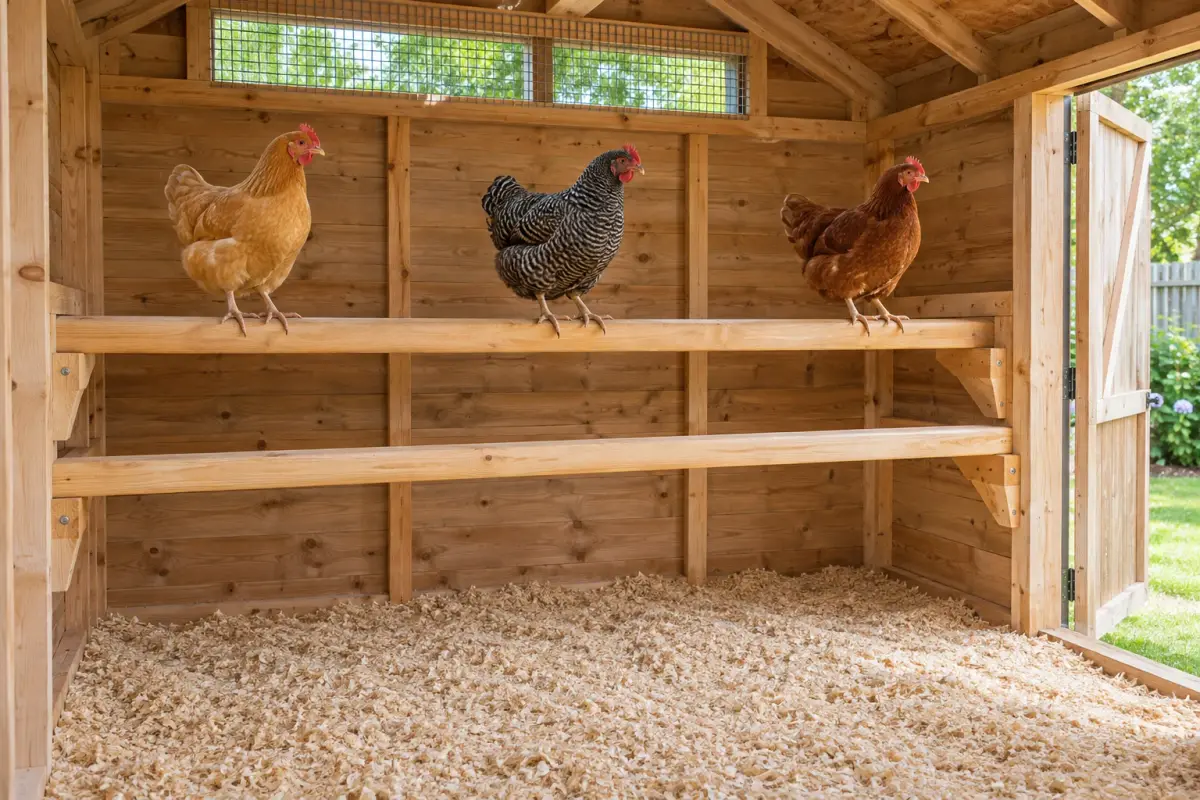
Mark the doors, feeders, drinkers, nest boxes, and roosts on the drawing. A narrow passage blocked by equipment may be difficult for a lower-ranking bird to use, even if the overall measurements look generous. Check that birds can move between important areas without repeatedly forcing their way past one another.
Utah State University emphasizes access to feed and water as well as room for equipment and maintenance. Think about the smallest birds and any with mobility difficulties, rather than designing only around the most confident hen. The layout should also let a caretaker inspect a quiet bird without a stressful chase through clutter.
Plan roosts and nests separately from floor area
Roosting and laying needs require their own places in the coop. Minnesota Extension describes one nest box for every four to five hens. Check that boxes remain accessible, comfortable, and clean rather than assuming hens will use every space you have provided simply because it is labeled a nest.
Utah State’s housing guidance discusses perch space, placement, and access for cleaning below. Choose a layout that suits the actual birds and permits manageable access to the resting area. Avoid creating a fall or collision problem with a high perch and crowded landing space. Ask a poultry specialist about a design that includes unusually heavy or less mobile birds.
Assess the outdoor run and periods of confinement
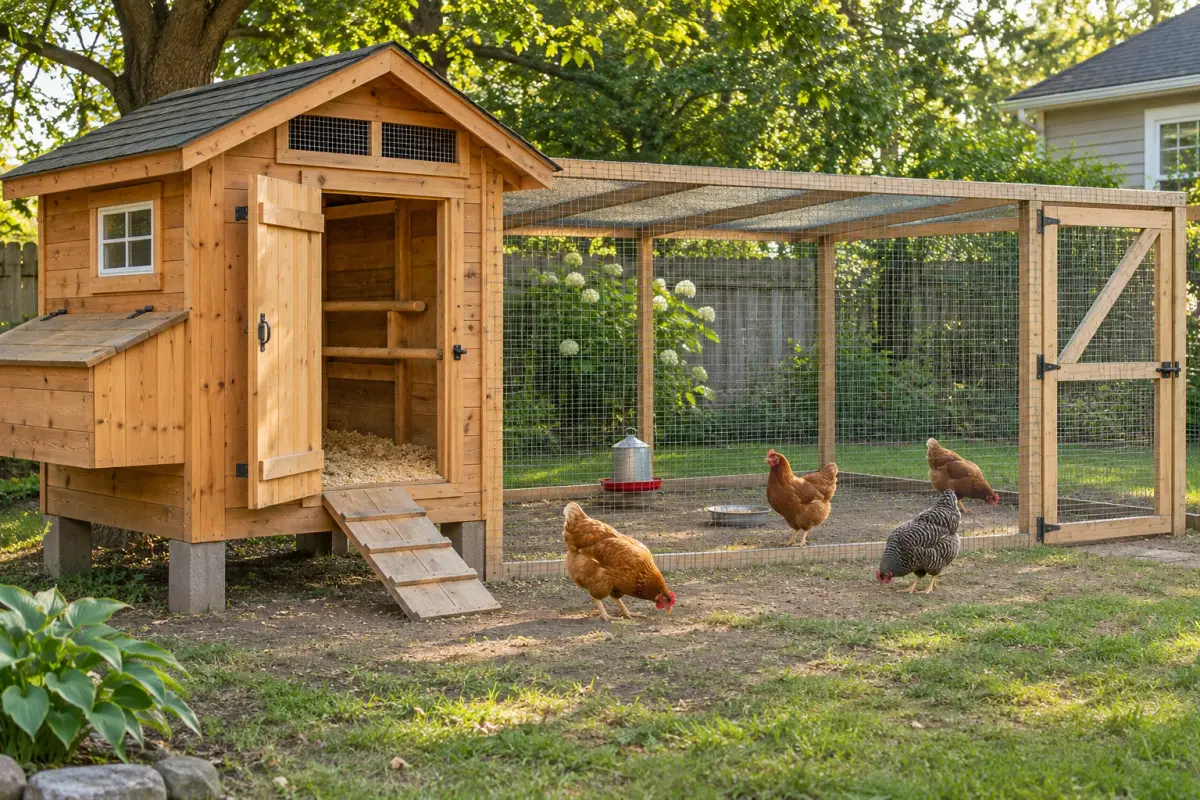
Indoor housing and an outdoor run serve connected purposes, but one area does not automatically make the other adequate. Colorado State University’s Boulder guide describes run space separately and stresses shade, drainage, and protection from predators. Measure the area birds can actually use rather than including inaccessible corners beyond fencing.
Consider what happens during severe weather, an enclosure repair, or a need to restrict outdoor access for flock health. A plan that depends on birds spending almost all day outside can become crowded when that routine changes. Discuss likely local conditions with an extension poultry specialist before deciding the coop is large enough.
Include ventilation and practical cleaning access
More floor space does not compensate for stagnant, damp air. Utah State University explains that ventilation removes moisture and stale air while avoiding uncomfortable drafts at bird level. Review how openings work in different seasons and protect them against access by predators or wild birds.
Make sure you can reach wet bedding, inspect corners, clean beneath roosts, and maintain feeders and drinkers. A hard-to-clean design can leave a small problem unnoticed until a large area is affected. Plan the caretaker’s movements too, including safe access with a water container and a way to collect eggs without disturbing the whole flock.
Review the finished coop with the flock in mind
Observe how birds use the space after moving in. Repeated crowding, blocked feeding access, persistent dampness, or injurious pecking calls for a management review. Those observations do not prove that floor area is the only cause, so consider layout, flock relationships, weather, and the availability of resources together.
Ask a poultry veterinarian about injuries, illness, or changes in eating and activity. An extension specialist can help assess a housing plan, while local authorities can confirm current building and animal-keeping requirements for the address. Expand or revise the arrangement when the birds’ needs show that the original estimate was insufficient.
Compare the Chicken Coops and Chicken Runs collections against your measured plan. Check usable interior dimensions and the outdoor layout separately, rather than treating a stated bird capacity as the whole assessment.
This page is general information, not veterinary advice, and it cannot replace advice from a veterinarian who treats poultry.
Common questions
How much space do chickens need inside a coop?
Minnesota Extension recommends at least 3 to 5 square feet indoors per chicken. Use that as a starting estimate and assess bird size, layout, access to resources, and likely periods of confinement.
What indoor floor area does that suggest for six chickens?
At 5 square feet per adult bird, six chickens gives an initial estimate of 30 square feet. You still need to assess the layout, roosts, nests, ventilation, and outdoor arrangement.
Does a large run mean the indoor coop can be very small?
Do not assume that. Birds still need usable indoor space, and weather or flock-health precautions can keep them inside for longer than expected. Assess both areas and the conditions of use.
Why do published coop space recommendations differ?
Guides can address different birds, housing systems, and management assumptions. Compare those conditions rather than choosing the smallest figure, and ask a local extension poultry specialist to review your proposed arrangement.
Sources we checked
This guide is general information, not veterinary advice. If your pet is unwell or injured, contact your veterinarian.


