






Care & how-to
Chicken Pecking Order: Normal Behavior and Harmful Attacks
A chicken pecking order is the flock’s social hierarchy; mild pecking can occur as birds establish their relationships. Persistent attacks, damaged skin, bleeding, or a bird unable to reach food and water needs intervention. Do not treat injury as something a hen must endure to fit in. Separate birds safely when needed and contact a poultry veterinarian for wounds or illness.
By Matt GarnettUpdated November 11, 20264 min read3 sources
Protect injured birds and seek appropriate care
Extension’s feather-pecking guidance explains that wounds can attract further pecking and that harmful behavior can spread through the flock. Remove an injured bird from access to attackers and contact a poultry veterinarian. Do not leave exposed tissue or bleeding within reach while waiting to see whether the others become bored.
Tell the veterinarian about the injury, the bird’s ability to stand and eat, and the frequency of attacks. Seek urgent care for significant bleeding, severe injury, weakness, or breathing difficulty. Do not apply an improvised chemical or a product intended for another animal. Ask for directions about handling and wound care while keeping the bird safely separated.
Check resources and conditions before blaming one hen
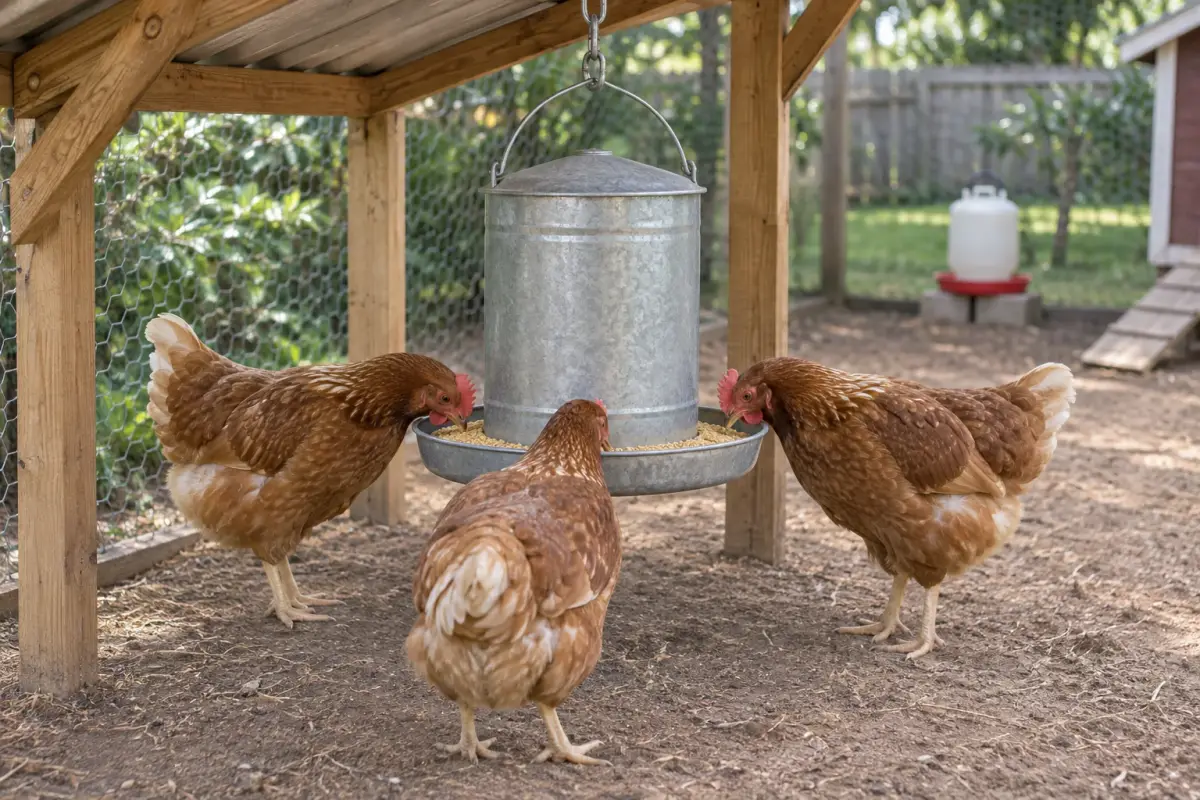
Crowding and competition for feed or water are among the management concerns listed by Cooperative Extension. Review how many birds can actually use the provisions, not merely how many containers are present. A drinker placed behind a dominant bird’s favored resting spot may be technically available but difficult for another hen to approach.
Also assess temperature, ventilation, lighting, and the suitability of the normal ration. The extension guide identifies overheating, excessive light, and inadequate nutrition as possible contributors to harmful pecking. These are factors to investigate with a poultry specialist, not a diagnosis from one featherless patch or a reason to start random mineral and protein supplements.
Expect flock changes to need careful management
The normal-behavior guide explains that introductions and returns after absence can disturb established relationships. University of Arizona Extension recommends gradual integration with a physical barrier after the health quarantine period, followed by supervision. Putting unfamiliar birds together and walking away removes the opportunity to stop problems before a bird is hurt.
Keep a separate accommodation available, check the size and stage of young birds, and review access to feed, water, and roosting space. If a particular pair cannot mix safely, return to separation and ask for help with the setup. Do not use forced contact or a late-night move as a guarantee that the morning will be peaceful.
Keep records that help solve repeated attacks
A short record can list the time, location, birds involved, available resources, and any recent flock or housing change. Photographs of the layout may help an extension poultry specialist assess a recurring problem. Avoid staging another attack for a video; protecting the bird takes priority over collecting an ideal example.
Contact a poultry veterinarian when pecking occurs with reduced eating, unusual quietness, loss of condition, abnormal droppings, or wounds. A bird appearing different can attract attention from flock mates, but that observation does not explain why it is unwell. Persistent problems need a combined review of health and management rather than a permanent personality label.
Review shelter and enclosure access together if birds repeatedly block one another. The Chicken Coops and Chicken Runs collections can support that layout review, while injuries and persistent distress still require professional attention.
This page is general information, not veterinary advice, and it cannot replace advice from a veterinarian who treats poultry.
Common questions
What is a chicken pecking order?
It is a social hierarchy within the flock. Mild pecking may occur as relationships are established, but the term does not justify wounds, persistent attacks, or preventing a bird from reaching feed and water.
Should I separate a chicken that is bleeding?
Protect it from further pecking and contact a poultry veterinarian. Wounds can attract additional attacks. Significant bleeding, weakness, severe injury, or breathing difficulty needs urgent veterinary attention rather than waiting for the flock to settle.
Why does pecking get worse after adding new chickens?
A newcomer can disturb existing social relationships. Health quarantine and gradual protected introductions serve different purposes, and both require planning. Supervise later mixing and keep a separate area available if attacks or exclusion occur.
Does feather pecking always mean a protein deficiency?
No. Nutrition is one possible management factor, alongside crowding, lighting, heat, and other issues. Review the whole setup and the birds’ health with a poultry professional instead of diagnosing a deficiency and adding supplements.
Sources we checked
This guide is general information, not veterinary advice. If your pet is unwell or injured, contact your veterinarian.


