






Care & how-to
Free-Range Chickens: How to Let Them Roam Safely
Free-range chickens roam outside the coop by day, and the main risk is predators, not space. Penn State Extension says fully confined birds in a fenced, covered run are best protected, so free ranging is a trade-off. If you do it, birds must be shut into a secure coop every night, with cover, shade and a sound run as the fallback.
By Matt GarnettUpdated November 13, 20264 min read2 sources
What free range means in a backyard
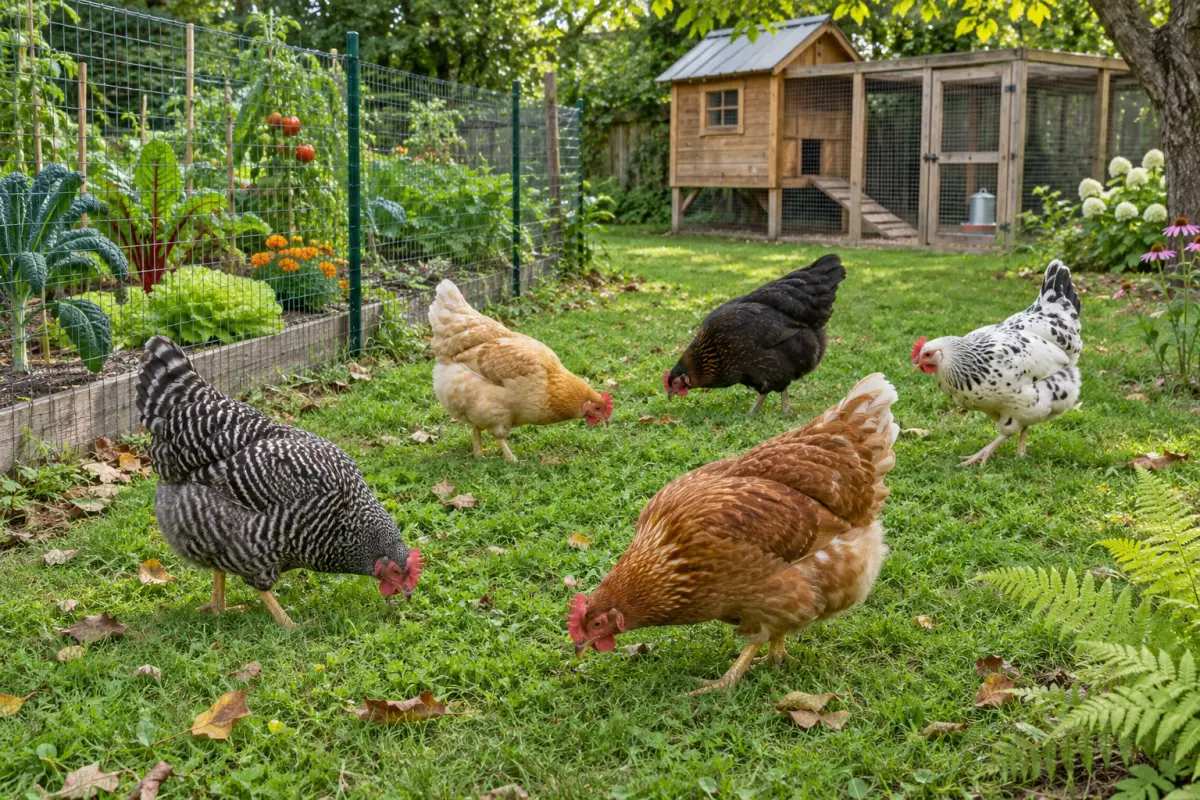
In a backyard, free range simply means your hens spend part of the day roaming beyond a fenced run, picking at plants and insects. It is a spectrum, from a few supervised hours in the yard to a flock with the run of the whole garden. The more freedom they have, the more you are relying on the coop for safety at night.
The coop is still the heart of the setup. Oregon State Extension advises designing it so the flock is closed inside at night, and Penn State Extension says that if outdoor runs are not predator-proof, birds should be locked up before dark. Browse our chicken coops if you are building that base first.
Space still matters, even when they roam
Free-ranging does not remove the need for proper housing. Penn State Extension's table gives laying hens 1.5 square feet inside and 8 square feet in the run, and large chickens 2 square feet inside and 10 outside. Oregon State Extension says to provide at least 3 square feet per bird when there is access to a run or outdoor area, and roughly 8 to 10 square feet if there is none.
Those figures are floors for birds that are shut in. Bad weather, snow or a predator scare can keep the flock inside for days, so the coop and run have to be comfortable on the worst day, not the best one. Inside, allow 5 to 10 inches of roost pole per bird and about one nest box for every four birds, each around 12 inches in each direction.
The predator trade-off
Penn State Extension is blunt that keeping poultry totally confined with fencing and covered runs is the best protection from predators. Free ranging gives up some of that protection in exchange for foraging and freedom, so it is worth deciding honestly how much risk you will accept, and what you will do after a loss.
There are ways to improve the odds. Oregon State Extension suggests avoiding large plants around the coop, which can shelter predators, while Penn State notes that tall leafy ground cover gives birds somewhere to hide and a 3 to 4 foot grid of wire or twine over a run helps against flying predators. Supervised time out is safer than leaving the flock alone.
A secure run as the middle ground
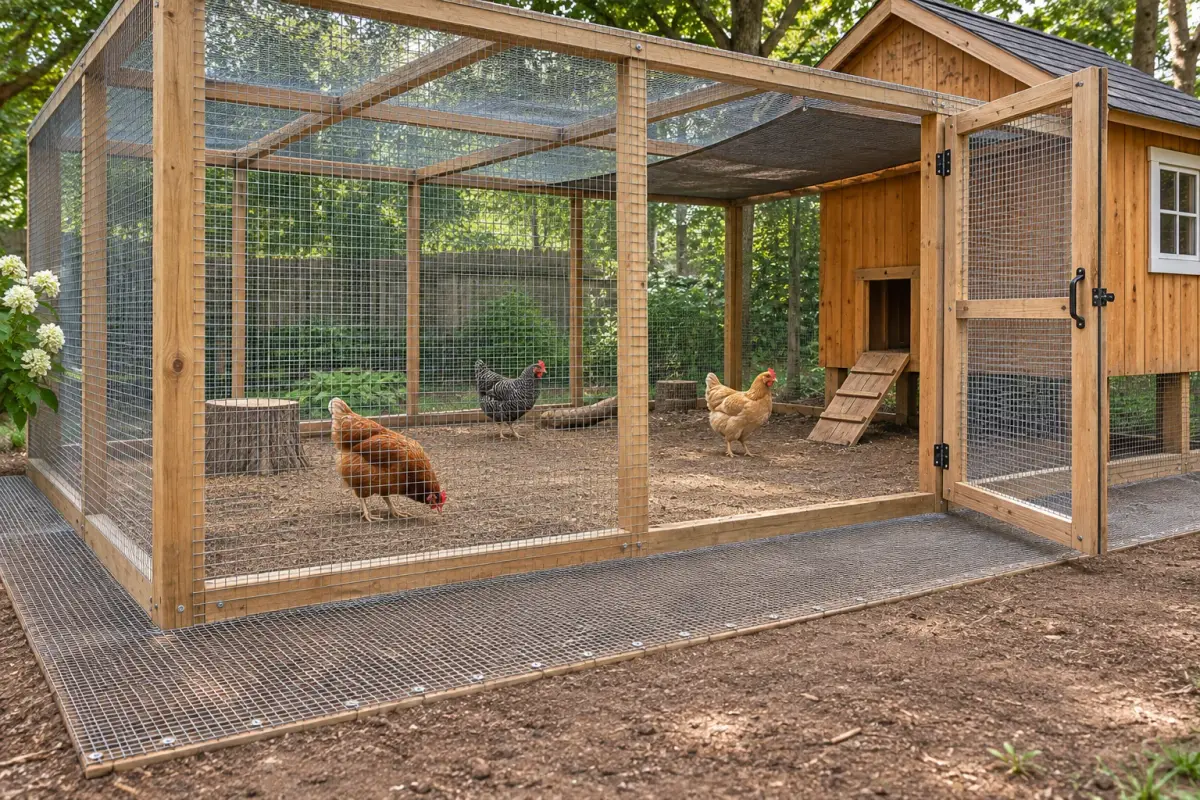
Many keepers settle on a large, covered run for most of the day and supervised free-range time when they are home. For the run, Oregon State Extension recommends mesh fencing of 1 by 2 inches and burying fencing 6 inches to 1 foot into the ground. Penn State suggests burying it at least 12 inches and bending the bottom outward about 6 inches.
Cover the top with mesh or netting against hawks and owls. A walk-in chicken run lets you do that and gives birds a safe place when you cannot watch them. Our chicken run buying guide covers types and sizes, and a large run for 19 to 25 chickens shows what a covered walk-in design looks like.
Getting the flock to come home
Birds are creatures of habit, and most will head for the coop at dusk on their own. Your job is to make sure the door is closed once they are in, every night, without fail. A routine matters more than gadgets: count the birds, close the pop-hole, check the latch.
A modular run can also act as a holding area while birds learn the routine. A combinable wooden run with perches is one type you can extend as the flock grows. Keep food and water in the run or coop so birds have a reason to return, and keep fencing in good repair, since a small gap is all a predator needs.
Health and when to call a vet
Birds that roam meet more wild birds, rodents and mud, and a sick chicken often hides it. If a hen is lethargic, stops eating, has labored breathing or shows swollen eyes or a sudden drop in activity, call a vet who treats poultry promptly rather than waiting.
Check the flock daily when you shut them in, and keep a quiet pen ready to separate a bird that is hurt or unwell. This page is general information, not veterinary advice, and it cannot replace an examination by the vet who knows your pet.
Common questions
Can chickens free range all day?
They can, but it is the riskiest option. Penn State Extension says fully confined birds in covered runs are best protected from predators, so many keepers combine a secure run with supervised time out.
Do free-range chickens still need a coop?
Yes. Oregon State Extension advises a coop that closes the flock inside at night, and Penn State says to lock birds up before dark if the run is not predator-proof.
How much space do chickens need if they free range?
Oregon State Extension says at least 3 square feet per bird inside when there is outdoor access. Penn State gives laying hens 1.5 square feet inside and 8 in the run.
What fencing keeps predators out of a chicken run?
Oregon State Extension suggests 1 by 2 inch mesh buried 6 to 12 inches. Penn State suggests burying fence at least 12 inches and bending the bottom outward about 6 inches.
Sources we checked
This guide is general information, not veterinary advice. If your pet is unwell or injured, contact your veterinarian.


