






Care & how-to
Can Chickens Fly? What It Means for Your Fence and Run
Yes, chickens can fly, but only in short, low bursts, and how much depends on the breed and the bird. Lighter, more nervous breeds get over barriers more easily than heavy, calm ones. For a backyard keeper the practical answer is not to rely on a fence alone: a covered run keeps hens in and keeps hawks out.

By Matt GarnettUpdated November 13, 20264 min read3 sources
What chickens can and cannot do in the air
Chickens are not long-distance fliers. They have heavy bodies and short, rounded wings, so flight is a quick burst: up onto a roost, over a low fence, into a tree to escape something chasing them. They glide down rather than soar. That is enough to get a determined hen over an obstacle she can reach in a hop and a flap, which is why a run that looks secure from the ground can still lose birds.
Roosting is the everyday use of flight. Penn State Extension's housing table gives roost heights of 18 to 24 inches for standard chickens and 12 to 18 inches for bantams, and says chickens should never perch more than 4 feet off the floor. Those numbers describe how high housing designers expect birds to go on a regular basis, and they hint at why a fence that is only a little taller than a roost height can be cleared.
Which breeds fly the most
Temperament and build both matter. The Mississippi State University Extension breed guide lists Leghorns among breeds described as nervous or flighty, and notes that Polish chickens have a somewhat nervous and flighty temperament. Lighter, active birds tend to be the ones that go over fences; heavy, docile breeds are generally less inclined to try. The extension sources used here do not publish specific flight heights by breed, so be cautious of any exact figure you see online.
Individual hens vary within a breed, and young pullets are often more agile than older, heavier hens. Handling birds from chickhood makes them calmer and easier to catch, which matters if one does escape. If your flock includes flighty breeds, plan for the most athletic bird you own rather than the average one. Our guide to Plymouth Rock chickens describes a calmer dual-purpose option.
Why a covered run beats a taller fence
Raising the fence only helps until a hen finds the next launch point. Feeders, stumps, the coop roof and even a wheelbarrow beside the wire all act as steps. Penn State Extension's advice goes further: fully enclose birds with fencing and covered runs, and cover outside runs with mesh wire or netting against hawks and owls. Oregon State Extension also recommends netting or wire over the top of the run.
A roof solves two problems at once. Hens cannot leave over the top, and flying predators cannot come in. That is why a covered design is usually the better investment than a very tall fence. Browse the chicken runs collection, and compare designs such as a wooden run with perches or a larger covered run for a bigger flock. Our buying guide for chicken runs explains the features that matter.
Practical ways to keep hens where you want them
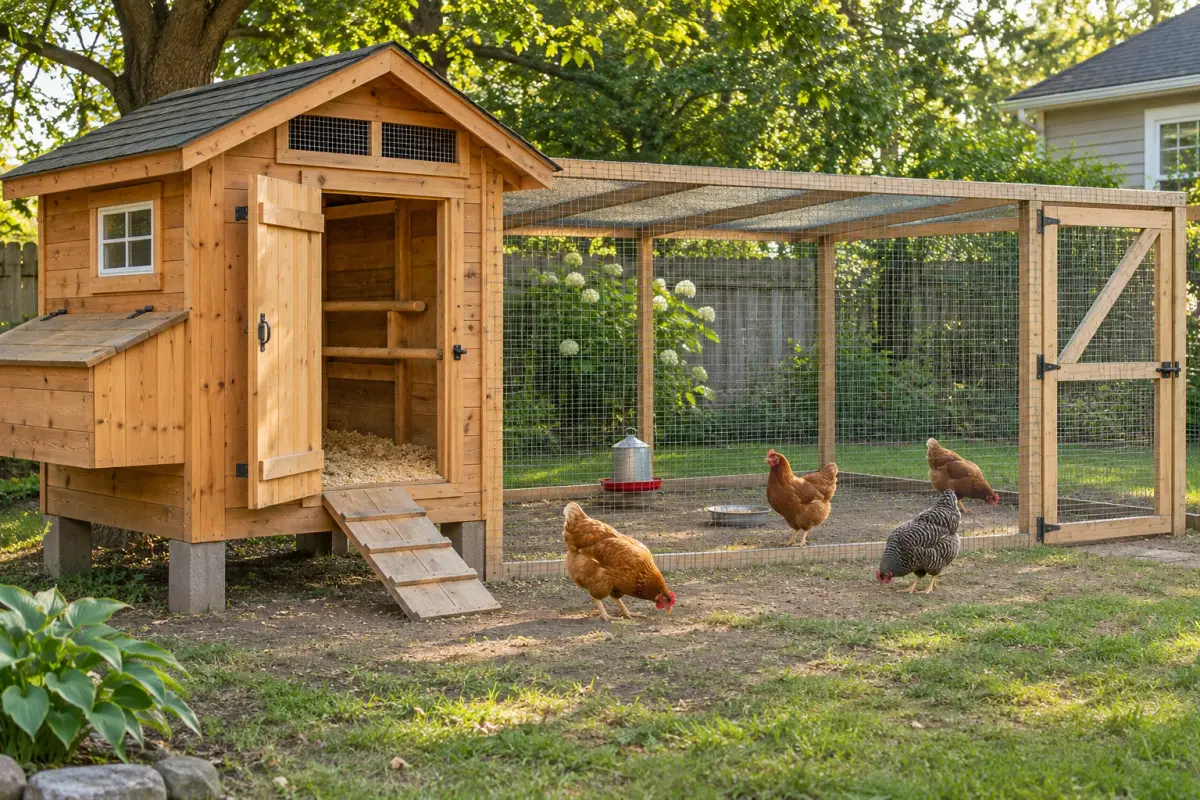
Start with the obvious: remove anything hens can use as a step beside the fence, and keep feeders and perches toward the center of the run rather than against the wire. Give them a reason to stay, with shade, dust-bathing ground, places to scratch and enough space. Penn State Extension allows 8 square feet per laying hen in a run, and cramped birds are more likely to push at the boundaries.
If you free-range, accept that some wandering is normal and that the main risk is predators, not escape. Oregon State Extension advises closing birds into the coop at night and raising the coop at least 1 foot off the ground with secure flooring. Count the flock at dusk and keep a coop door that latches. Some keepers trim flight feathers on one wing to reduce lift; it is a temporary measure that should be shown by someone experienced, so ask a veterinarian who treats poultry or your county extension office before you try it.
When an escape is a problem
A hen that is out in the yard for an afternoon is usually fine. A hen that is out near a road, a neighbor's dog or at dusk is at real risk. If a hen is missing, check the coop, the shrubs and the area under porches first, since frightened birds hide. Try again at dusk, when hens naturally head to roost.
See a veterinarian who treats poultry if a bird is limping, holding a wing down, bleeding or lethargic after a fall or a predator encounter. Wounds on chickens can look minor and still need care, and other flock members may peck at an injured bird, so a separate recovery space is sensible. This page is general information, not veterinary advice, and it cannot replace advice from a veterinarian who treats poultry.
Common questions
How high can chickens fly?
Only short, low bursts, and it varies by breed and bird. The extension sources used here give roost heights but no breed flight heights, so plan around your most athletic hen and use a covered run rather than counting on fence height.
Which chickens fly the most?
Lighter, more active breeds fly best. Mississippi State Extension lists Leghorns among breeds described as nervous or flighty. Heavy, calm breeds are generally less inclined to go over fences, though individual hens differ.
Do I need to cover my chicken run?
Extension guidance recommends it. Penn State says to cover outside runs with mesh wire or netting against hawks and owls, and Oregon State recommends netting or wire over the top. A roof also stops hens leaving over the fence.
Can chickens fly out of a coop at night?
Hens go to roost at dusk and are calmer then, but a coop door left open or a loose panel is an easy exit. Close and latch the coop each night, as extension guidance advises, to keep predators out.
Should I clip my chickens' wings?
It is a temporary measure and should be done carefully, so ask a veterinarian who treats poultry or your county extension office first. A covered run and removing launch points beside the fence are safer first steps.
Sources we checked
This guide is general information, not veterinary advice. If your pet is unwell or injured, contact your veterinarian.


