






Buying guides
Best Dematting Tool for Dogs: How to Remove Mats Safely
The best dematting tool for home use is a dematting comb or rake with rounded ends and blades on the inside curve, used with a detangling spray and a metal comb to work small mats loose from the outside in. A mat splitter handles tighter knots. The AKC advises working gently over several short sessions and not cutting mats out yourself. Mats tight against the skin are a job for a groomer.
By Matt GarnettUpdated November 14, 20264 min read2 sources
What matters most: safety and working from the outside in
A mat is a dense knot of shed and live hair that tightens over time and pulls on the skin. The AKC's advice is to start at the outer edge of a mat and work inward toward the skin, holding the mat steady at its base with one hand so your dog does not feel each tug, and to expect several short sessions over a few days for a bad mat.
Safety decides the tool. Dematting tools have sharp blades, and dog skin lifts easily with the mat. Look for rounded tips, blades set on the inside of the curve so the outer edge is blunt, and a comfortable handle. The AKC warns against cutting mats out with scissors, since a nervous dog's sudden movement can cause a serious injury. Browse our dematting tools with that in mind.
Dematting comb, rake, splitter and comb compared
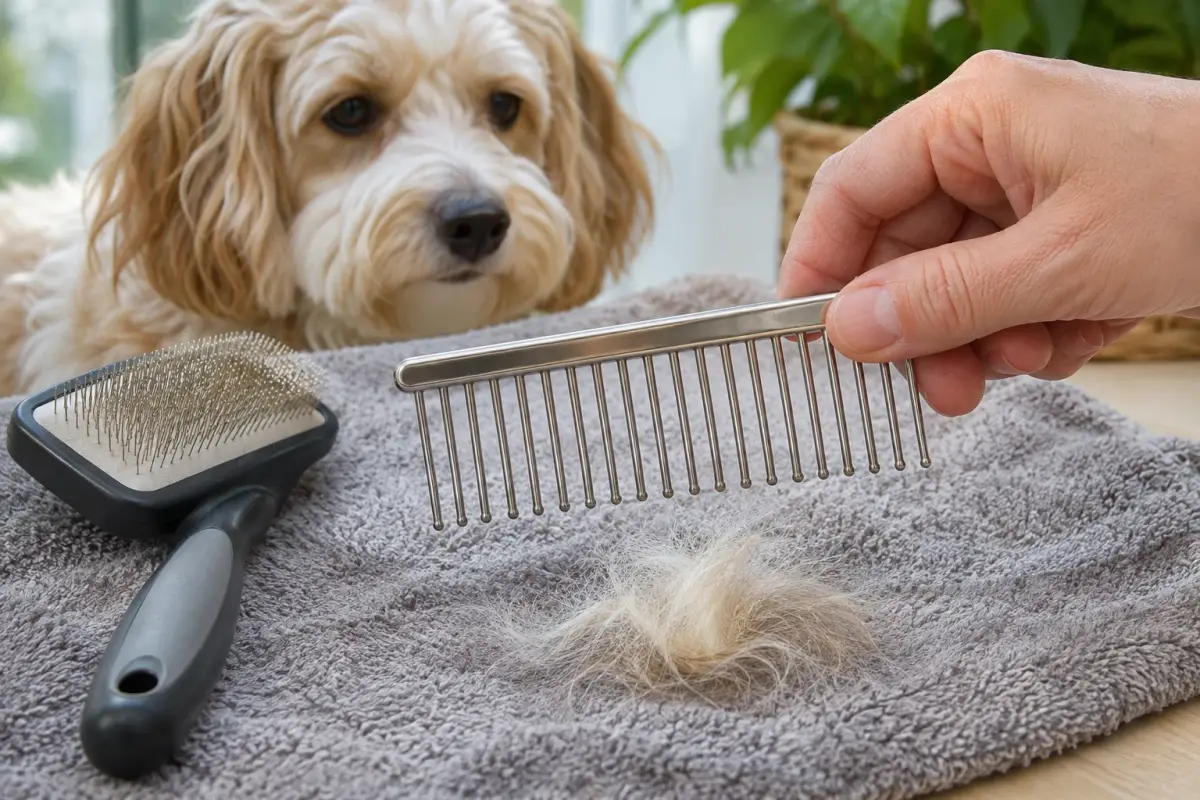
Dematting combs and rakes have a row of curved blades with sharpened inner edges. Pulled through a mat in the direction of hair growth, they slice it into smaller sections that can then be brushed out. They suit medium and long coats with occasional mats. Mat splitters have one or a few blades you slide into a mat to divide it, which suits small, tight knots.
A metal comb, wide and fine teeth, is essential to finish and to check the mat is gone. Fingers and a detangling or conditioning spray do a surprising amount, as the AKC notes. Undercoat rakes prevent mats by removing loose undercoat but are not designed to cut through existing ones.
Best tool for each coat
For double-coated breeds with mats behind the ears or on the britches, such as Collies, Shelties and Golden Retrievers, a dematting rake followed by an undercoat rake. For curly and doodle coats, a mat splitter and a long-toothed comb for small knots, plus line brushing with a slicker to prevent new ones.
For long silky coats such as Shih Tzus, Maltese and Yorkies, a small mat splitter, detangling spray and a fine comb, since these coats break easily. For cats with mats, use tools sized for cats and extra care; many cat mats are best handled by a groomer or your vet.
What to avoid
Avoid scissors near the skin. Avoid pulling a dematting tool against the direction of growth or straight down into the skin. Avoid long sessions with an unhappy dog; stop and come back later. Avoid bathing a matted dog before dematting, since water tightens mats.
If mats are close to the skin across large areas, or your dog is sore, a professional groomer can clip the coat short safely. The AKC's grooming standards note groomers should explain the downsides before shaving. If the skin under a mat is red, wet, smelly or broken, have your vet check it.
How to use a dematting tool
Mist the mat with detangling spray and loosen it with your fingers. Hold the base of the mat against the skin with one hand. Draw the dematting tool through the outer part of the mat in short strokes, in the direction of hair growth, gradually working closer to the skin. Brush out the loosened sections with a slicker, then comb through.
Work for a few minutes at a time, reward your dog and break a big mat into several sessions. Mats form most often behind the ears, under the legs, in the armpits and around collars and harnesses, as the AKC notes, so check those spots often.
Preventing mats, and tool care
The AKC suggests combing two or three times a week to prevent mats. Brush before baths, dry thoroughly afterward and keep friction areas, such as under the harness, brushed after walks. Shorter clips make long and curly coats much easier to keep mat-free.
Wipe blades clean and dry after use to prevent rust, and store tools with blade covers if supplied. Replace a dematting tool when blades dull or chip, since a dull blade pulls rather than cuts.
Mat-working tools and finishing combs
| Tool | Working form | Important distinction |
|---|---|---|
| Dematting comb or rake | Curved blades with working inner edges | A cutting tool rather than an ordinary finishing comb |
| Mat splitter | One or a few blades | A different blade arrangement |
| Metal finishing comb | Wide and fine tooth sections | Checks coat separation without being a mat-cutting blade |
| Undercoat rake | Teeth arranged to lift loose undercoat | Not the same mechanism as cutting a mat |
Common questions
Is a dematting tool safe for dogs?
Yes, when used gently from the outside of the mat inward, holding the base of the mat and pulling in the direction of hair growth. Never cut mats out with scissors near the skin.
How do I get mats out of my dog's fur without cutting?
Spray detangler, loosen the mat with fingers, then use a dematting comb or splitter in small strokes, followed by a slicker and comb. Spread a big mat over several sessions.
When should I take a matted dog to a groomer?
When mats are tight to the skin, cover large areas or your dog is in pain. A groomer can clip them safely. See your vet if the skin underneath is sore.
What is the difference between a dematting tool and an undercoat rake?
A dematting tool has sharpened blades to cut through existing mats. An undercoat rake removes loose undercoat to prevent mats but does not cut. Most double-coated dogs benefit from both.
Sources we checked
This guide is general information, not veterinary advice. If your pet is unwell or injured, contact your veterinarian.


