






Buying guides
Best Cat Wand Toy: How to Choose One and Use It Safely
The best cat wand toy is one with a sturdy wand, an attachment your cat likes to chase and that cannot be easily chewed off, and a way for you to put it away after play. VCA says many cats love wand and fishing-pole toys, and warns never to leave a cat unattended with one. Browse our cat wand toys with those points in mind.
By Matt GarnettUpdated November 14, 20264 min read2 sources
Why wand toys work
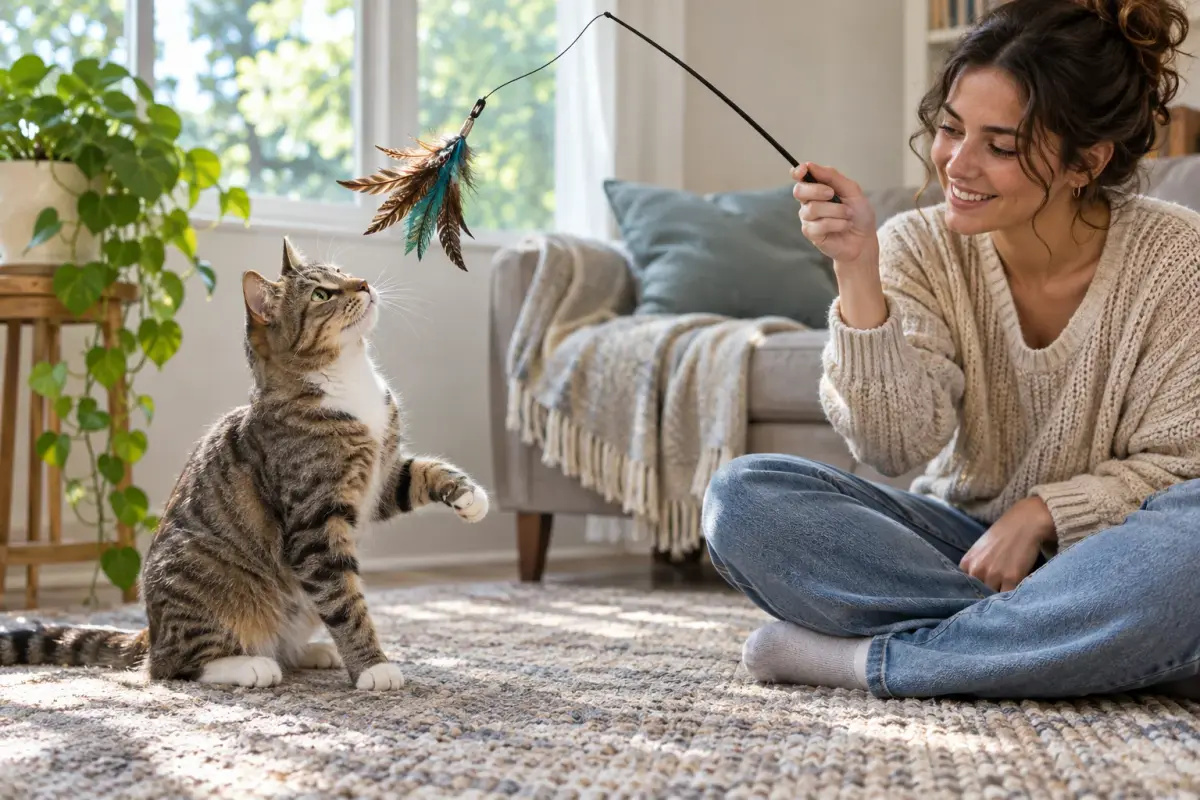
Wand toys let you play the part of the prey. VCA Animal Hospitals describes wand and fishing-pole toys as favorites of many cats, and its predatory aggression page lists wands, wiggling ropes and dangling toys among the successful interactive toys. The moving lure invites stalking, chasing and pouncing, which is how cats play when they are hunting.
Because you hold the wand, the toy also keeps your hands out of the game. VCA's advice on aggression suggests offering a toy to divert a cat that ambushes people, rather than correcting it with physical contact, which may reward the behavior. A wand gives a playful cat something to attack that is not your ankle, from a safe distance.
Wand and attachment types
Most wands share a rod and a line, with a lure on the end. A feather lure like this feather teaser wand mimics a bird. A plush lure such as the plush paw teaser wand or the fairy teaser wand feels more like a small animal. VCA notes that store-bought wands often come with rotatable tips in feather, cardboard or felt.
A shorter rod works in a small room and for kittens, while a longer rod helps with a cat that leaps. A pole-style design like this cat pole toy gives you range. Choose by what your cat chases: try one feather lure and one plush lure and see which your cat goes after, because cats have clear preferences.
Safety: supervision, string and swallowing
VCA's rule is simple: never leave cats unattended with wand or fishing-pole style toys. Cats can get tangled in a wand toy or swallow string, which can make them dangerously ill. VCA also advises watching your cat during play to make sure it doesn't swallow non-food toys, and making sure toys are not small enough to be swallowed.
In practice, that means putting the wand away after every session, in a drawer or a high shelf, where a cat cannot chew the line. Inspect it before each game for frayed string, loose feathers or a lure coming off, and replace worn parts or the whole toy. If your cat vomits, strains or stops eating after play, call your veterinarian that day, because swallowed string can be an emergency.
How to play: movement, sessions and the catch
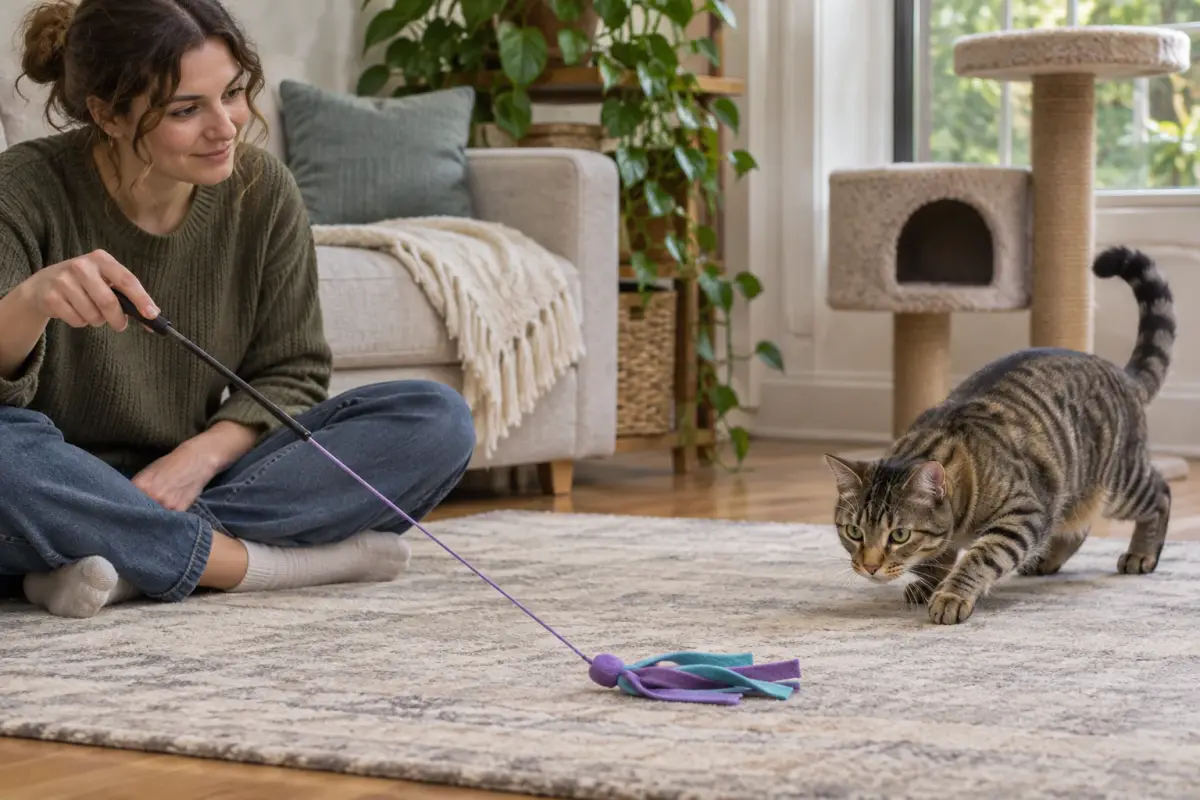
Move the lure like prey. Let it skitter along the floor, hide behind furniture, then dart away, rather than waving it in your cat's face. VCA says to keep the prey moving for a while, but to avoid frustrating your cat, and that cats need to be successful or they will lose interest. Let your cat catch the lure at the end of each game, and offer a treat if you like.
VCA notes most cats can benefit from several 10-minute play sessions every day, and that play is best at dawn and dusk, when predatory activity peaks. A short session followed by lost interest does not mean the cat dislikes the toy. Adjust to your cat, and stop while it is still keen.
Mixing wands with other toys
Wands are one part of a toy collection. VCA suggests keeping about 20 toys on hand, offering only 4 or 5 at a time and rotating them weekly, because cats tire of the same toys. Add toys your cat can catch and carry, like toy mice, ping pong balls and crinkle balls, to finish games on.
For a cat that loves chasing lights, our guide to the best laser pointer for cats explains how to use one safely. Our guides to the best interactive cat toys and best cat toys cover other types, and you can browse interactive cat toys too. Back to all cat wand toys when you are ready.
This page is general information, not veterinary advice, and it cannot replace an examination by the vet who knows your pet.
Wand bodies and lure options
| Feature | Physical difference | Check before play |
|---|---|---|
| Feather lure | Feathers at the end of a line | Attachment and loose pieces |
| Plush lure | A soft shaped attachment | Seams and attachment point |
| Short rod | A shorter reach from the handle | Rod and line length |
| Long or pole-style rod | A longer reach from the handle | Space for the intended movement |
| Replaceable tip | An attachment that can be changed | Exact compatible replacement and connector |
Common questions
Are cat wand toys safe?
They are when used with supervision. VCA says never to leave cats unattended with wand or fishing-pole toys, because they can get tangled in them or swallow string. Put the wand away after play.
How often should I play with my cat using a wand?
VCA says most cats can benefit from several 10-minute play sessions every day. Adjust to your cat's interest, and play at dawn and dusk if you can, when predatory activity peaks.
What attachment is best on a cat wand toy?
Cats differ, so there is no single best one. Try a feather and a plush lure. VCA notes many wands have rotatable tips in feather, cardboard or felt, so you can see which your cat prefers.
Should my cat catch the wand toy?
Yes. VCA says cats need to be successful or they will lose interest. Keep the lure moving, then let your cat catch it at the end of the game, and consider a treat afterward.
Sources we checked
This guide is general information, not veterinary advice. If your pet is unwell or injured, contact your veterinarian.


