






Care & how-to
Why Does My Cat Bite Me? Play, Petting and Fear Bites
Most cats bite for one of four reasons: play that is aimed at your hands or feet, petting that has gone on too long, fear, or pain. The ASPCA calls play aggression the most common kind cats direct at their owners, and it is especially common in kittens and young cats; redirecting that energy to cat wand toys is covered below. A cat that starts biting suddenly should see a vet, because pain is a frequent hidden cause.
By Matt GarnettUpdated November 13, 20264 min read4 sources
Play biting and ambushing feet
Kittens learn to hunt through play: stalking, pouncing, grabbing and biting. Cornell notes play aggression is most common in kittens and in cats raised without littermates, who never learned from siblings how hard is too hard. If hands and feet were used as toys when your cat was small, they became acceptable prey.
VCA describes cats hiding under furniture or around corners and dashing out at people's feet and ankles as they walk by. It is play, but it hurts. These attacks tend to happen at the same times and places, often in the evening, when an under-stimulated cat has energy to burn.
Biting during petting
Some cats enjoy being stroked for a while, then suddenly bite and run off. This is petting-induced aggression, and the ASPCA explains that repeated stroking can become irritating or overstimulating. Cats usually give warnings first, but they are easy to miss.
VCA lists the signs: ears turning back, body tensing, the tail beginning to flick or thump, skin twitching along the back, and freezing or moving away when a hand reaches toward them. A cat that bites only when touched in one area, such as the lower back or belly, may be sore there, which is worth a vet check.
How to stop play biting and foot attacks
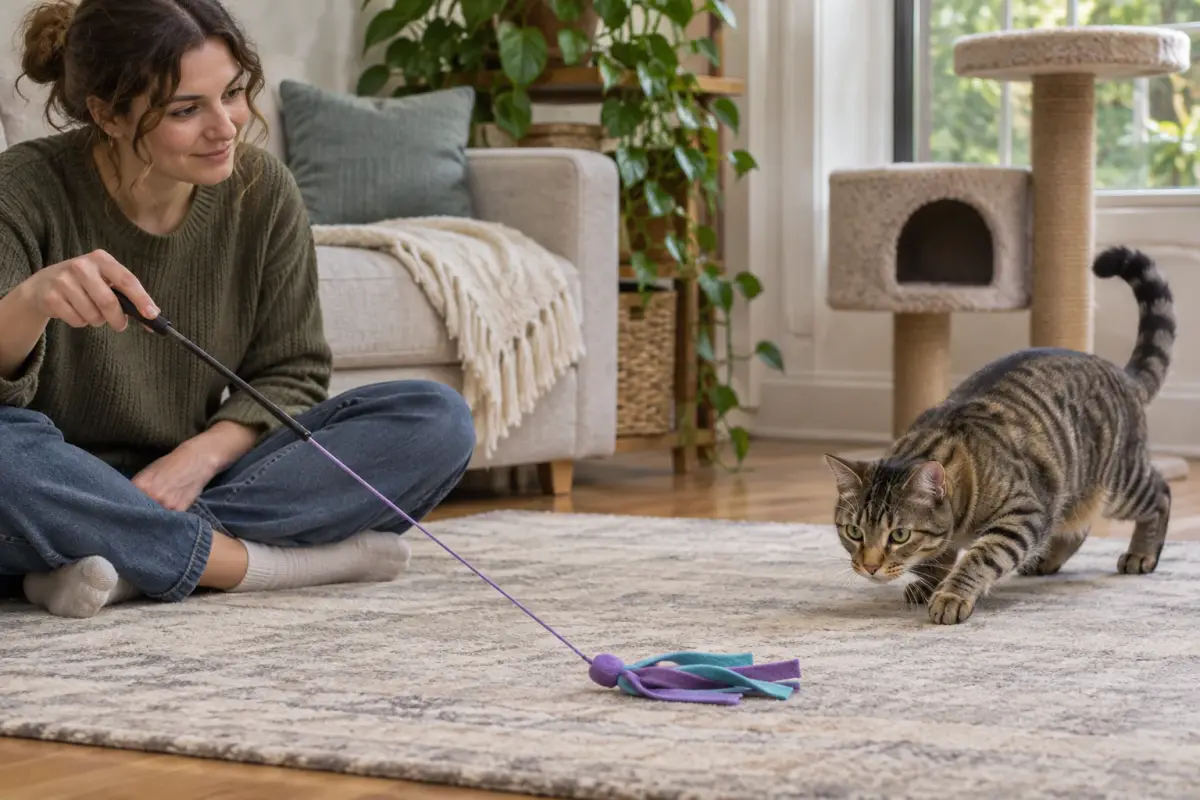
Never use hands or feet as toys. VCA recommends redirecting with a wand toy such as a pom-pom teaser wand, a toy on a string or a small toy tossed away from you, and scheduling active play sessions before your cat's usual attack times. Two or three sessions of ten to fifteen minutes a day, ending with a meal or treat, burn energy and satisfy the hunting drive. Our guide to choosing cat toys covers the main toy types.
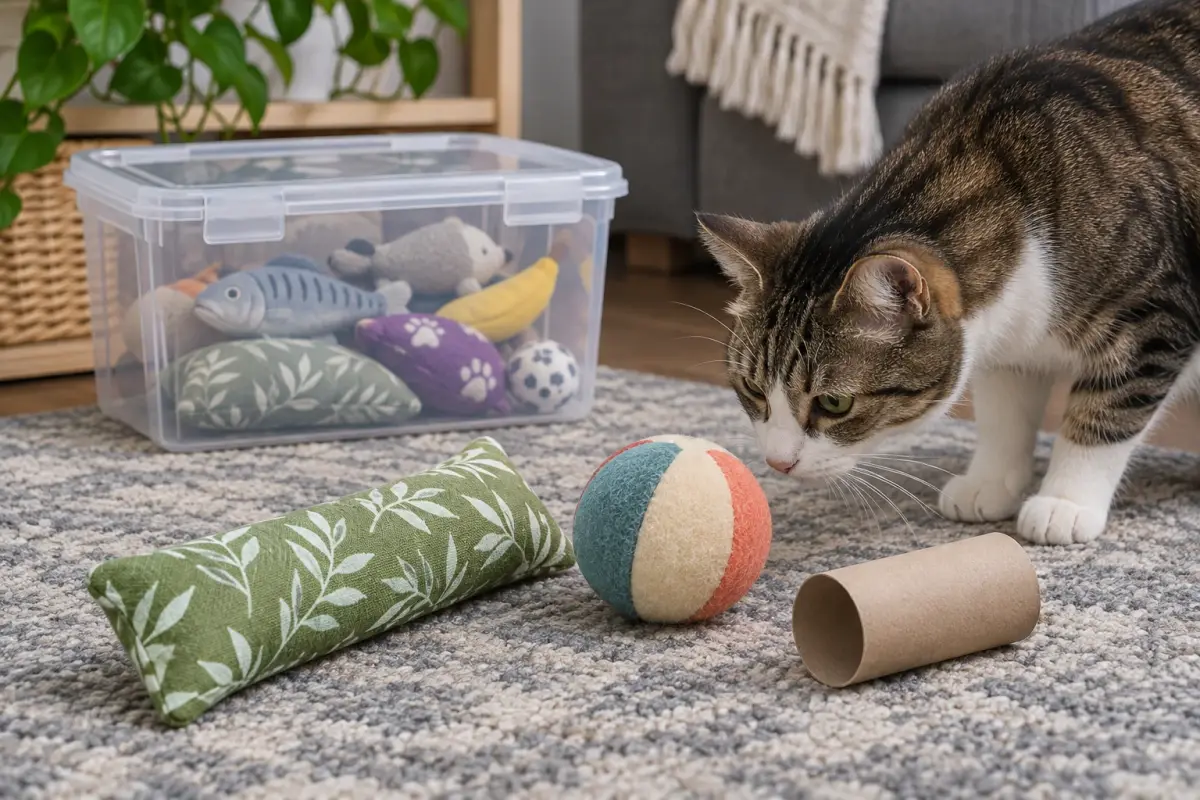
For ambushes, VCA suggests noting where and when they happen, carrying a small catnip toy to toss as you pass a known spot, blocking favorite hiding places, and using a bell on a breakaway collar so you hear your cat coming. If an attack starts, stand still and stop moving your feet, which makes them less like prey, then redirect to a toy.
What not to do, and when to get help
Do not hit, shout at or physically punish a biting cat. The ASPCA and Cornell both warn that painful punishment is ineffective and can make aggression worse, while VCA notes it can increase fear. Do not try to reassure or touch a cat showing defensive body language, and never put your hands between fighting cats.
With petting, stop at the first warning sign and let your cat walk away. Keep sessions short and offer play with interactive cat toys instead. Cat bites can become infected quickly, so wash any bite and see your doctor if it breaks the skin. If biting is frequent or serious, ask your vet about a referral to a veterinary behaviorist.
This page is general information, not veterinary advice, and it cannot replace an examination by the vet who knows your pet.
Common questions
Why does my cat attack my feet?
It is usually play and hunting instinct: moving feet look like prey. It is common in young, energetic cats with not enough to do. Daily interactive play with wand toys and redirecting to a toy when you walk past usually helps.
Why does my kitten bite me?
Kittens bite as part of play and learning to hunt. If they were allowed to bite hands, they see them as toys. Redirect every time to a toy, such as a plush kicker toy, be consistent across the household, and give plenty of play so biting habits do not carry into adulthood.
Why does my cat bite me gently?
Gentle nibbles can be part of grooming, a sign of affection, or a soft warning that your cat has had enough petting. Watch the tail and ears: a flicking tail or turned-back ears means stop and give your cat space.
Should I see a vet if my cat suddenly starts biting?
Yes. A sudden change often has a medical cause, such as pain from arthritis or dental disease, or hyperthyroidism. Cornell advises ruling out medical problems first, before working on the behavior itself.
Sources we checked
This guide is general information, not veterinary advice. If your pet is unwell or injured, contact your veterinarian.


