






Care & how-to
Why Do Kittens Bite? Causes and How to Redirect It
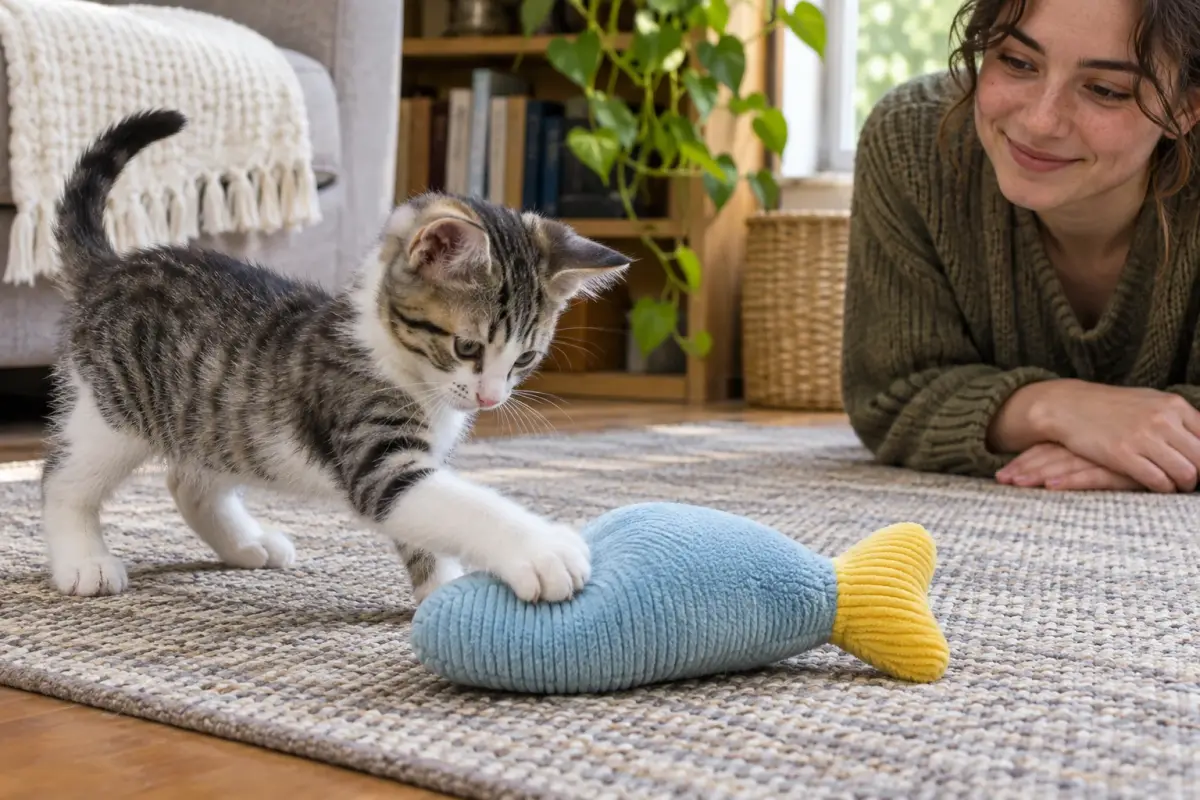
Kittens bite mostly because they are playing. Stalking, pouncing and biting are normal predatory play, and the ASPCA calls play aggression the most common aggression cats direct at their owners. Hands and feet become targets when they are allowed to be toys. Redirect every bite onto a wand toy, and see your vet if biting is sudden or severe.
By Matt GarnettUpdated November 13, 20264 min read3 sources
Play is the main reason kittens bite
VCA Animal Hospitals describes kitten play as predatory: stalking, pouncing, jumping, biting and clawing, often intense. Object play starts around weaning, when kittens chase, stalk, swat and bat at moving things, and VCA says that play builds eye-paw coordination and hunting skills. By 10 to 12 weeks, running and climbing play is fully developed.
Seen that way, a bite on your ankle is not meanness. It is a kitten practicing the only job its instincts tell it to practice. The ASPCA lists stalking, chasing, ambushing, pouncing, batting, swatting, grasping and biting as the moves involved, and notes that rough play is normal for kittens and cats under two.
Why play biting gets out of hand
The ASPCA explains that cats normally learn bite inhibition, and how to sheathe their claws, by playing with other cats. A kitten that was orphaned or weaned early may not have learned those limits, so its bites are harder than a littermate-raised kitten's would be.
Two more causes are fully in our hands. Long stretches alone with nothing to hunt leave a kitten with energy to burn, and owners who encourage a kitten to chase or attack hands and feet teach it that bodies are prey. VCA makes the same point: kittens may treat hands and feet as prey if they are allowed to play with them, even when it looks harmless.
Redirect every bite onto a toy
VCA's advice is to redirect every time a kitten chews on hands, feet or clothing, rather than only sometimes. When your kitten goes for your hand, shift its attention to a toy: dangle a feather from a fishing-pole style toy, or toss a small fleece toy to chase. A feather teaser wand or a retractable wand set with feather refills keeps your hands well away from the action.
VCA also suggests a kick toy for lively sessions, since a kitten may enjoy kicking its back feet into a plush stuffed animal. A catnip kicker toy gives that grab-and-bunny-kick a proper target. Browse the full range of kicker toys if your kitten likes to wrestle.
Set up play so it does not escalate
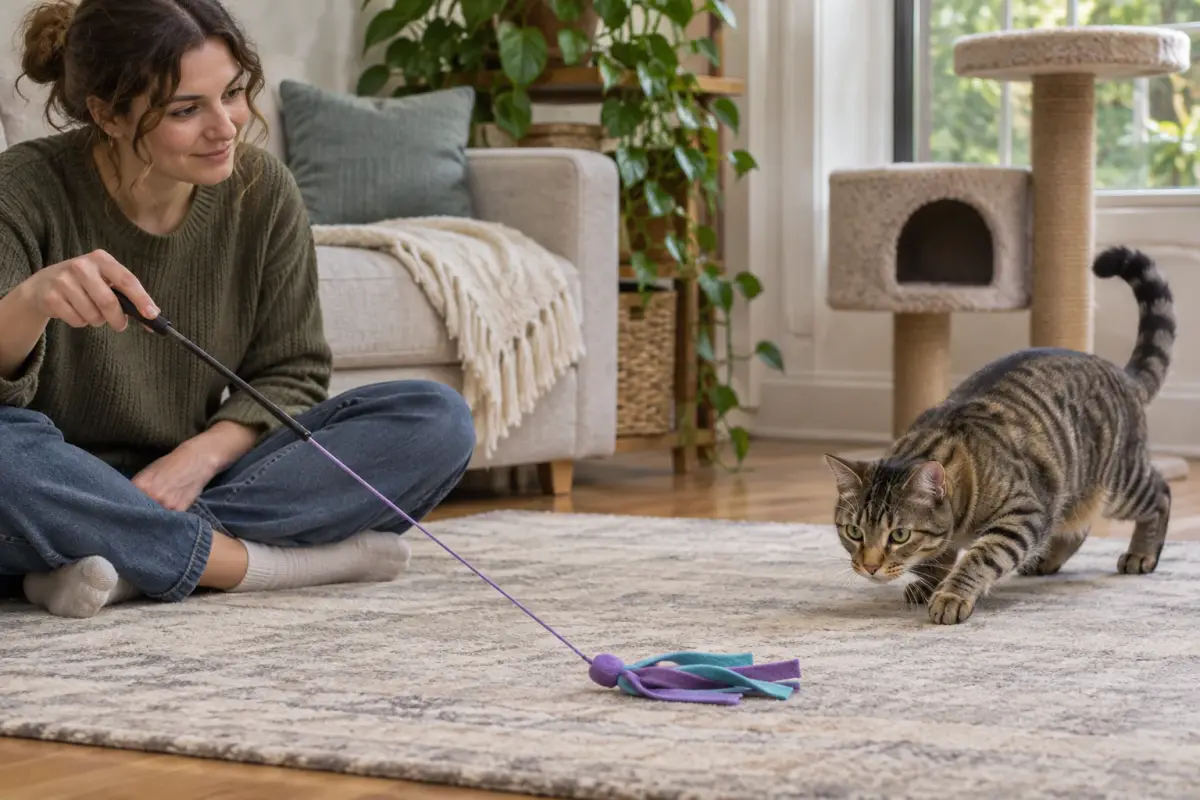
VCA recommends daily play, which strengthens your bond and helps a kitten burn off energy and learn the rules of play. It also advises that you choose the toys and start the sessions: sessions the kitten starts can escalate into overly aggressive play, so ignore them or interrupt with a distraction. Give plenty of play before you leave a kitten confined, so it is tired and settled.
Offer outlets before you try to stop unwanted behavior: scratching posts, climbing structures, shelves and windowsills. For safety, VCA warns against small objects a kitten could swallow and against string or yarn unless you are supervising, so put wand toys away when the session ends. Our guide to toys for bored cats covers more ways to keep a young cat busy.
What not to do
Do not use your hands or feet as toys, even when a kitten is small and the nips feel harmless. VCA notes that a moving hand can become a play target, and that bites and scratches can become serious as the cat ages. A mouthy kitten may be cute, but a mouthy adult cat can cause real injury.
Do not use painful punishment. The ASPCA says it is not only ineffective for changing cat behavior but can make aggression worse. Keep the household consistent too: VCA warns that mixed signals, such as one person discouraging biting while another encourages it, simply confuse a kitten.
When biting is not just play
The ASPCA advises a full veterinary exam first when a cat's aggression is a concern, because medical problems can contribute to it. If your kitten's biting is sudden, unusually hard, or does not improve with consistent redirection, book a visit with your vet before assuming it is behavior.
The ASPCA also recommends a qualified professional, such as a Certified Applied Animal Behaviorist or a board-certified veterinary behaviorist, for a customized plan, noting that many behavior techniques can backfire if misapplied. A second kitten can help some households: VCA suggests a young, sociable, playful companion for play. Until then, keep a wand toy within reach.
This page is general information, not veterinary advice, and it cannot replace an examination by the vet who knows your pet.
Common questions
Why does my kitten bite my feet and ankles?
Moving feet look like prey to a kitten that is practicing stalking and pouncing. VCA says kittens may treat hands and feet as prey if allowed to play with them, so redirect to a toy every time.
Is it normal for a kitten to bite hard?
Rough play is normal for kittens, but the ASPCA notes that kittens orphaned or weaned early may not have learned bite inhibition. If biting is unusually hard or sudden, ask your vet to rule out a medical cause.
Should I punish my kitten for biting?
No. The ASPCA says painful punishment does not change cat behavior and can make aggression worse. Redirect to a toy, stay consistent, and make sure everyone in the household responds the same way.
Do kittens grow out of biting?
You should not count on it. VCA stresses addressing biting while the kitten is young and keeping the rules consistent, because a mouthy adult cat can cause real injury even if a mouthy kitten seems cute.
Would a second kitten stop the biting?
It can help some households. VCA suggests a young, sociable, playful companion for play, but it is not a fix on its own, so keep redirecting bites to toys and talk with your vet first.
Sources we checked
This guide is general information, not veterinary advice. If your pet is unwell or injured, contact your veterinarian.


