Buying guides
Best Laser Pointer for Cats: What to Look For and How to Use One
The best laser pointer for a cat is one made for pets, easy to aim away from the face, and used alongside a toy the cat can actually catch. VCA warns owners not to shine a laser directly into a cat's eyes, and notes that repeatedly pouncing on a light and finding nothing can be frustrating. Browse cat laser toys with those two rules in mind.
By Matt GarnettUpdated November 13, 20264 min read4 sources
What a laser pointer is good for
A laser can get a sleepy indoor cat running when little else will. VCA's exercise advice for pets says a laser pointer can provide endless entertainment for cats, who chase the elusive red dot, and that cats love chasing it. Because you can keep the dot moving from across the room, it suits short bursts of exercise in a small home.
The catch is that the dot can never be caught. VCA's kitten games page says to reward your cat when they catch the light and warns that repeatedly pouncing on a light to find nothing there can be frustrating for some cats. A laser works best as one part of a play session, not the whole of it.
Protect your cat's eyes
VCA says to be careful not to shine the laser directly into your cat's eyes. That single rule matters more than any feature on the box. Choose a pointer sold for pets, read the maker's warnings, and keep the beam low and moving along floors and walls rather than at head height.
A handheld pointer puts the beam under your control, so you can stop the instant a cat looks up at it. A toy that sweeps a beam on its own does not, so stay in the room and watch while it runs. Skip anything that does not state what it is or carries no warning, and keep every laser away from children and other pets.
Handheld, automatic and combination toys
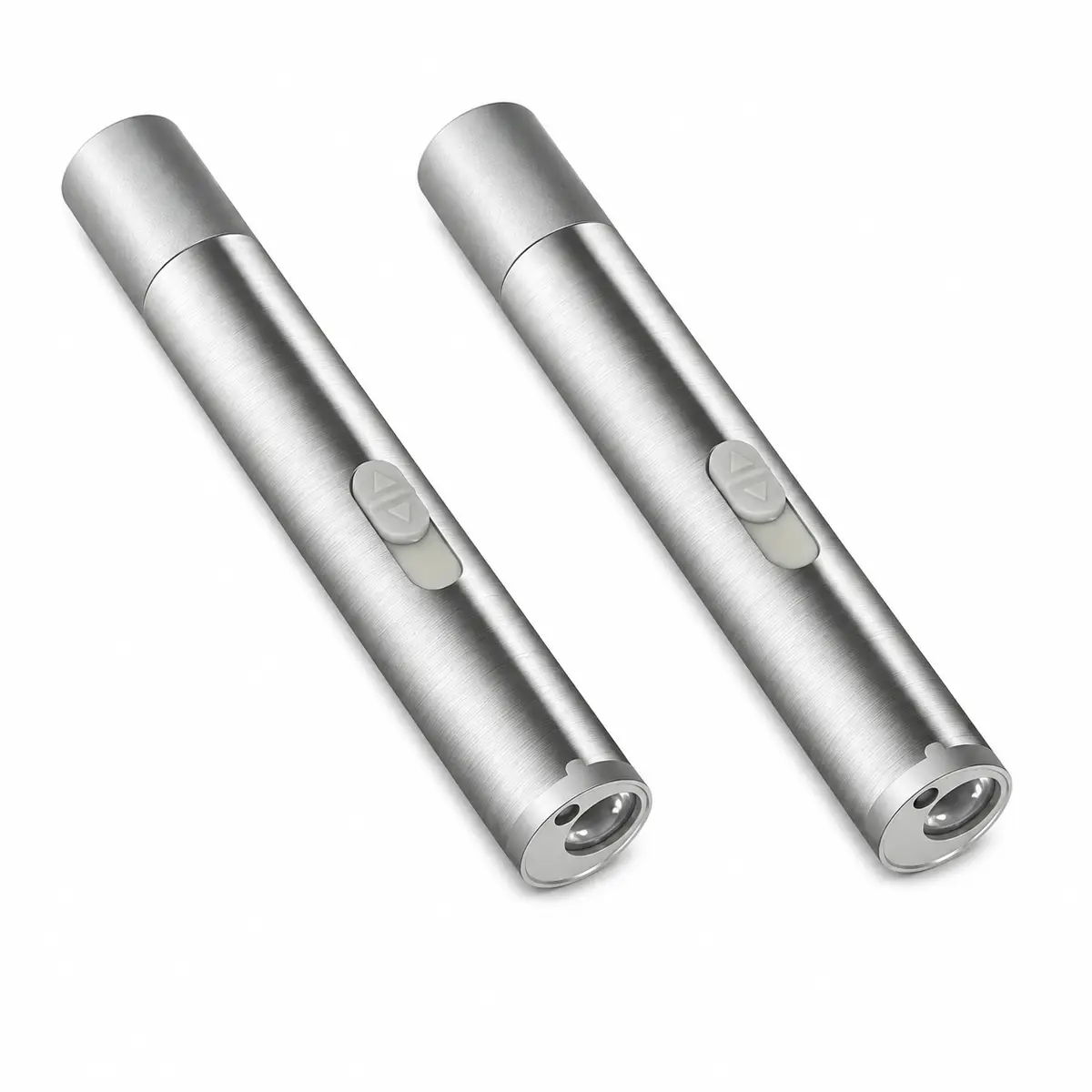
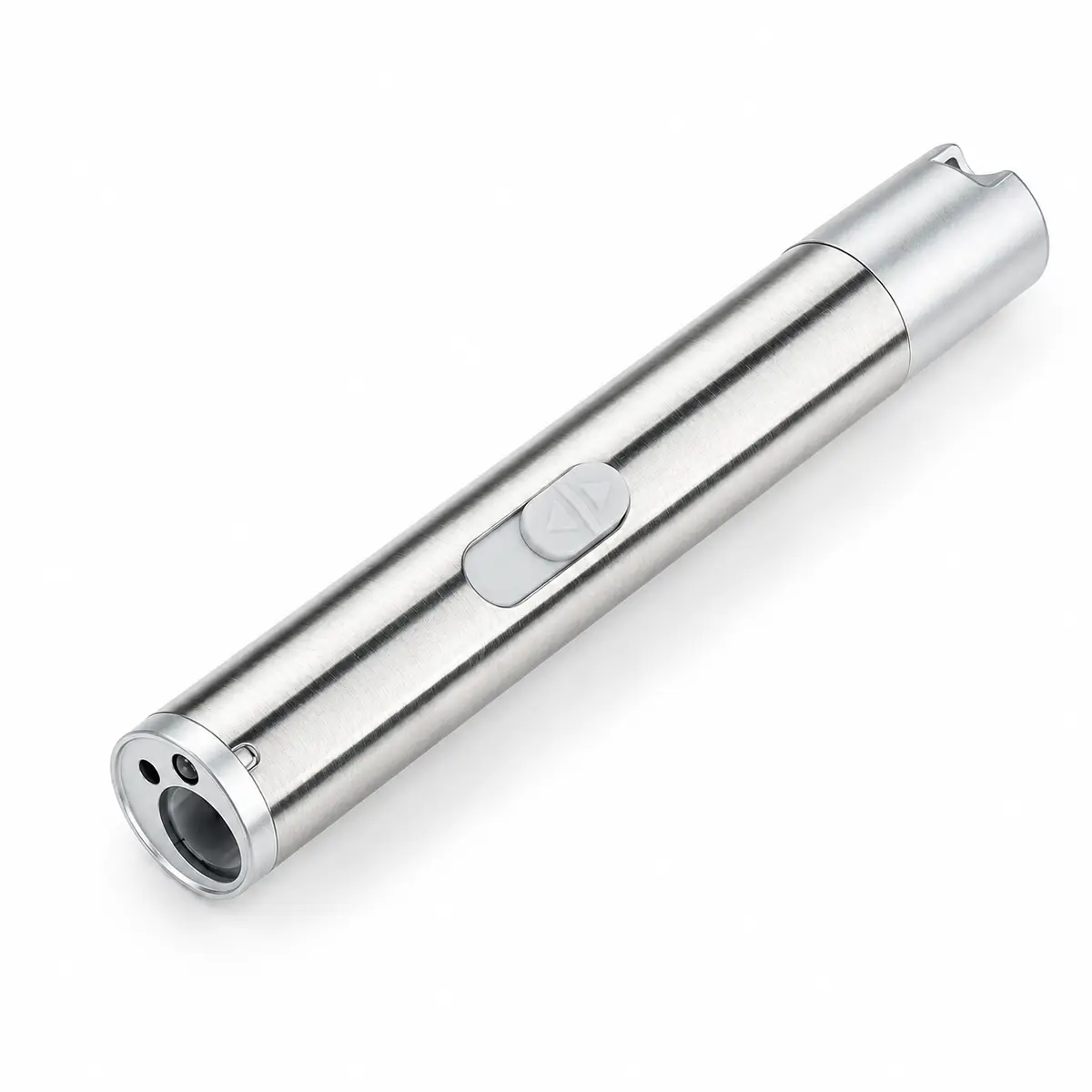
Handheld pointers are the simplest and give you the most control over the pattern and the moment play ends. Automatic laser toys move the dot in a random pattern for a set time, which helps when you are busy, such as this smart USB-charging laser teaser. Because nobody is aiming, the same eye rule applies: be present while it runs.
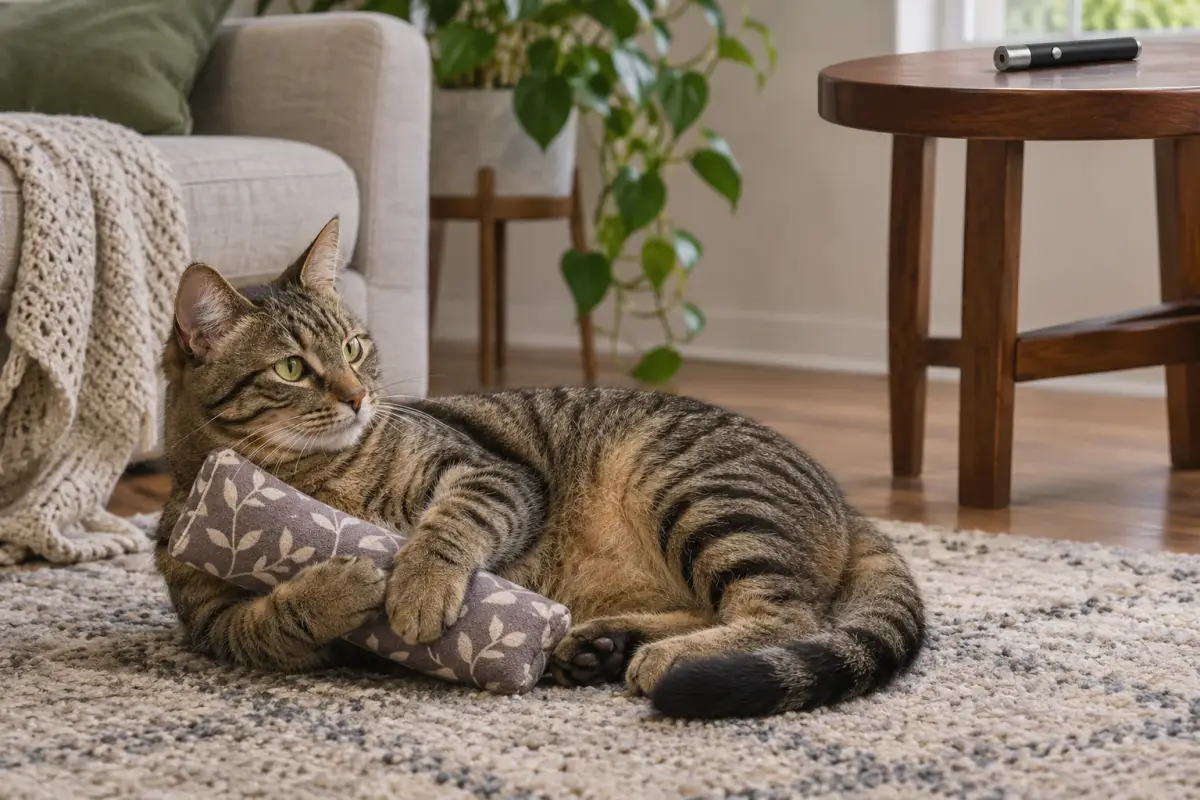
Combination toys pair a laser with something physical, like a laser rolling ball toy. These help with the frustration problem, because the cat has a real object to chase. VCA says cats need to be successful or they will lose interest, and recommends toys they can eventually catch, such as toy mice or balls.
Ending every session with a catch
VCA's play advice says cats need to be successful or they will lose interest, and suggests keeping the prey moving for a while without frustrating your cat. With a laser, that means finishing the game on something real. Aim the dot at a toy mouse, let the cat pounce on it, then hand over a treat or a favorite toy.
Keep sessions short and stop while your cat is still keen. VCA notes that most cats can benefit from several 10-minute play sessions every day, and that play is best at dawn and dusk when predatory activity peaks. If your cat starts chasing lights or shadows when no laser is on, stop using it and ask your veterinarian about it.
Other toys to pair with a laser
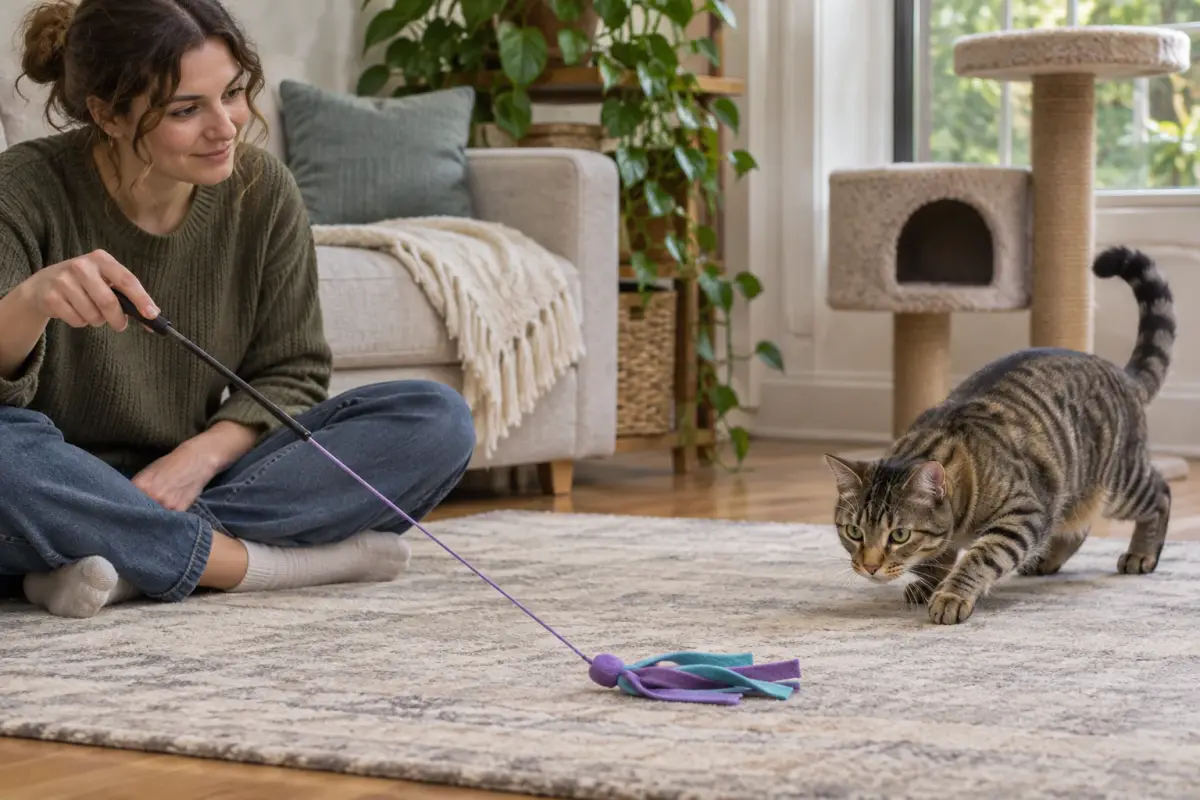
Wand toys give the same stalk-and-pounce game with something to hold. VCA's predatory aggression page says successful interactive toys include wiggling ropes, wands, dangling toys and items thrown or rolled for the cat to chase. Our guide to the best cat wand toy explains what to choose, and the cat wand toys collection has more.
Rotate toys too: VCA suggests keeping about 20 toys on hand, offering only 4 or 5 at a time and rotating them weekly. For other ideas, read our guides to laser pointer safety and the best cat toys. When you are ready, see all cat laser toys.
This page is general information, not veterinary advice, and it cannot replace an examination by the vet who knows your pet.
Common questions
Are laser pointers safe for cats?
They can be when used carefully. VCA says not to shine the laser directly into a cat's eyes, and to reward the cat when it catches the light, because chasing a dot that is never there can be frustrating.
How long should I play with a laser pointer?
Keep it short. VCA says most cats benefit from several 10-minute play sessions a day, adjusted to your cat's interest. End each session with a toy or treat the cat can catch.
Is an automatic laser toy as good as a handheld one?
An automatic one keeps the cat busy while you do something else, but you cannot aim it. Stay in the room while it runs and make sure the beam does not cross the cat's face.
Can a laser pointer be the only toy my cat has?
It is better not to rely on it. VCA says cats need to be successful or they will lose interest, so give your cat toys it can catch and rotate them regularly.
Sources we checked
This guide is general information, not veterinary advice. If your pet is unwell or injured, contact your veterinarian.