






Buying guides
Best 20 Gallon Fish Tank: How to Choose One That Fits Your Fish
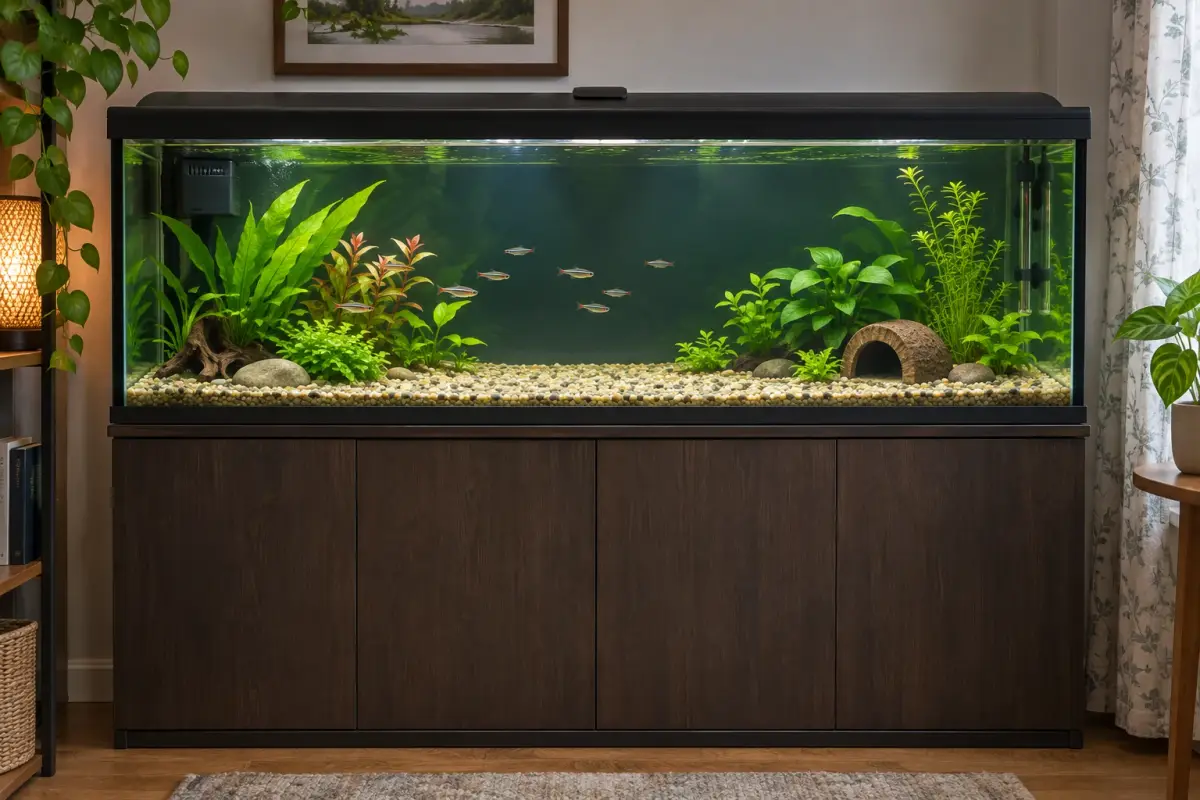
The best 20 gallon fish tank is a glass or acrylic tank with enough surface area for your fish, a lid, a filter, and a stand that can carry the weight. VCA notes that 10 and 20 gallon tanks are the most common starting sizes, and the Merck Veterinary Manual sizes stocking by surface area, so shape matters as much as volume. Browse our fish tanks once you know what you need.
By Matt GarnettUpdated November 14, 20265 min read2 sources
Why 20 gallons is a popular size
VCA Animal Hospitals says most people start with a 10 or 20 gallon tank, and a 20 gallon tank is a sensible middle: roomy enough to give a few small fish space to swim, small enough to fit on a sturdy dresser-height stand in most rooms. The Merck Veterinary Manual points out that small tanks need frequent water changes, perhaps as much as 50% per week, because waste builds up quickly in a small volume of water. A bigger tank gives you more water to dilute that waste.
A 20 gallon tank is still a small system, so it is not a place to crowd fish. Pick the species first, then check that the tank suits them. A school of small, peaceful fish, a pair of dwarf species or a single bigger fish with space to turn all work better than a tank packed with one of everything at the pet store.
Surface area matters more than the gallon number
The Merck Veterinary Manual gives a freshwater stocking guideline of 1 inch of fish for every 12 square inches of surface area. Surface area is the water's top: length times width in inches. A tank whose top measures 30 by 12 inches has 360 square inches, so by that rule it supports about 30 inches of adult fish in total. A taller tank with the same gallon rating but a smaller top supports less.
VCA offers a simpler rule of about 1 gallon of water per inch of fish. Treat both as upper limits, not goals, and count the adult size of each fish, not the size on the day you buy it. If the two rules disagree, use the lower number. Wider, longer tanks also give more room for the water's surface to exchange oxygen, which is why shallow, long shapes are often a better home than tall ones.
Glass, acrylic and tank kits
Glass resists scratches and stays clear for years, but it is heavy. Acrylic is lighter and can be molded into more shapes, but it scratches more easily, so you need to clean it with soft materials and avoid gravel getting trapped against the wall. Either material works for a 20 gallon tank; choose the one that suits how you will clean and where you will put it.
A kit usually bundles the tank, a light, a lid and a basic filter, which makes setup simpler for a first tank. Check what is included against the equipment list below before assuming a kit is complete. Buying separately costs more effort but lets you match the filter and light to the fish you actually want, instead of whatever the kit shipped with. Our aquarium supplies cover the pieces a kit might skip.
Weight, the stand and where to put it
The Merck Veterinary Manual states that 1 gallon of water weighs 8.3 lb and that gravel is typically about 1 pound per gallon of water. For 20 gallons that is roughly 166 lb of water plus around 20 lb of gravel, before the glass, rocks and decor. That is nearly 190 lb sitting on a few square feet of floor and furniture.
The same source says the floor and the tank stand or cabinet must be strong, level and stable. A bookshelf or a hollow dresser is not a stand. Look for a tank stand rated for the tank's filled weight, and put the setup out of direct sunlight, which Merck and VCA both note causes algae and temperature swings, and away from air conditioning vents. Our guide to the best fish tank stand covers what to check.
Filter, heater, thermometer and lid
VCA states that all fish tanks require a filtration system to clear out waste, debris and bacteria. For a 20 gallon tank, a hang-on-back filter or an external canister filter are two types people use; the best aquarium filters guide compares them. Choose a filter rated for the tank's volume and clean it on the schedule the maker gives.
A heater is necessary for tropical fish, according to the Merck Veterinary Manual, while goldfish and some other cold-water fish do fine at room temperature. If you keep a tropical tank, use a separate thermometer, such as this aquarium thermometer, to check the water independently of the heater's thermostat. A lid keeps fish from jumping out and slows evaporation, and a light lets you see them. Our best aquarium heater guide explains sizing.
Setting up and cycling the tank
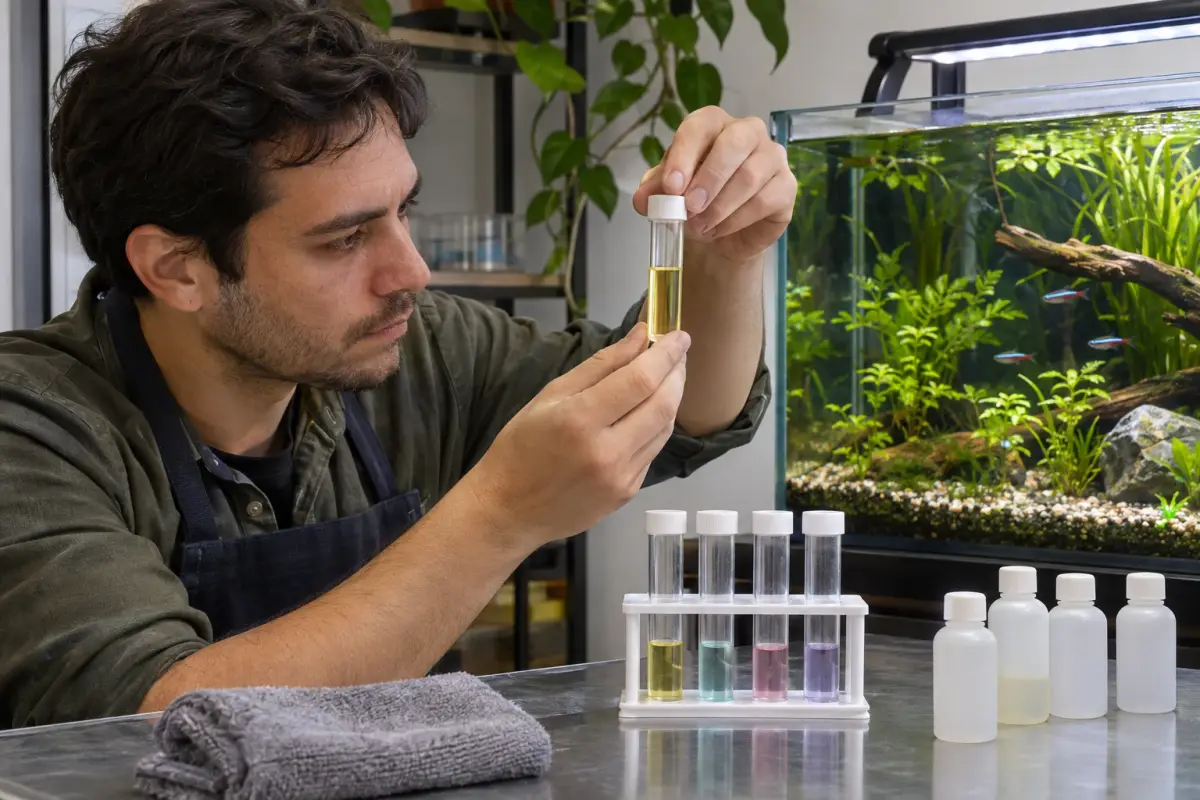
Fill the tank before you switch on the filter, heater or lights, since Merck warns against running a heater in a tank that is not full. Then let the filter run before any fish go in. VCA says to run the water through the filtration system for 4 to 6 weeks so that ammonia and nitrite levels are acceptable, and recommends asking a fish specialist which water test kit to use.
Merck describes the same process: beneficial bacteria convert ammonia to nitrite and then to less toxic nitrate, and they develop on their own in 4 to 6 weeks. Add fish gradually, one or possibly two at a time, so the bacteria keep up. If fish look sluggish, gasp at the surface or die suddenly, test the water and call a vet who sees fish. A 20 gallon tank is easier to keep healthy when you go slowly. When you are ready, see all fish tanks.
This page is general information, not veterinary advice, and it cannot replace an examination by the vet who knows your pet.
Common questions
Is a 20 gallon tank good for a beginner?
Yes. VCA says most people start with a 10 or 20 gallon tank. It holds more water than a tiny tank, so waste is diluted, but it is still small enough to set up, clean and move water for without much trouble.
How many fish can I keep in a 20 gallon tank?
The Merck Veterinary Manual suggests 1 inch of fish per 12 square inches of surface area in freshwater, while VCA gives about 1 gallon per inch. Use the lower result, count adult sizes, and add fish slowly.
How much does a 20 gallon fish tank weigh when full?
Merck says a gallon of water weighs 8.3 lb and gravel is about 1 lb per gallon of water, so water and gravel come to roughly 186 lb before the tank, stand and decor are counted.
Does a 20 gallon tank need a heater?
Only if you keep tropical fish. Merck says a heater is necessary for tropical freshwater fish, while goldfish and some cold-water fish do fine at room temperature. Check what your chosen species needs first.
Sources we checked
This guide is general information, not veterinary advice. If your pet is unwell or injured, contact your veterinarian.


