






Buying guides
Best Aquarium Heater: How to Choose the Right One for Your Tank
The best aquarium heater is an adjustable, submersible heater matched to your tank's volume, paired with a separate thermometer. First check whether you need one at all: the Merck Veterinary Manual says a heater is necessary for tropical freshwater and saltwater fish, while goldfish and some other cold-water fish do fine at room temperature. Everything below helps you choose and use one safely from our aquarium supplies.
By Matt GarnettUpdated November 14, 20264 min read2 sources
Do your fish need a heater at all?
The Merck Veterinary Manual states that a heater is necessary for both freshwater and saltwater tropical fish, and that keeping temperature in range is critical to their health. It also says goldfish and certain cold-water fish do fine in water that is room temperature, and that small tanks such as goldfish bowls may not need a heater. So the first step is not choosing a heater but choosing your fish.
VCA Animal Hospitals gives the same advice in plainer terms: you may also need a heater, and the water should be at a temperature suited to the species you keep, so research your fish's requirements before you buy equipment. If the species you want is tropical, plan for a heater from the start. If it is a cold-water species, a heater can do harm by keeping the water warmer than the fish want.
What to look for in a heater
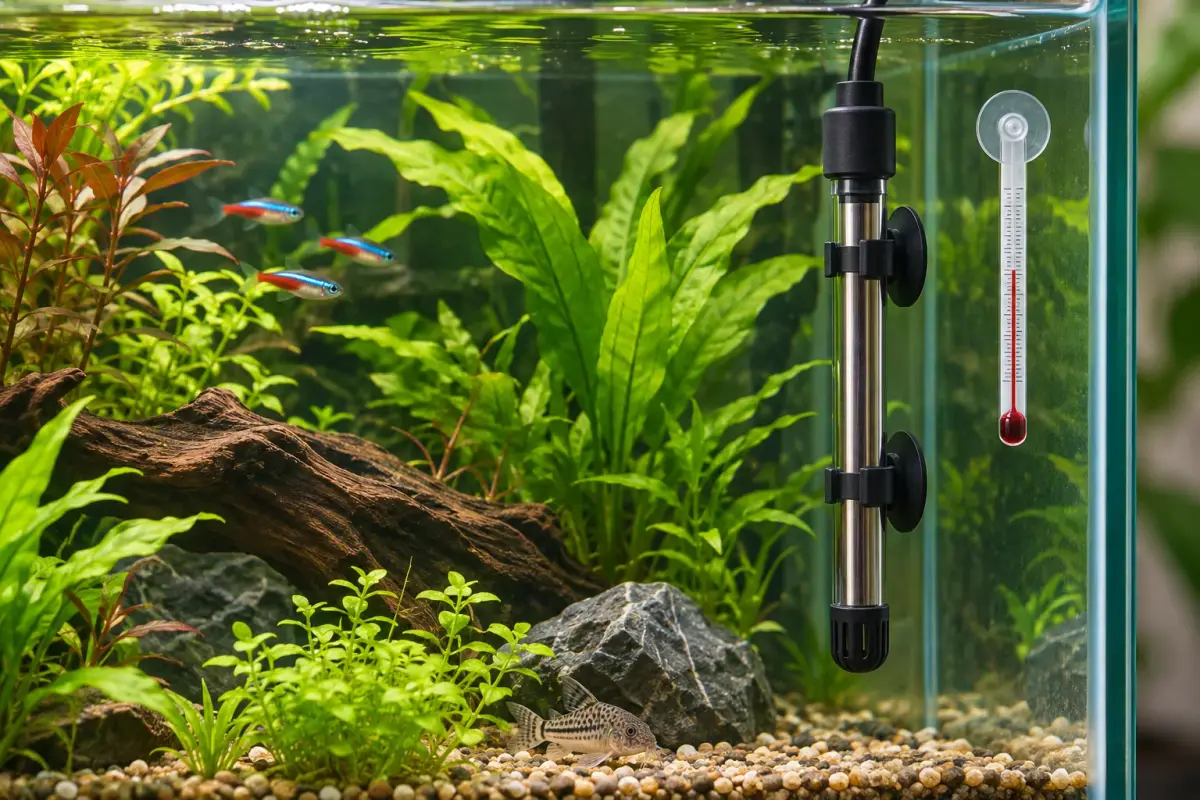
Merck notes that heaters typically have a programmable thermostat that lets you set the water temperature. Choose an adjustable one rather than a heater fixed at a single temperature, because different species want different settings and you will need to fine-tune it over the first few days. A submersible heater sits fully under water, usually clipped to the back or side glass, and is the type most home tanks use.
Look for a rated tank size on the box and pick a model whose stated range includes your tank's volume. A heater that is too weak runs constantly and cannot keep up in a cold room, while one far too large can overheat a small tank quickly if the thermostat sticks. Because the right figure depends on how warm the room is, read the maker's sizing chart rather than relying on a single rule of thumb. A heater with a guard around the glass tube helps protect it from bumps.
Why you need a separate thermometer
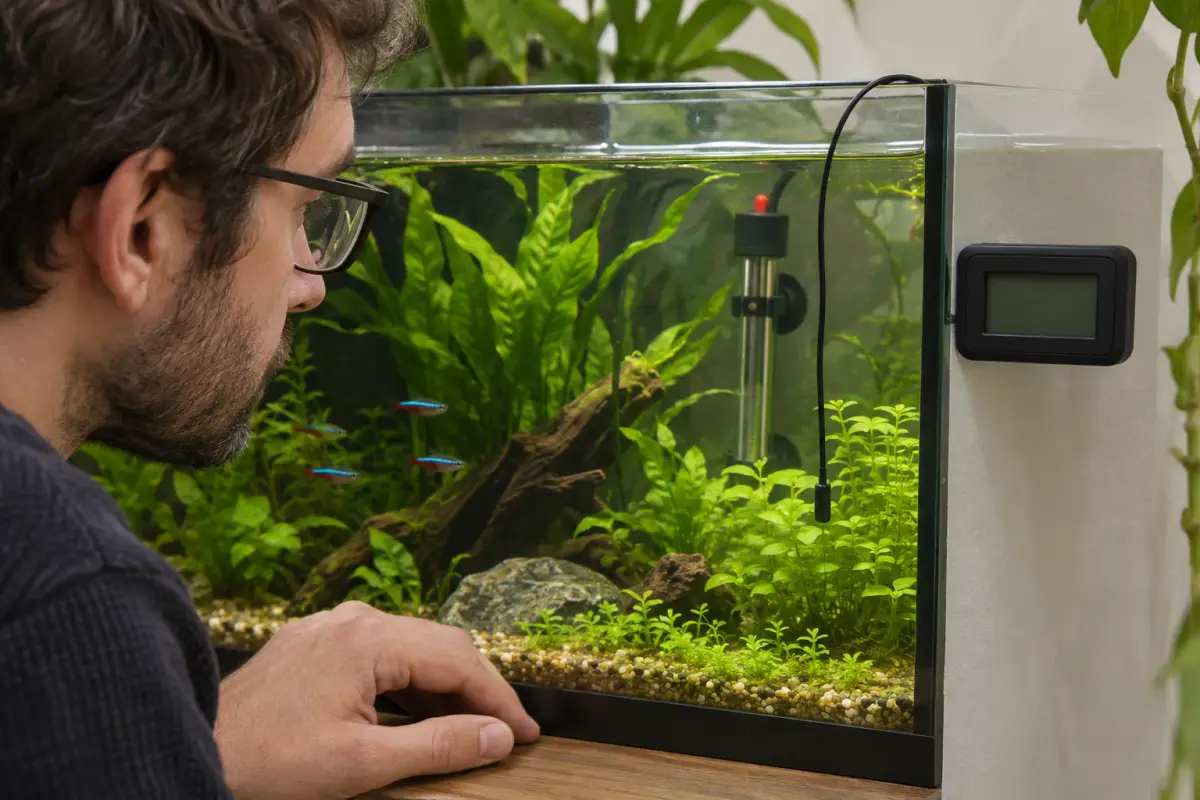
The Merck Veterinary Manual says to have a separate thermometer in the tank to monitor the water temperature independently from the heater. The heater's dial tells you what you asked for, not what the water actually is, and a thermostat can drift or fail. A thermometer is the only way to notice.
VCA likewise lists a thermometer as needed to keep a proper temperature for your fish and plants. A simple aquarium thermometer fixed at the far end of the tank from the heater gives the most honest reading, because it shows whether the warm water is circulating. Check it daily at first, and again whenever the room gets noticeably colder or warmer.
How to place and use it safely
Merck is explicit: do not plug in the heater until the tank is full of water. Turn on filters, pumps, heaters and lights only after the tank is filled, and unplug the heater before you do maintenance that lowers the water. Many heaters can crack or overheat when they are exposed to air while hot, so follow the maker's instructions on submersion and on letting it cool.
Place the heater near the filter outlet or other moving water so the warmth spreads through the tank, and keep it where fish and decorations cannot knock it. Keep the tank out of direct sunlight too, because Merck notes sunlight raises water temperature and warmer water holds less oxygen. That means a heater is only part of keeping the temperature steady.
Placing the heater near the outflow of your aquarium filter helps spread the warm water evenly around the tank.
Matching a heater to different tanks
A small tank changes temperature quickly, so it needs a well-sized, accurate heater and a close eye on the thermometer. A large tank holds heat longer, which makes it more forgiving but means a heater needs enough output to warm so much water. If you are still choosing a tank, our guides to the best fish tank and the best 20 gallon fish tank explain how size affects everything else.
Heaters work alongside the rest of your equipment. A filter keeps water moving so heat spreads evenly, and lights add a little warmth of their own. Because gear wears out, replace a heater that no longer holds temperature or whose thermometer reading keeps drifting, even if it still switches on. For other equipment, browse aquarium supplies.
When to call a vet
Sudden temperature swings stress fish, and a failed heater can leave a tank too cold or too hot overnight. If fish are lethargic, clamped, gasping at the surface or dying, check the thermometer first, correct the temperature slowly and test the water. Then call a veterinarian who treats fish, because a temperature problem often goes hand in hand with other water problems.
This page is general information, not veterinary advice, and it cannot replace an examination by the vet who knows your pet.
Common questions
Do all fish tanks need a heater?
No. The Merck Veterinary Manual says tropical freshwater and saltwater fish need one, while goldfish and some other cold-water fish do fine at room temperature. Check your species' needs before you buy.
Why do I need a thermometer if the heater has a dial?
Merck advises a separate thermometer to monitor water temperature independently of the heater. The dial shows a setting, not the real temperature, and a thermostat can drift or fail without warning.
When should I plug in a new aquarium heater?
Only once the tank is full of water. Merck says not to plug in the heater until the tank is full, and to switch on filters, pumps and lights only after filling the tank.
Can sunlight affect my tank temperature?
Yes. Merck notes direct sunlight can raise water temperature, and warmer water holds less oxygen. Place the tank away from windows so the heater is not fighting the sun.
Sources we checked
This guide is general information, not veterinary advice. If your pet is unwell or injured, contact your veterinarian.


