






Care & how-to
Betta Fish Care: Tank, Temperature, Food and Water Changes
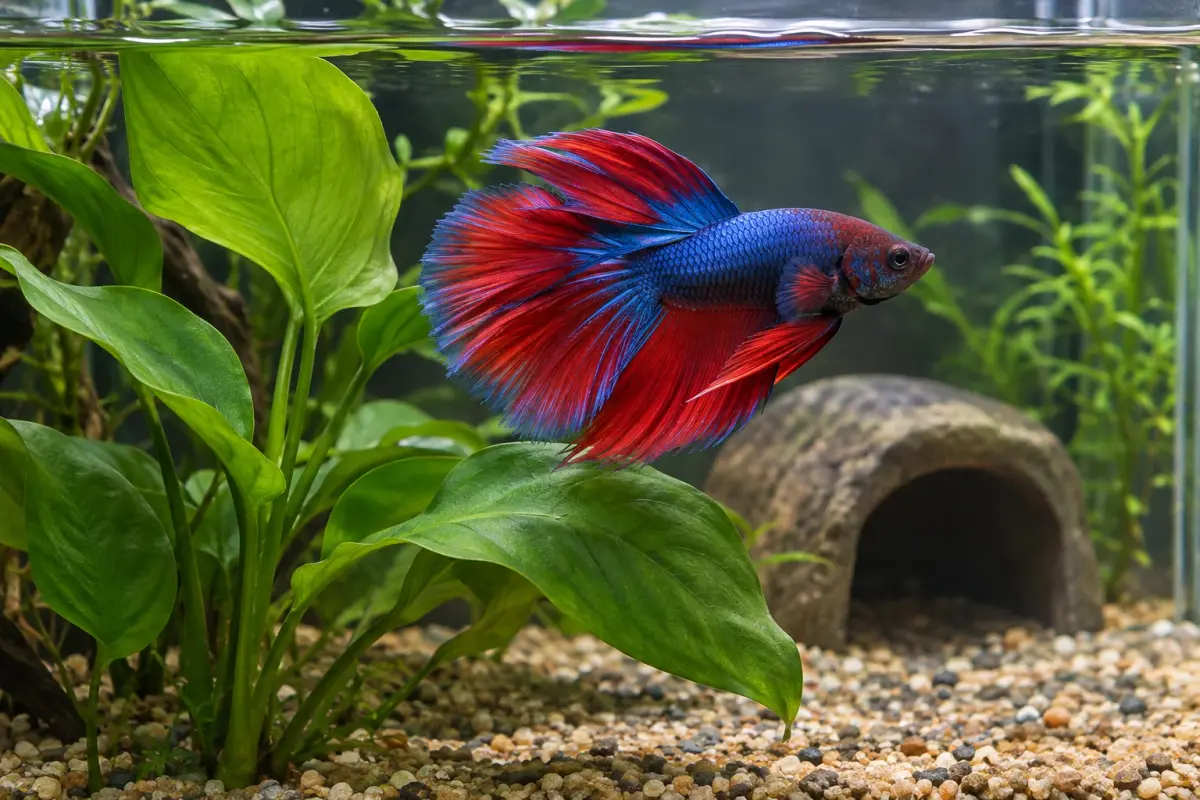
Betta fish care comes down to four things: a tank of about 5 gallons or more, water kept steadily between 76 and 81 degrees Fahrenheit, a gentle filter with dechlorinated water, and a small daily portion of a balanced betta food. A bowl is not enough. The University of Illinois veterinary college says bettas need more than a bowl, and a fish vet can help if one gets sick.
By Matt GarnettUpdated November 14, 20265 min read2 sources
Start with the right home
A betta needs a real tank, not a bowl or a vase. The University of Illinois College of Veterinary Medicine recommends ideally 5 gallons or more, in glass or plastic. Leave the fish easy access to the surface, because bettas are labyrinth fish, which means they have an extra breathing organ and must be able to gulp air at the surface. If you are shopping, our betta fish tanks collection is a place to start, and our guide to the best betta fish tank explains what to look for.
Keep decor smooth. Sharp or rough edges tear long fins, so run a hand or a nylon stocking over ornaments before they go in. Plants and a cave or two give a betta somewhere to rest and hide, but do not crowd the tank so the fish cannot swim freely.
Keep the water warm and steady
Bettas are tropical. The University of Illinois puts the target at 76 to 81 degrees Fahrenheit, checked with a thermometer, and says an in-tank heater is needed because most homes run cooler. The University of Florida's IFAS Extension adds that a betta kept in an unheated, unfiltered container needs a room that never drops below about 71.6 degrees, and that bettas do not do well in cold water.
Aim for stability as much as the number. A heater with a thermostat and a stick-on thermometer at the far end of the tank from the heater is a simple setup. Wide daily swings stress fish, so keep the tank away from drafty windows, air vents and direct sun.
Filtration, flow and water quality
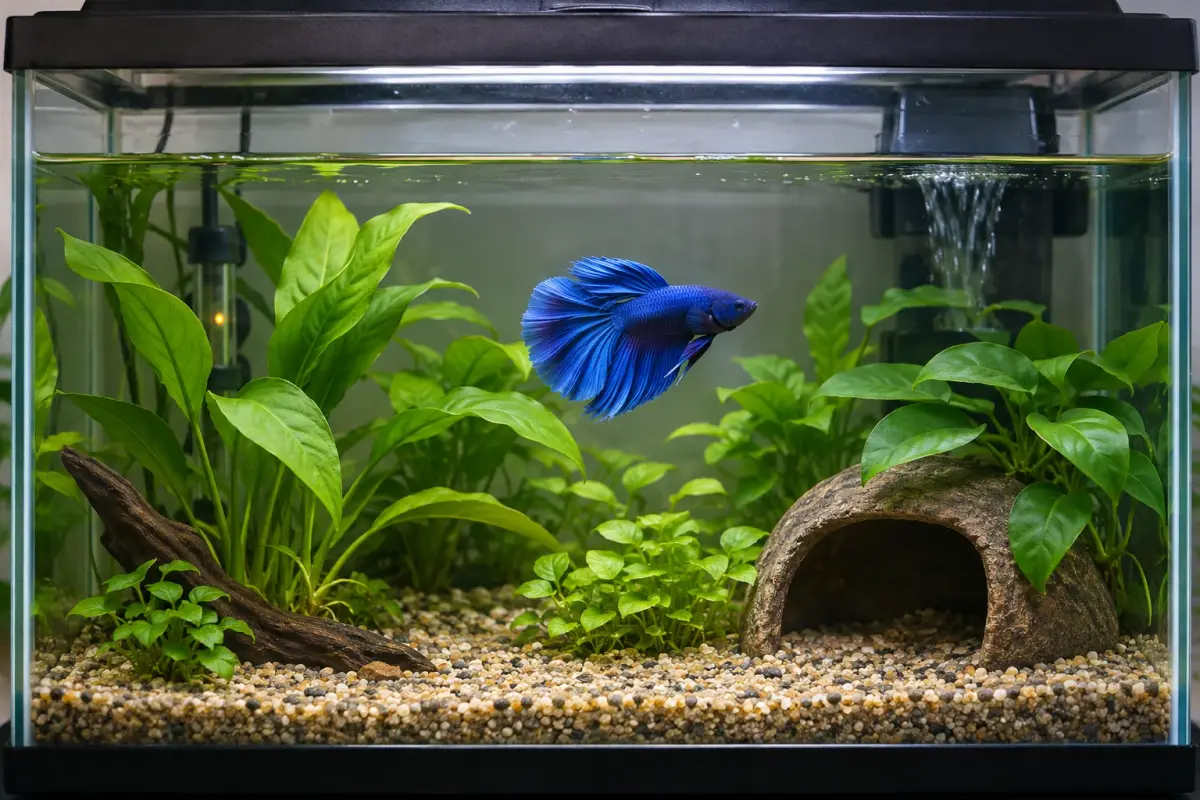
Use a filter with gentle flow. The University of Illinois warns that strong suction can injure delicate fins, and UF/IFAS cites research showing bettas prefer calm water and that heavy filtration may be harmful. A sponge filter or an adjustable low-flow model suits most setups, and you can compare options in our aquarium filters range.
Filtration does not replace water changes. Uneaten food and waste release ammonia and other toxins, and UF/IFAS says a smaller tank or lighter filtration calls for more frequent partial changes so waste never reaches harmful levels. Poor water chemistry can weaken a fish's immune system and make it sick.
Prepare tap water properly
Tap water usually contains chlorine or chloramine, and some supplies carry metals, all of which can harm fish. The University of Illinois advises treating tap water with a dechlorinating conditioner and notes that testing for heavy metals is worthwhile. Bottled spring water is an alternative, but avoid distilled water, because it lacks the minerals fish need.
Match the temperature of new water to the tank before adding it, and take out only part of the water at a time rather than moving the fish into a fresh tank. Conditioners, thermometers, nets and test supplies are all in our aquarium supplies collection.
What and how much to feed
Bettas are carnivores, not plant eaters, so a decorative plant is not a meal. The University of Illinois recommends a balanced pellet or flake food made for bettas once a day, in an amount the fish eats within 3 to 5 minutes. Remove anything left over, because uneaten food fouls the water quickly. Bloodworms or brine shrimp, live or freeze-dried, make an occasional treat in moderation.
Overfeeding is the most common mistake. Bettas can get obese just as cats and dogs can, and a swollen fish that is not eating is a good reason to call a vet. Watch how much the fish takes in a normal week and feed a little less if food is sinking uneaten.
Housing, company and enrichment
Keep one male betta per tank. UF/IFAS explains that males have been bred over about a century and still display aggression the moment they meet another male, flaring their gill covers and biting fins and flanks. Illinois notes that tank mates such as snails, ghost shrimp, some small fish and African dwarf frogs can work only if the tank and filter are upgraded, so research any companion before buying it.
Enrichment is simple: live or silk plants, a smooth hiding spot, and a lid-covered tank with a few inches of open air above the water. Browse aquarium decorations that are smooth and betta-safe, and rearrange a little at cleaning time to keep things interesting.
Signs of trouble and when to see a vet
Because poor water is behind many problems, check the basics first: temperature, recent water changes and uneaten food. Frayed or clamped fins, a fish that sits at the bottom, stops eating, gasps at the surface, or develops white patches or swelling needs attention. Do not add medicines to the tank without guidance, since the wrong product can harm the fish and the water.
Find a veterinarian who treats fish or exotic pets, and call them if the fish worsens after you correct the water. The University of Illinois suggests contacting a vet who works with zoological companion animals. Have the tank size, temperature and recent changes ready to share.
This page is general information, not veterinary advice, and it cannot replace an examination by the vet who knows your pet.
Common questions
How big should a betta fish tank be?
The University of Illinois veterinary college recommends ideally 5 gallons or more, with a heater and a low-flow filter. Bowls and very small containers make it hard to keep water clean and warm.
What temperature should betta water be?
Keep it between 76 and 81 degrees Fahrenheit, checked with a thermometer. Because most homes are cooler than that, an in-tank heater is needed, and the temperature should stay steady rather than swing through the day.
How often should I feed a betta?
Once a day is typical, using a balanced betta pellet or flake. Give only what the fish eats in 3 to 5 minutes and remove leftovers, since extra food fouls the water and can lead to obesity.
Do betta fish need a filter?
A gentle filter helps break down waste, but bettas prefer calm water, so avoid strong flow. A tank with little or no filtration needs much more frequent partial water changes to keep ammonia down.
Can two betta fish live together?
Two males cannot, because they fight and can injure each other. Keep one male per tank, and ask a fish vet or an experienced aquarium professional before trying any other tank mates.
Sources we checked
This guide is general information, not veterinary advice. If your pet is unwell or injured, contact your veterinarian.


