






Buying guides
Best Aquarium Air Pump: What Actually Matters
The best aquarium air pump is the one sized for your tank, quiet enough for the room, with the right number of outlets for what you run on it. An air pump drives sponge filters, airstones and decor, and its job is to keep water moving so fish have enough dissolved oxygen, which Merck puts at above 5 mg/L for most fish.
By Matt GarnettUpdated November 14, 20265 min read3 sources
What an air pump does and why oxygen matters
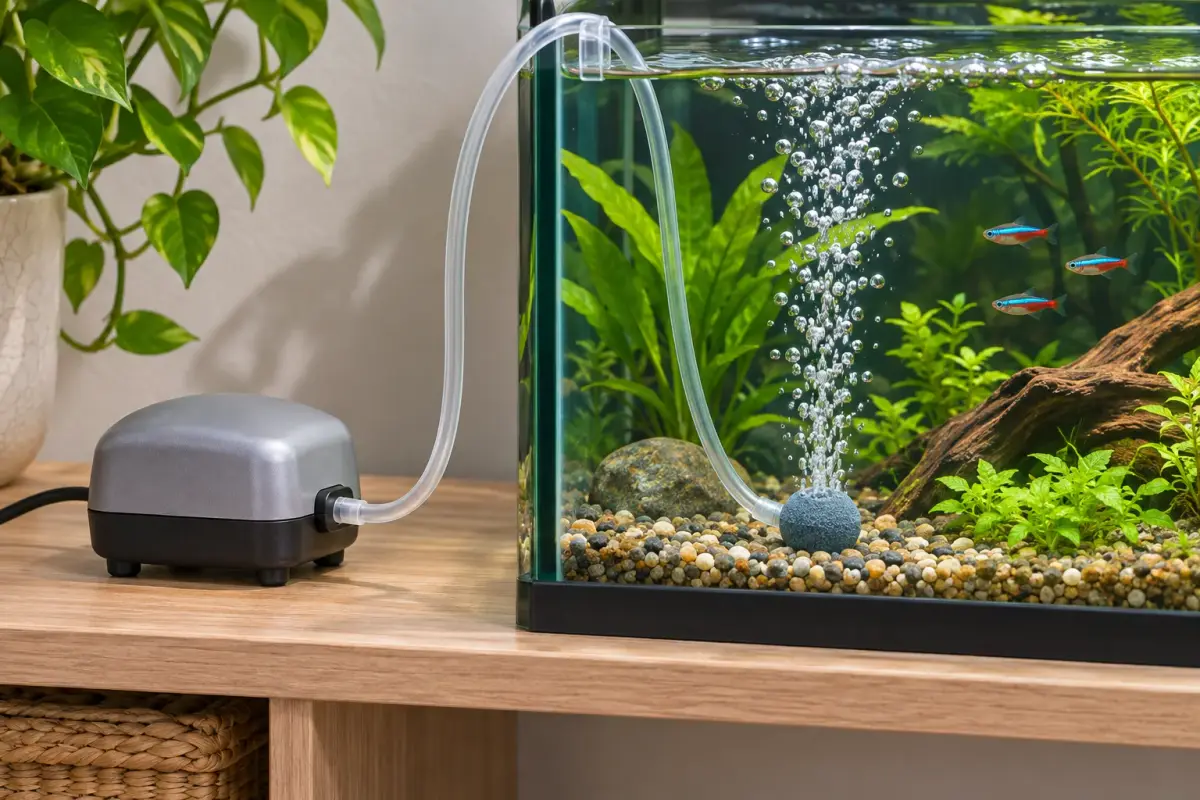
An air pump pushes air through tubing to an airstone, a sponge filter or a bubbling decoration. The bubbles stir the water and break the surface, which helps oxygen move in. The Southern Regional Aquaculture Center explains why fine bubbles are favored: they have a higher ratio of surface area to water volume than large bubbles, so they exchange oxygen more efficiently. The Merck Veterinary Manual describes a dissolved oxygen concentration above 5 mg/L as optimal for most finfish and says fish experience stress below that, so oxygen is the real reason to own one. Browse our aquarium air pumps once you know the tank you are fitting.
Warm water holds less oxygen, and Merck notes temperature is the most influential factor on oxygen solubility. That makes a stocked tank in a warm room the case where extra aeration earns its place. It also means an air pump is not magic: it supports a healthy tank alongside filtration and regular water changes, rather than replacing them.
Signs your tank may be short of oxygen
Merck lists fish gathering near the surface and gulping air, a behavior called piping, as a sign of low oxygen, and notes that hypoxic fish often school near the surface. The same behavior can come from high nitrite or gill disease, so surface gasping does not prove an oxygen problem on its own.
If you see it, check the water temperature and test ammonia and nitrite before buying anything. If fish keep gasping or you are unsure, ask a veterinarian who treats fish or a trusted local aquarium store. Aeration is a sensible quick support while you work out the cause, but it will not fix poor water quality by itself.
How to choose by tank size and equipment
Match the pump to the volume of water and to what it will drive. A pump that is too weak will barely move a long airstone or a large sponge filter, while an oversized one can churn the tank more than small or slow fish like. Look for the pump's rated output on the box, compare it with the manufacturer's tank size guidance, and err toward a unit with adjustable flow if your tank is in between sizes.
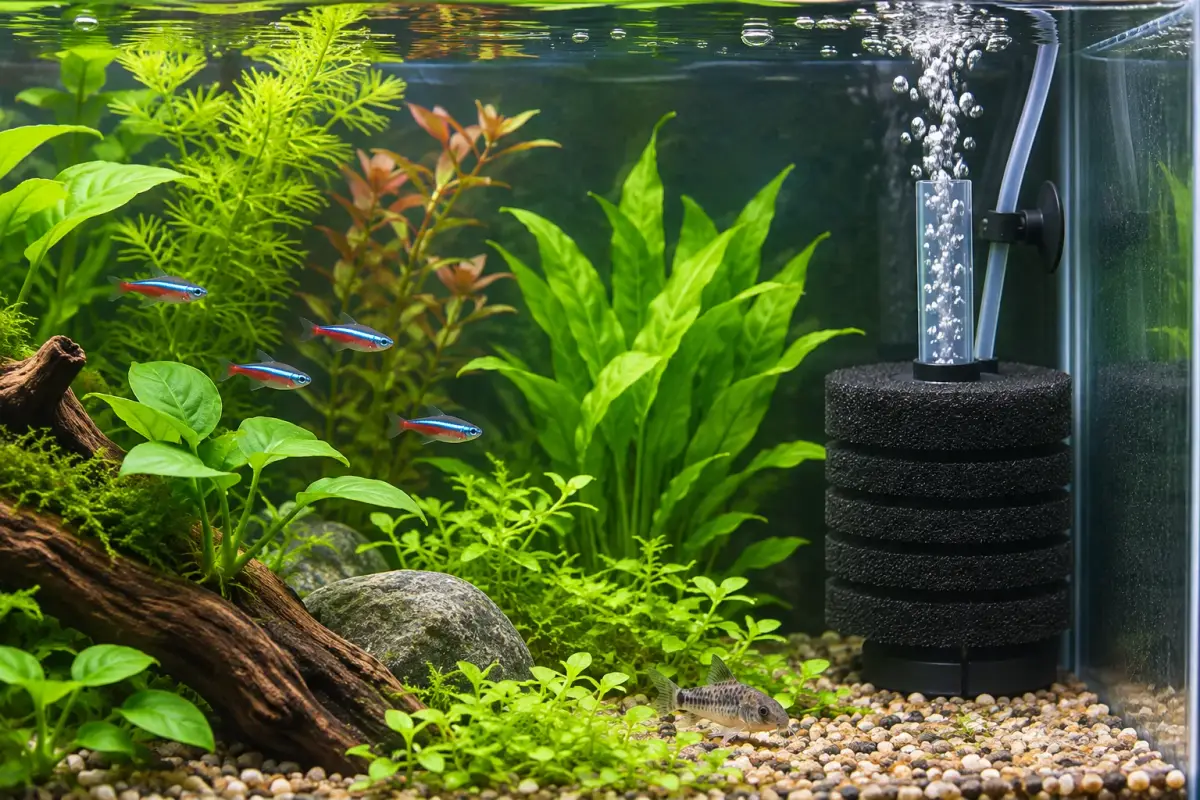
Count your outlets. A single outlet suits a small tank with one sponge filter, whereas a tank with an airstone plus a decoration, or several tanks, needs a multi-outlet pump with valves so you can balance the flow. A multi-outlet quiet air pump fits that case, while a single or double outlet mini compressor is the simpler choice for one small tank.
Pump types compared
Most home aquarium pumps are small diaphragm pumps that sit outside the tank and push air down a hose. They are compact and sit outside the tank, and a diaphragm oxygen pump is the standard design to look for. Their weak point is a vibrating diaphragm, which is where most of the hum comes from.
Portable and USB-powered pumps trade output for convenience. A USB aquarium air pump suits a small tank, a quarantine tub or a power bank during an outage. Merck even mentions transporting live fish in a cooler with a battery-powered aerator, which shows why a battery or USB option is worth having in a drawer.
Noise, placement and backup power
Noise matters most in a bedroom or office. Look for a pump that mentions a rubber foot or a vibration-damped case, set it on a soft surface and keep the hose from touching hard edges. Do not trust a quiet claim on the label alone, because your own room and shelf change what you hear. Airstones also wear: the Southern Regional Aquaculture Center says fine-pore diffusers foul easily and must be cleaned often, so expect to clean or replace the stone.
Check the pump's manual for any placement or check valve requirement, since the manufacturer knows how that model should sit relative to the tank. Power cuts are worth planning for: Merck mentions a battery-powered aerator for moving live fish, and a battery or USB unit gives you the same option at home. Keep cords and outlets clear of water.
When you do not need one, and what to pair it with
Not every tank needs an air pump. A lightly stocked tank with a filter that ripples the surface may already move enough water, and Merck's quarantine setup for hobbyists simply lists a sponge filter and a small aeration pump alongside a heater. If you want a sponge filter, an air pump is how it runs, and a used sponge filter from an established tank can seed a new system with beneficial bacteria.
Merck notes it can take up to 8 weeks for a biofilter in a tropical tank to establish, so be patient with new setups and test the water rather than assume. If you are still choosing filtration, read our guide to the best aquarium filter and browse aquarium filters, then come back to size the pump to the filter you pick.
Air-pump placement and power options
| Option | Physical arrangement | Verify on the exact model |
|---|---|---|
| External diaphragm pump | A body outside the tank feeding an air hose | Outlet connection and placement instructions |
| USB-powered pump | A pump supplied from a USB connection | Required input and compatible power source |
| Battery-powered aerator | A pump using its stated battery arrangement | Battery type,runtime and operating instructions |
Common questions
Do aquarium fish need an air pump?
Not always. Fish need dissolved oxygen, which Merck puts above 5 mg/L for most finfish, and many tanks reach that through filter movement alone. An air pump helps in warm, heavily stocked or poorly circulated tanks, and it is required to run a sponge filter.
How do I know if my aquarium has enough oxygen?
Watch for fish gathering at the surface and gulping air, which Merck calls piping. It can also signal high nitrite or gill disease, so test the water and check the temperature, and see a fish vet if it persists.
What size air pump do I need for my fish tank?
Match the pump's rated output to your tank volume and to what it drives, such as an airstone or sponge filter. Check the manufacturer's size guidance, and choose adjustable flow if you are between sizes, since a very strong flow may not suit small fish.
Why does my fish tank air pump make so much noise?
Most noise comes from the vibrating diaphragm or from the pump sitting on a hard surface. Move it onto a soft pad, keep hoses off hard edges, and replace the diaphragm if it has worn out.
Can I run an air pump all the time?
Fish-farm guidance from the Southern Regional Aquaculture Center describes keeping aeration going through the night until past dawn, when photosynthesis starts producing oxygen again. A home tank is different, so follow the pump manufacturer's guidance for continuous use, and ask a fish vet or aquarium store if you are unsure.
Sources we checked
This guide is general information, not veterinary advice. If your pet is unwell or injured, contact your veterinarian.


