Buying guides
Best Aquarium Filter: What Actually Matters When You Choose
The best aquarium filter is one rated for at least your tank's volume, with plenty of room for the bacteria that do the real work. Biological filtration clears ammonia and nitrite, so media space, steady flow and a design you can clean without rinsing everything at once matter more than any extra feature. Canister filters suit larger tanks; a compact submersible filter suits small ones.
By Matt GarnettUpdated November 14, 20265 min read2 sources
What a filter actually does
A filter does three jobs. Mechanical filtration catches debris and uneaten food, chemical filtration (usually carbon or a similar media) adsorbs dissolved impurities, and biological filtration hosts bacteria that turn fish waste into less harmful compounds. The third job is the one your fish depend on. The Merck Veterinary Manual explains that biofilters convert ammonia to nitrite and then to nitrate, and that a tropical tank's biofilter can take up to 8 weeks to establish.
That is why a filter is judged by its media space and flow rather than its looks. VCA Animal Hospitals states plainly that all tanks need filtration to remove waste, debris and bacteria. When you browse aquarium filters, ask first how much room there is for sponge, ceramic or bio-media, and whether you can change one stage at a time without disturbing the rest.
Match the filter to the tank
Every filter is sold with a tank-size rating, and the safe approach is to choose one rated at or above your tank's volume. A filter rated well above your tank's size gives the bacteria more media and gives you slack if you add fish later. A filter rated below it is the one that struggles first. VCA suggests most beginners start with a 10- or 20-gallon tank and offers a rule of thumb of 1 gallon of water per 1 inch of fish, so a stocking plan comes before a filter choice.
Heavier waste loads need more filtration. Large, messy fish, a crowded community tank or a lot of feeding all ask more of the media than a few small fish do. If you are between two sizes, step up. Check that the flow can be turned down, because a strong outlet in a small tank can leave slow-swimming fish pinned to the glass.
Canister, submersible and other types compared
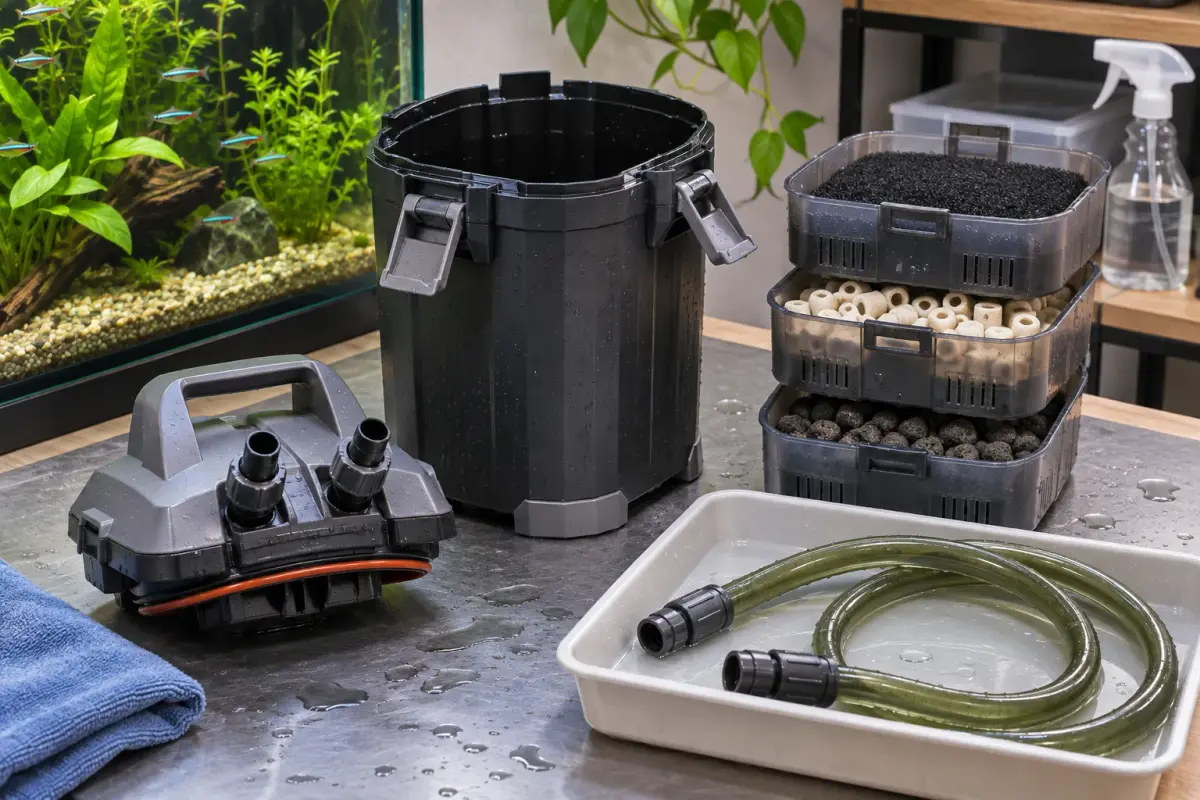
External canister filters sit below or beside the tank and pull water through stacked media trays, which gives the most biological and chemical capacity for the footprint. They suit larger tanks and planted setups, and a model such as this 3-stage external canister filter rated for 28-gallon tanks shows the typical layout: separate stages for coarse, fine and biological media. The trade-off is more hoses and a more involved clean.
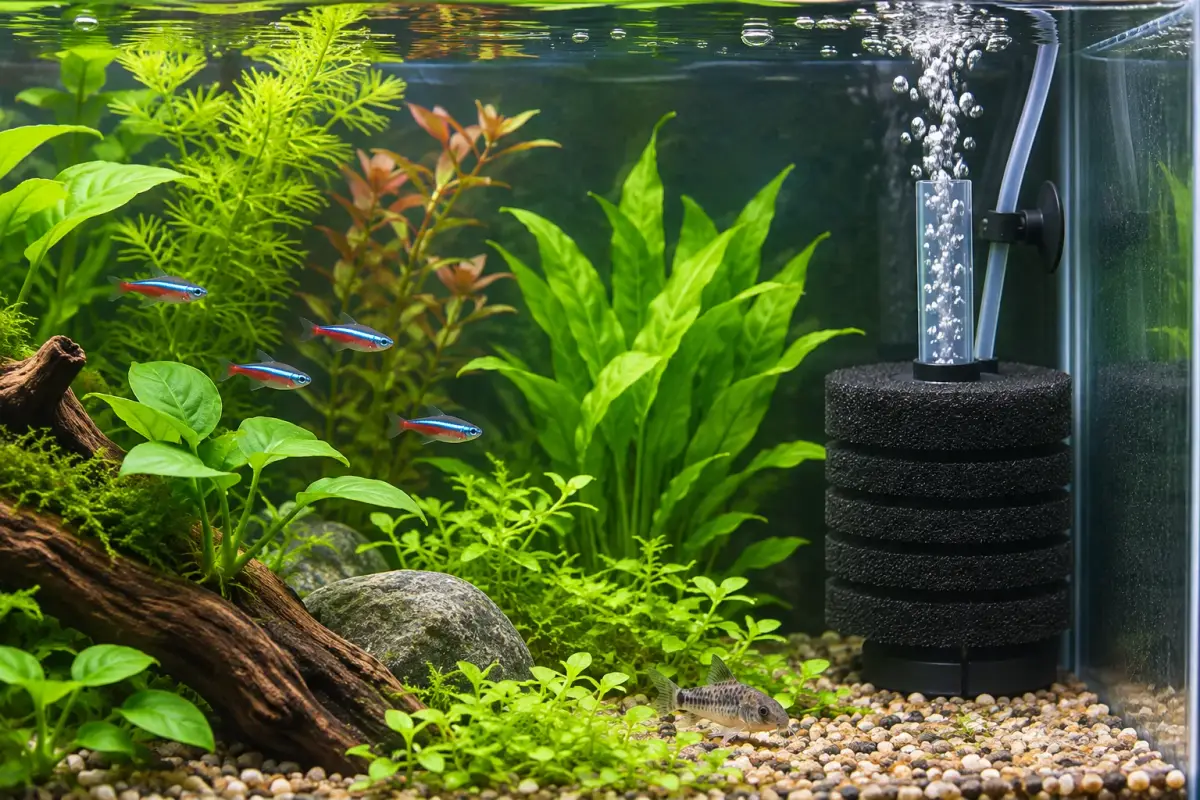
Submersible filters sit inside the tank and hide a pump and sponge in one small body. A small submersible pump filter is simple to install and easy to rinse, which makes it a good match for small tanks and quiet rooms, but its media space is limited. Sponge filters driven by an air pump are the gentlest of all, and the Merck manual lists one among the basic equipment for a quarantine tank.
Best type for each situation
For a small tank of 10 gallons or under, a submersible or sponge filter is usually enough, provided the flow is gentle. For a mid-size or large community tank, a canister gives you room for more media and fewer maintenance visits. For a quarantine or hospital tank, Merck's equipment list is a 10-gallon tank, a sponge filter, a small air pump and a heater, and an aquarium air pump is the part that drives the sponge.
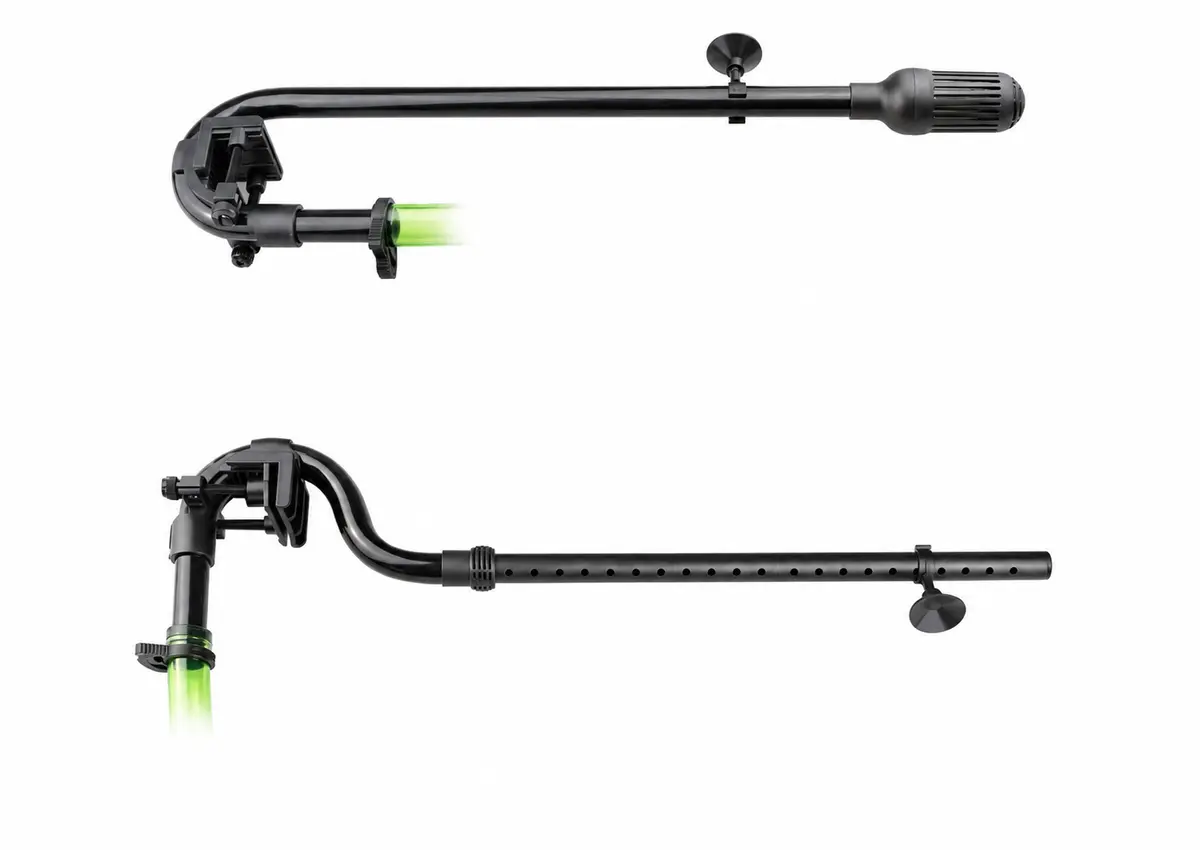
If your tank collects a lot of waste on the bottom, a design that pulls debris off the floor helps. A forced filter that moves fish waste toward the intake is one approach. If you already own a filter and want a softer current, inlet and outlet shower pipe accessories spread the outflow so it does not blast the tank.
What to avoid
Avoid filters with no stated tank rating, filters whose media cannot be reached without a full teardown, and any model that cannot slow its flow. Avoid buying on pump power alone: a strong pump with a tiny media chamber moves water without giving bacteria a place to live.
Avoid wrecking the bacteria you rely on. Merck notes that antimicrobial treatments can kill the nitrifying bacteria in a biofilter, and that copper harms them too, causing ammonia and nitrite to rise for weeks to months afterwards. Never replace all the media at once, and never let a filter sit switched off for hours, because the bacteria need moving, oxygenated water.
Starting up and keeping it running
A new filter is not ready the day you plug it in. VCA advises running the filtered water for 4 to 6 weeks before adding fish so ammonia and nitrite settle, and Merck describes testing ammonia, nitrite and nitrate during cycling and adding fish only once ammonia and nitrite are no longer detectable. Use a test kit rather than guessing, and add fish in small groups.
Once running, rinse sponge or coarse media in a bucket of tank water you have just removed, not under the tap, and clean one stage at a time. VCA recommends partial water changes every 2 to 4 weeks to remove excess waste and uneaten food. Merck also warns that total alkalinity of 50 mg CaCO3/L or less inhibits normal biofilter function, so test it if your pH drifts, and ask an aquatic vet or fish specialist if fish look unwell. Browse the full range of aquarium filters when you are ready.
Filter locations and media access
| Filter format | Where it sits | Maintenance access described |
|---|---|---|
| External canister | Below or beside the tank | Hoses and separate media trays |
| Submersible | A body inside the tank | Pump and sponge access |
| Air-driven sponge | Sponge connected to an air pump | Sponge and air connections |
Common questions
How big should an aquarium filter be?
Choose one rated for at least your tank's volume, and step up a size if you keep messy or large fish or plan to add more later. A bigger rating gives the bacteria more media, as long as the flow can be turned down.
How often should I clean an aquarium filter?
Clean it when flow noticeably slows, usually every few weeks, one media stage at a time, in tank water rather than tap water. VCA says filters must be cleaned regularly, and partial water changes every 2 to 4 weeks help keep waste down.
How long should a filter run before I add fish?
VCA suggests 4 to 6 weeks of running the filtered water before adding fish, and Merck says a tropical biofilter can take up to 8 weeks to establish. Test ammonia and nitrite, and add fish only when neither can be detected.
Is a canister filter better than a submersible filter?
Neither is better in every case. A canister holds more media and suits larger tanks, while a submersible filter is simpler and suits small tanks. Match the rating to your tank and pick the one you will actually maintain.
Sources we checked
This guide is general information, not veterinary advice. If your pet is unwell or injured, contact your veterinarian.