






Buying guides
Best Betta Fish Tank: What Actually Matters
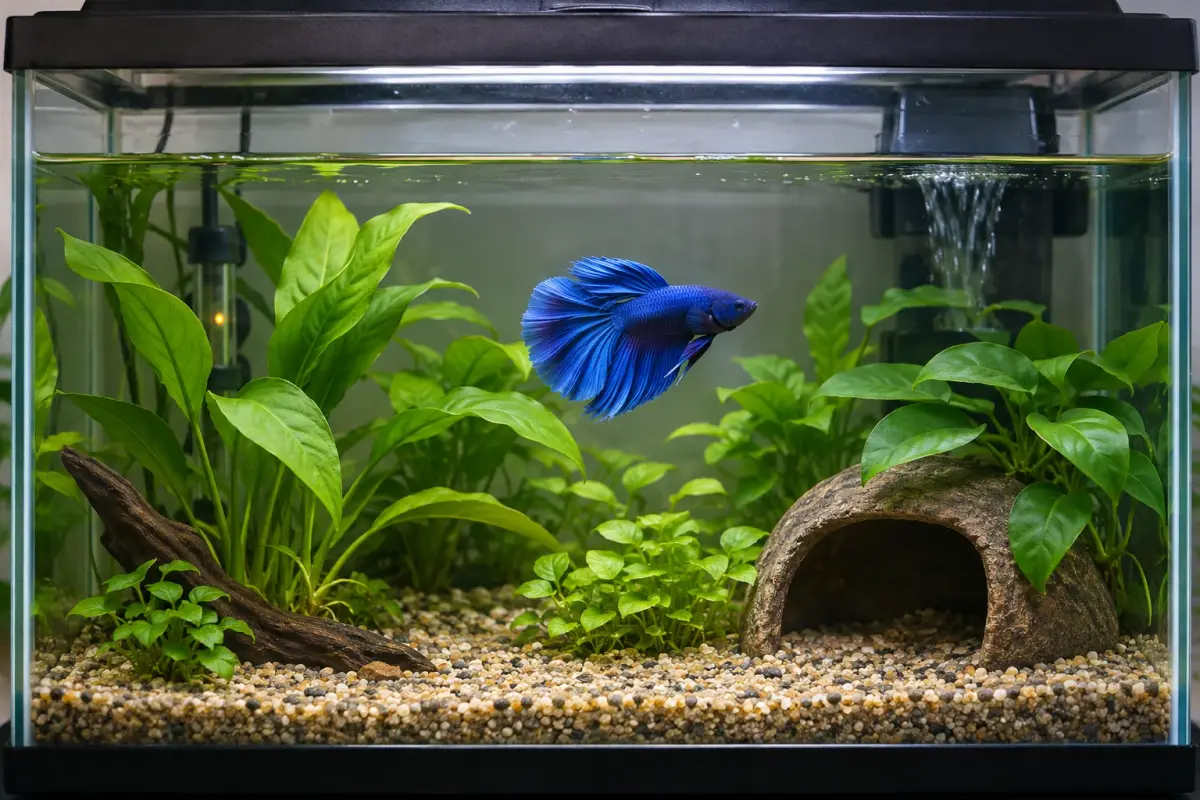
The best betta fish tank holds at least 5 gallons, is wide rather than tall, and has a heater that keeps the water between 76 and 81°F plus a gentle, low-flow filter. Bowls, vases and tiny 1 to 2 gallon tanks are too small. Browse our betta fish tanks with those four features in mind, then add smooth decor and plants.
By Matt GarnettUpdated November 14, 20264 min read2 sources
Size: 5 gallons is the practical floor
The University of Illinois College of Veterinary Medicine recommends a 5-gallon glass or plastic tank or larger for a betta, not a bowl. A bigger tank gives room to swim and hide, and it dilutes the waste and uneaten food that build up as toxins. That is the main reason a 1 or 2 gallon tank is a poor choice, however cute it looks.
Shape counts as much as volume. Washington State University's Ask Dr. Universe points out that the shape of a betta's tank is more important than its size, because a wide tank with plenty of surface lets a betta reach the top to gulp air more easily than a tall vase with a small opening. So choose a long, rectangular tank over a tall cylinder of the same volume.
Heater and thermometer
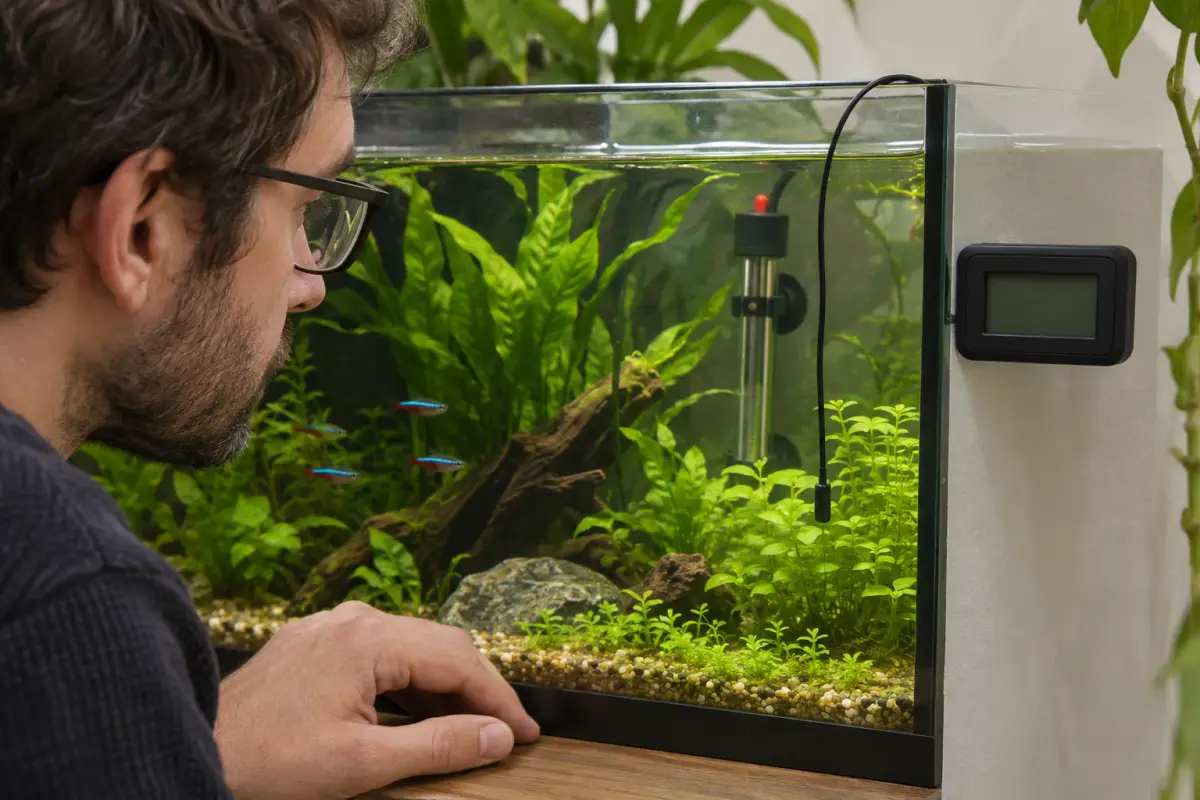
Bettas are tropical fish. Illinois gives their range as 76 to 81°F, and Ask Dr. Universe puts the ideal at 78°F. Most homes are cooler than that, so an in-tank heater is needed, and a thermometer lets you check the water instead of guessing. A lethargic betta in an unheated tank may simply be cold.
Size the heater to the tank, set it to the middle of the range, and run it for a day before the fish goes in so the temperature settles. A heater with a guard is a sensible choice for a fish with long, delicate fins. A tank with a built-in heater slot or a gently heated kit makes setup simpler, but you should still add a separate thermometer.
Filter, flow and lid
Illinois recommends a low-flow filter so suction and current do not injure delicate fins, and Ask Dr. Universe notes that strong water movement can bother a betta, so filters and bubblers are not always necessary. Look at filters with an adjustable flow, a sponge intake or a baffle, and avoid anything that sets the water churning. Browse our aquarium filters and check the flow before you buy.
A tight lid is worth having because bettas can leap, and it also keeps the air above the water warm and humid, which they breathe from. Leave a little gap for air at the surface. Make sure the lid has an opening for the filter and heater cords so nothing is pinched.
Decor, plants and hiding places
Illinois advises that decor should not take over the tank or push the fish toward the edges, and that sharp edges can tear fins. Test any ornament by running a soft stocking over it, and reject anything that snags. Wild bettas live in warm, shallow water full of plants, according to Ask Dr. Universe, so soft plants and resting spots suit them. Browse our aquarium decorations and aquarium plants.
Give your betta a few caves or leafy cover to rest in, plus open water to swim. Wash all decor in plain water before it goes in, and use tap water treated with a dechlorinator, not distilled water, which Illinois says should not be used.
Tank types compared, and what to avoid
A plain rectangular tank of 5 to 10 gallons is the best all-round choice, because it gives you room for a heater, a filter and decor. A starter kit with lid and light is a convenient version, provided the volume is 5 gallons or more. Avoid bowls, vases, tall cylinders and 1 to 2 gallon tanks, and avoid any filter that creates a strong current.
Dedicated space matters too: put the tank away from drafts, windows and loud speakers. If your betta stays lethargic or stops eating even after the temperature and water are right, Ask Dr. Universe recommends seeing a fish veterinarian. When you are ready to choose, browse our betta fish tanks.
This page is general information, not veterinary advice, and it cannot replace an examination by the vet who knows your pet.
Common questions
What size tank does a betta fish need?
The University of Illinois veterinary college recommends a 5-gallon tank or larger. Bowls and vases are not suitable, and a wide tank with a large surface is better than a tall one.
Does a betta tank need a heater?
Yes, in most homes. Bettas need water at about 76 to 81°F, and Illinois says an in-tank heater is usually needed because homes run cooler. Add a thermometer to check the temperature.
Does a betta tank need a filter?
A gentle one helps keep water clean, but strong flow stresses bettas and can injure their fins. Choose a low-flow filter, and remember that regular water changes still matter.
Is a 2-gallon tank big enough for a betta?
Not according to the sources we checked. Illinois recommends a 5-gallon tank or larger, so a 1 to 2 gallon tank leaves too little room for swimming, heating and diluting waste.
Sources we checked
This guide is general information, not veterinary advice. If your pet is unwell or injured, contact your veterinarian.


