






Buying guides
Best Fish Tank Stands: What Actually Matters
The best fish tank stand is one rated for the full weight of your filled tank, matched to its exact footprint and built to survive spills. A full aquarium is far heavier than the glass alone, so the stand is a safety decision, not a furniture one. Browse our aquarium stands, then use this guide to check capacity, size and construction.
By Matt GarnettUpdated November 14, 20265 min read2 sources
Why the stand is a safety decision
Water is heavy, and an aquarium holds a lot of it. Once you add gravel or sand, rock, decorations, the equipment and the glass itself, the total is much more than the tank's capacity suggests. VCA Animal Hospitals lists an aquarium and a sturdy stand as essentials and says the tank should sit on a level surface that can support its weight. The stand is the part that carries every pound of it, every day, for years.
That is why a bookcase, a dresser or a spare table is a poor substitute. Furniture that was built to hold books or clothes is not designed for a point load that never moves, and a failure is sudden and wet. If you are unsure, take the weight of a full tank from the manufacturer's listing and compare it with the stand's stated capacity, rather than guessing from how solid the furniture feels.
Match the stand to the tank
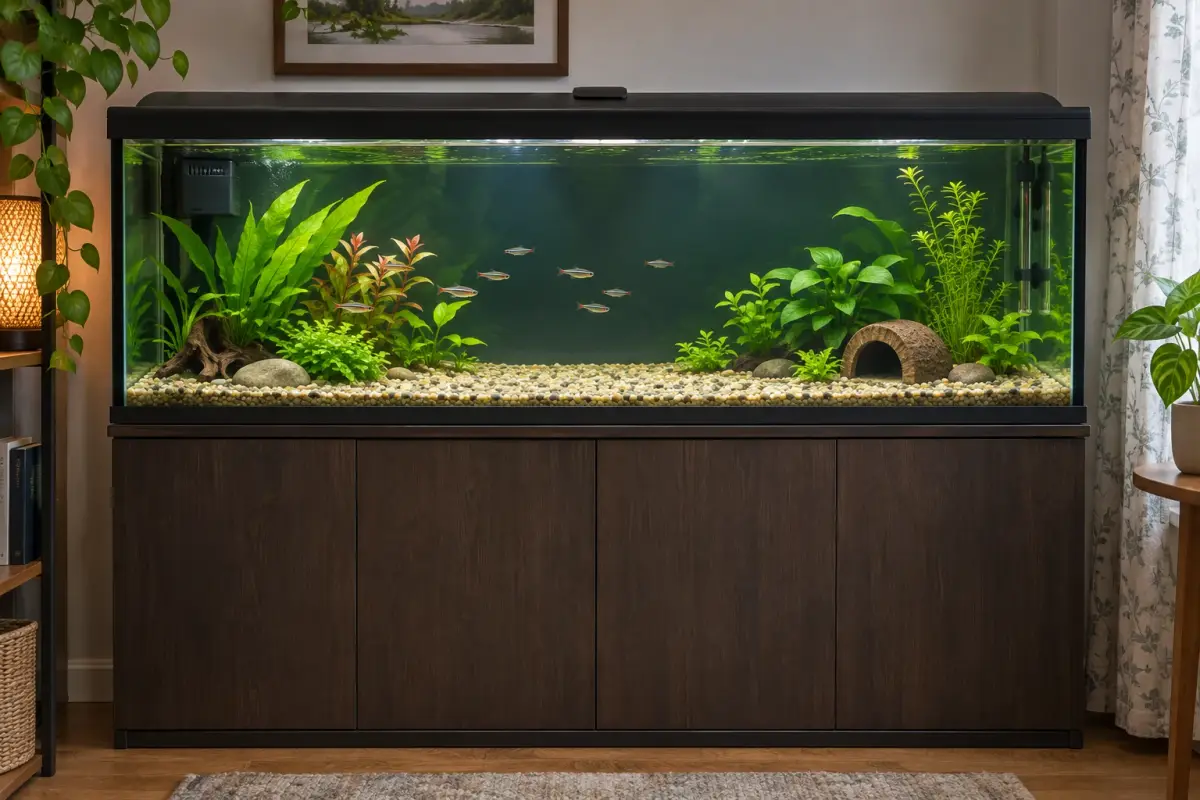
Tanks are sold by capacity, such as 10, 20, 29, 40, 55 or 75 gallons, and a stand has to fit that exact tank, not a similar one. Check the length and depth of the tank and compare them with the stand's top. The glass should sit fully supported by the frame around its whole perimeter, because an overhang or a gap puts stress on the base glass and the seams.
Stands are often listed by a range, so read it carefully. A fish tank stand for 55 to 75 gallon tanks is designed around the footprint of those tanks, and one made for a different size is the wrong choice even if the capacity number looks high. Measure your tank before you buy and keep the manufacturer's dimensions to hand.
Steel, wood and cabinet designs
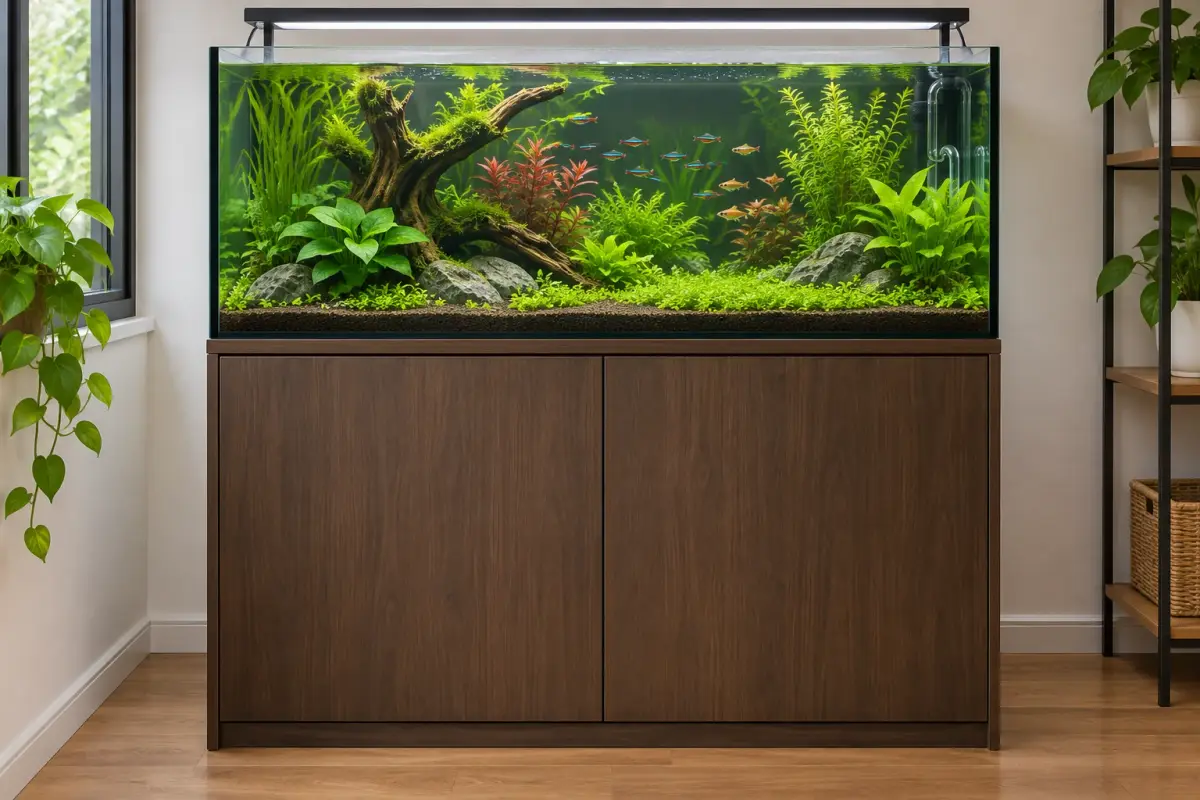
Metal-frame stands are open, light and tend to be the simplest way to support a tank, and an open frame lets you see the equipment and any leak. Wood or engineered-wood cabinets look like furniture and hide the filter, but moisture is their enemy, because water that gets into particleboard swells and weakens it. A sealed or water-resistant finish matters on any cabinet.
A cabinet stand gives storage for food, nets and spare equipment, and some include built-in outlets for filters, heaters and lights. If you want that convenience, check that the wiring is rated for use near water and that cords can be routed with a drip loop. For a smaller tank, a simple frame is often enough, and a cabinet is worth it once you have equipment to hide.
Level floors, location and sunlight
The surface under the stand matters as much as the stand. PetMD says to set up the tank on a level surface that can support its weight and has access to power, and VCA adds that the spot should not be near windows, doors, vents or air conditioners. Put the stand on a firm, flat floor, ideally against a load-bearing wall, and use shims under the legs if the floor is slightly uneven.
Direct sunlight is the other thing to avoid. PetMD recommends keeping the tank away from direct sunlight to prevent algae growth, and sun also heats the water unevenly. Leave a few inches behind the tank for cords and a hand to reach the equipment, and keep the stand away from a heating vent, which dries and cracks wooden stands over time.
Reptile tanks and other uses
Stands built for aquariums are used for other glass enclosures, such as turtle or reptile setups, but the weight differs. A reptile tank holds substrate and decor rather than a full volume of water, so it is lighter, though a turtle setup with a pool is not. Match the stand to the actual weight and footprint of what will sit on it.
A reptile tank stand is sold without the tank, so check the listing for the tank size it supports and its stated capacity. If it is for a water-heavy setup such as an aquatic turtle, treat it like a fish tank and plan for the full filled weight, not the dry one.
Checklist before you buy
Work through a short list. Is the stated capacity higher than the full tank's weight, with water, substrate and equipment? Does the top match the tank's length and depth? Is the finish water-resistant? Are the legs adjustable or can you shim them? Is there room for the filter, heater and cords? Answer these before choosing the style.
Once those are settled, compare finish, storage and outlets across our aquarium stands. If you are still choosing the tank itself, our fish tanks range is the place to start, and sizing the stand to match is easier when you have the dimensions in hand. If anything looks uneven or the stand creaks under load, empty the tank and fix it before refilling.
Common questions
Can I use a dresser as a fish tank stand?
It is not recommended. Dressers and bookcases are not built for a constant point load, and moisture damages them. Use a stand rated for the full weight of a filled tank, on a level floor.
What size stand do I need for a 55 gallon tank?
One made for a 55 gallon tank, matched to its exact length and depth so the frame supports the whole base. Check the manufacturer's dimensions and the stand's stated capacity before buying.
Where should I put a fish tank stand?
On a level floor that can support the weight, with access to power, away from direct sunlight, windows, doors, vents and air conditioners, as VCA and PetMD advise for setting up a tank.
Should a fish tank stand be steel or wood?
Either can work if it is rated for the load. Steel frames are simple and open, while wood cabinets hide equipment but need a water-resistant finish, because moisture swells and weakens engineered wood.
Can a fish tank stand hold a reptile tank?
Often yes, if the footprint and capacity suit. A reptile enclosure is usually lighter than a full aquarium, but a setup with a large water pool should be treated like a filled fish tank.
Sources we checked
This guide is general information, not veterinary advice. If your pet is unwell or injured, contact your veterinarian.


