







Dog shoes & boots
Breathable Dog Boots with Hook-and-Loop Straps and Non-Slip Soles
- Options
- 6 to choose from
From $29.99
Free US shipping over $49 · 30-day free returns · Happy pets, happy homes
Pet care guidesDogs
Ready for any weather.
8 items picked for everyday life with your pet, with shipping estimates on every item.
 Snug, dry and looking the part.
Dog shoes & boots
From $29.99


Dog shoes & boots
From $29.99


Dog shoes & boots
From $32.99


Dog shoes & boots
From $22.99
A little guidance
Buying guides and care advice written for this range: what to measure, what matters and what to skip.
Shop dog boots that stay on: waterproof boots with suspender straps that run over the back, anti-slip winter boots with a twist-dial closure sold as a set of four, lightweight mesh boots with twin hook-and-loop straps, non-slip dog shoes with rubber soles, and non-slip grip socks for indoor floors. This page narrows our Dog Boots range to designs that solve the most common complaint: boots that fly off mid-walk. Below is why boots slip, how to measure, and which closure suits which dog.
Most lost boots come down to three things. The boot is the wrong size, usually too big, so it twists and slides. The closure sits in the wrong place, below the wrist or hock where the leg narrows. Or the boot is fastened too loosely because the dog dislikes the feel at first.
A dog's leg tapers toward the paw, which gives a boot nothing to hold onto. The designs here deal with that in different ways, by tightening evenly around the leg, by adding a second strap higher up, or by anchoring the boots to the body.
Stand your dog on paper with its weight on the paw, trace around the foot including the nails, and measure the widest part. The AKC recommends this tracing method for choosing a size. Measure front and back paws, as front paws are often bigger.
If your dog falls between sizes, try the smaller size first for a snug fit, as long as the toes are not squashed. A boot that is even a little too large is the one most likely to come off.
Twist-dial closures tighten a cord evenly around the leg in small steps and do not loosen as your dog moves, which makes them very secure for winter walks and snow. Twin hook-and-loop straps, one above the other, grip a longer section of leg than a single strap. The AKC suggests wrap-around closures for a secure fit.
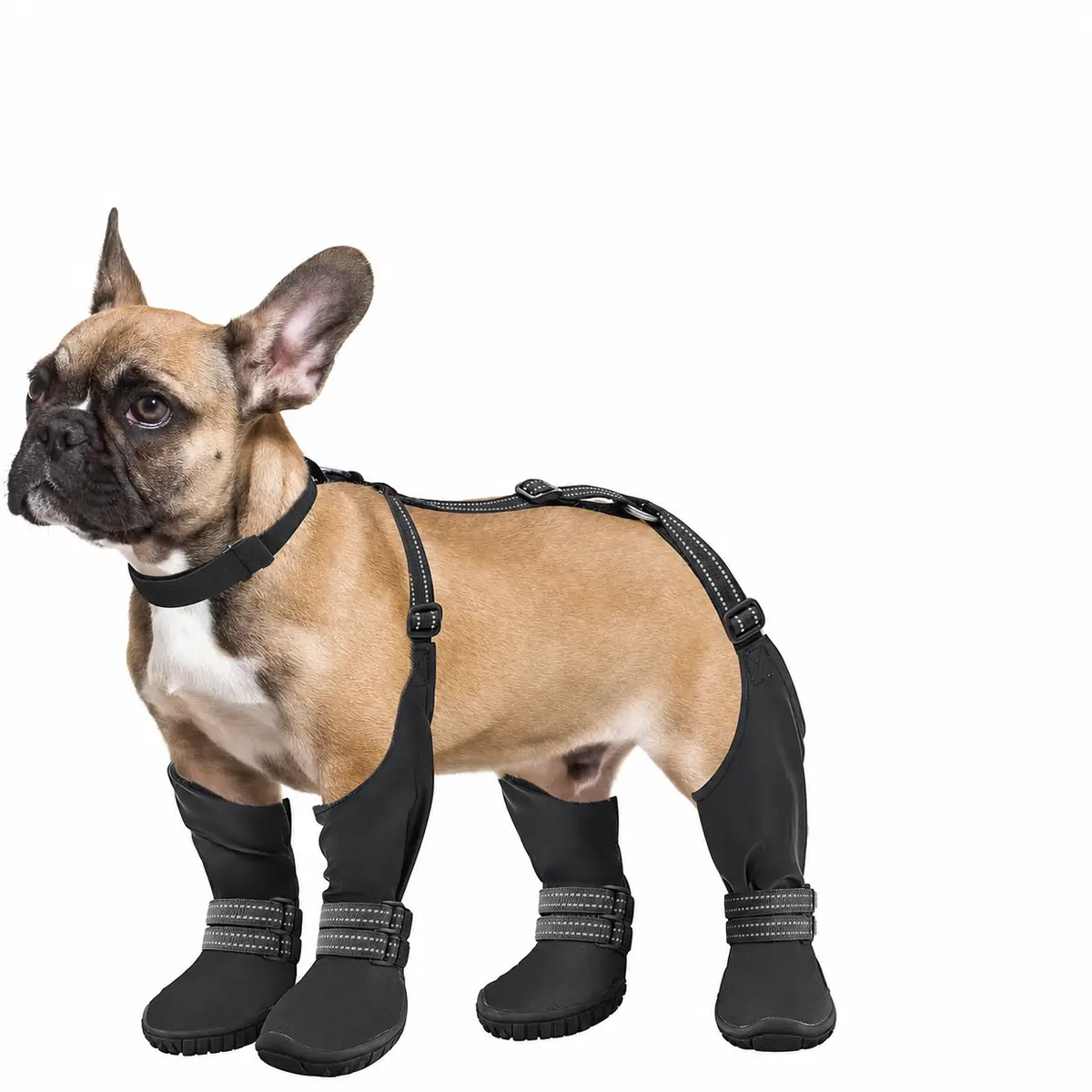
Suspender straps connect the boots across your dog's back, so even if a boot loosens, it cannot fall off and be lost. They suit dogs with very tapered legs, such as sighthounds, and dogs that run and dig in deep snow.
Non-slip dog socks with rubber grip dots help senior dogs and dogs with weak legs walk on wood, tile and laminate without sliding. They are softer than boots and most dogs accept them quickly. Fit them snugly so they do not twist.
Non-slip shoes with rubber soles give more protection for outdoor use and rough ground. Remove socks and shoes after use and check the paws for rubbing, and keep pads dry, since the AKC warns that moisture trapped between the toes can lead to yeast infections.
Start indoors. Let your dog sniff the boots and reward it, put on one boot for a minute, then add the others over a few sessions. The AKC advises short, gradual sessions and watching for signs of stress.
Expect high-stepping at first; most dogs walk normally within a few days. Check the fit a few minutes into each walk, since boots often settle, and retighten if needed. Boots protect against hot pavement in summer and salt and ice in winter, so a dog that wears them happily is ready for both.
Choose the right size, fasten the closure snugly above the paw, and check the fit after a few minutes of walking. Twist-dial closures, twin straps and suspender straps hold best.
They are boots joined by straps that run over your dog's back, so a loosened boot cannot fall off. They suit dogs with narrow, tapered legs and very active dogs.
Snug but not tight. You should be able to slip a finger under the closure. Too loose and they slip; too tight and they restrict blood flow and rub.
Well-fitted grip socks stay on for most dogs indoors. Choose the right size, pull them up fully, and remove them if they twist so the grip dots stay under the paw.
Boots change how the paw feels the ground, so dogs lift their feet high at first. Short practice sessions with treats help most dogs walk normally within days.