






Buying guides
Best Dog Boots: How to Choose a Pair That Fits and Stays On
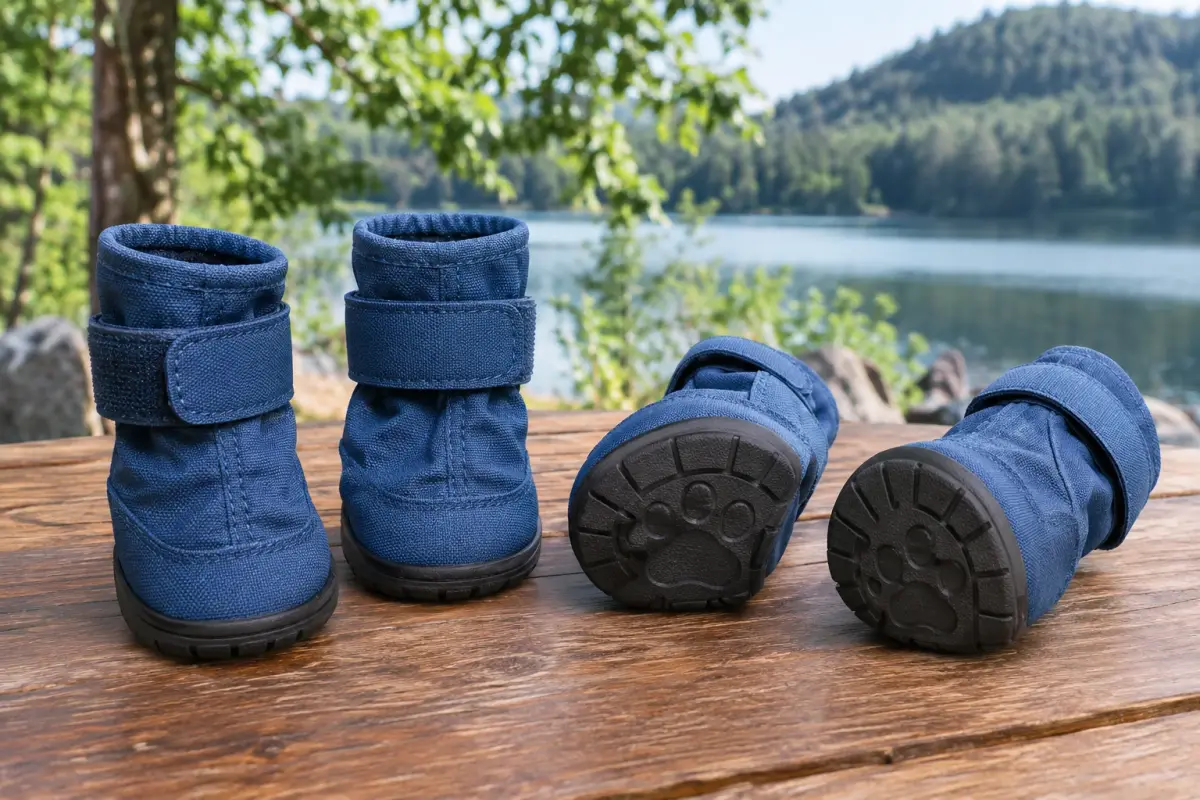
The best dog boots are the ones that fit the width of your dog's paw, grip with a grooved rubber sole, and close snugly above the wrist so they stay on. Choose the material for the job: rubber or coated fabric for wet streets, insulation for snow, mesh for heat. For everyday rain, start with our waterproof dog boots, then size them from a paw tracing.
By Matt GarnettUpdated November 14, 20265 min read3 sources
When dogs actually need boots
Many dogs never need boots, and paw pads are tougher than they look. The AKC's rule of thumb is simple: if you would not walk barefoot on a surface, your dog should not either. That covers hot asphalt in summer, sidewalks treated with ice melt, sharp gravel or rocky trails, and slick ice. Boots also help a dog with a sore or injured paw that your vet wants kept clean.
Heat is the most common reason. The AKC cites data showing that when the air is 86°F, asphalt can reach 135°F, and suggests pressing your palm to the pavement for ten seconds; if it is too hot for your hand, it is too hot for paws. In winter, the ASPCA warns that dogs lick ice-melt chemicals off bare paws, and that booties keep salt and sand from between the toes. For wet city walks, our waterproof dog boots are the simplest starting point.
What matters most in a dog boot
Fit comes first. A boot that is too wide twists and falls off; one that is too narrow rubs. The paw should sit flat, with the dog's toes able to spread slightly as it walks. Closure comes second: the AKC notes that hook-and-loop straps are quick to fasten and keep a boot snug, and a strap that closes above the wrist joint, not across it, is what stops most boots flying off at a trot.
Then the sole. A grooved, flexible rubber sole grips pavement, rock and wet floors, and the AKC points out that this traction helps a dog keep its balance on slick surfaces. Material decides the weather: waterproof rubber or coated fabric for rain and slush, breathable mesh for heat, insulated linings for cold. Reflective strips are a useful extra for walks in the dark.
Dog boot types compared
Rubber and silicone rain boots slip on like a balloon or a sock, keep paws completely dry and are light. A pair such as the waterproof silicone dog rain boots suits short, wet walks, but sealed rubber does not breathe, so they are not for long hikes. Soled fabric boots with straps, like the waterproof non-slip dog boots, are the all-round choice, with a firmer sole for rough ground.
Insulated winter boots add a fleece or faux-fur lining and a higher cuff for snow. Mesh boots trade waterproofing for airflow on hot pavement and summer trails. Grip socks are for indoors: they give an older dog traction on hardwood but offer no real protection outside. Lightweight waterproof rain shoes for pets fall between sock and boot for city walks.
Which type suits which dog
Small dogs with short legs often splash through every puddle, so a light rain boot or soft-soled shoe is usually enough, and heavy hiking boots make them walk awkwardly. Large, active dogs need a stiffer sole and two straps, because their stride generates more force and twists a boot off faster. Dogs that hike on rock want a thick, grooved sole and a high cuff that keeps gravel out.
Senior dogs that slip on hard floors are better served by grip socks or very light boots worn indoors for short periods than by heavy outdoor boots. Dogs in snowy regions need insulation and a cuff high enough to keep snow from packing in. For a city dog walked on salted sidewalks, waterproofing matters more than insulation, and our guide to dog boots for snow covers the colder end.
How to measure your dog's paws
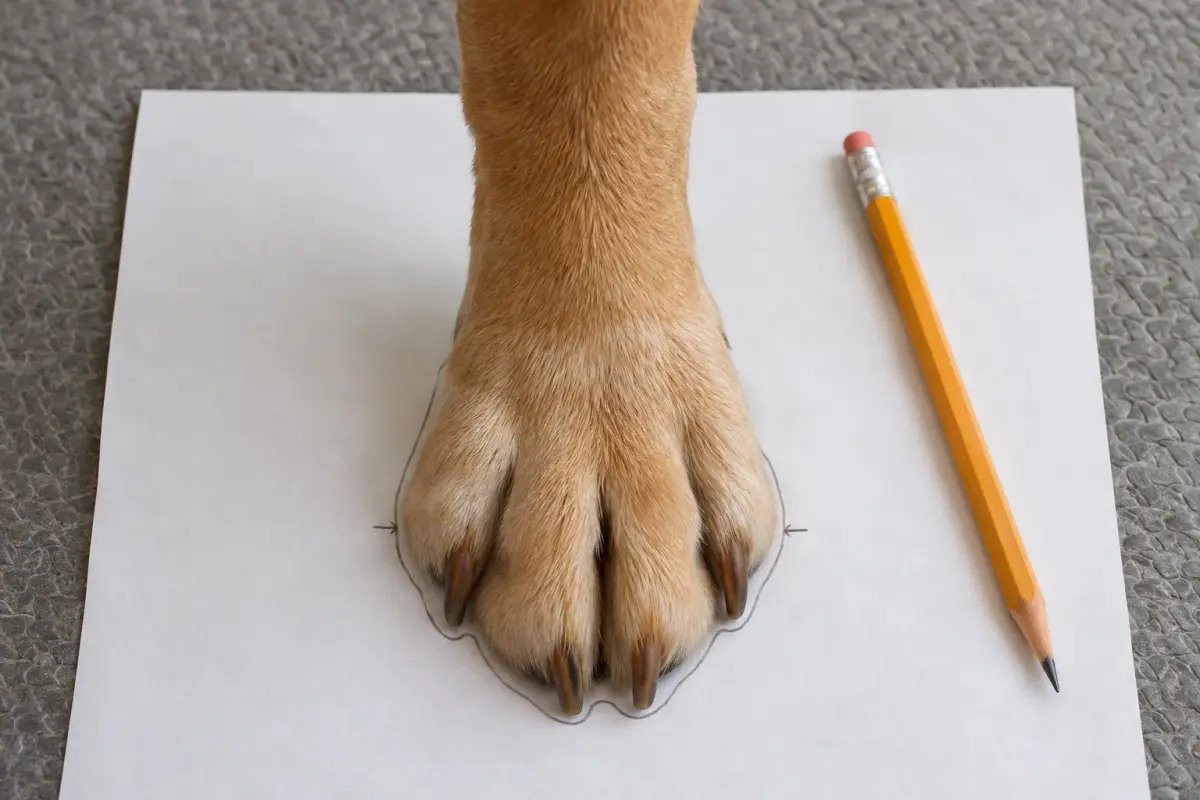
Measure, do not guess from breed or weight. The AKC's method: stand your dog on a sheet of paper so the paw spreads as it does when walking, trace around it, then draw a line across the widest part and measure it. Measure the front and back paws, since front paws are often larger, and use the widest figure against the size chart.
If your dog falls between sizes, the boot's closure decides it. With an adjustable strap, the smaller size often fits better; with a slip-on rubber boot, the larger may be easier to put on. Do a test walk indoors first, as the AKC suggests, and check the boot stays on, grips the floor and does not twist. A boot that turns sideways on the paw is the wrong width.
Getting your dog to wear them
Most dogs high-step comically the first time, and that is normal. The AKC recommends letting your dog sniff the boots, pairing them with praise and high-value treats, then putting on one boot at a time and starting with short indoor sessions. Add the remaining boots only once your dog walks calmly in the first.
Keep early outings short and pleasant, and take the boots off before your dog gets frustrated. Watch for signs of stress or discomfort, and check the paws after each wear for redness or rubbing, especially at the dewclaw and the top of the foot. If a pad is blistered, cracked or swollen, see your vet before putting a boot back on.
What to avoid, and how to care for boots
Avoid boots that trap water inside: the AKC notes that moisture held between the toe pads can lead to yeast infections, so dry boots and paws after every wet walk. Avoid boots without a closure for active dogs, and avoid leaving boots on for hours at home. In summer, boots are not a reason to walk on scorching asphalt at midday; walk early or late instead.
Rinse salt and grit off after winter walks, as the ASPCA advises for paws themselves, and let boots air-dry rather than drying them on a heater, which can crack rubber. Replace a pair when the sole is worn smooth or a strap no longer holds. When the old pair goes, compare the soles and closures across our waterproof dog boots before choosing the next.
Boot construction and fitting areas
| Construction | Physical features | Fit or care check |
|---|---|---|
| Rubber or silicone rain boot | Light slip-on body | Opening, enclosed space and duration of wear |
| Soled fabric boot | Fabric upper with a firmer sole and straps | Sole dimensions and strap positions |
| Insulated winter boot | Additional lining and a higher cuff | Interior space after lining and cuff fit |
| Mesh boot | Mesh in the upper | Ventilated area and intended conditions |
| Grip sock | Fabric sock with an indoor grip surface | Twisting and indoor fit |
Common questions
Do dogs really need boots?
Many dogs do not, but boots help on surfaces you would not walk on barefoot: hot asphalt, sidewalks treated with ice melt, sharp gravel and slick ice. They also help keep a sore paw clean while it heals.
How do I find dog boots that stay on?
Measure the widest part of the paw from a tracing, choose a boot that matches that width, and pick a strap that closes snugly above the wrist joint. A boot that twists sideways on the paw is the wrong width.
Are rubber dog boots or fabric boots better?
Rubber boots keep paws completely dry on short, wet walks but do not breathe. Soled fabric boots with straps are better for longer walks and rough ground, and mesh boots suit hot weather.
How hot is too hot for a dog's paws?
The AKC cites asphalt reaching 135°F when the air is 86°F. Press your palm to the pavement for ten seconds; if it is too hot for your hand, it is too hot for your dog's paws.
Sources we checked
This guide is general information, not veterinary advice. If your pet is unwell or injured, contact your veterinarian.


