






Buying guides
Best Dog Boots for Winter and Snow: What to Look For
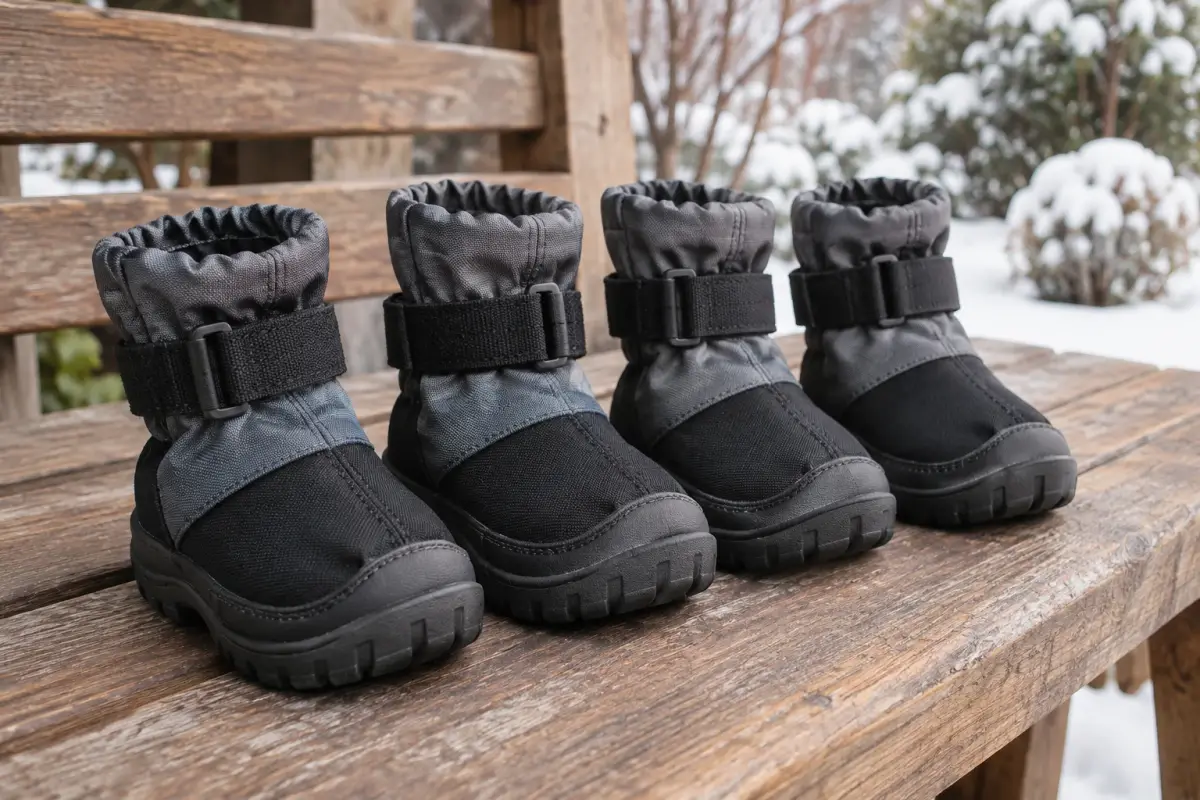
The best winter dog boots have a flexible, grippy rubber sole, a wide opening that goes on easily, and two adjustable straps that close above the dewclaw so they stay on. Fit by paw width, not dog weight. Boots matter most where sidewalks are salted, ice is sharp or snow balls up between the toes.
By Matt GarnettUpdated November 14, 20264 min read2 sources
What winter boots are really protecting against
Cold alone is not the main problem for most healthy dogs on short walks. The bigger hazards are de-icing salts and chemicals, which the AKC notes can damage paw pads and may be toxic if a dog licks them off later, along with sharp crusted ice and the hard snowballs that form in the fur between the toes of long-haired breeds. Boots put a barrier between the pad and all three.
That tells you which dogs need them most: city dogs walking salted sidewalks, dogs with feathery feet that ice up, older dogs with thin pads, and dogs hiking on crusted snow. A short-coated dog on a quick, unsalted backyard trip may not need boots at all, provided you wipe and check its paws when it comes in. If your dog fits one of these descriptions, our dog boots for snow are the place to start.
What makes a boot stay on
Boots that fall off are the most common complaint, and closure design is the reason. Look for two hook-and-loop straps, or one wide strap plus a drawstring, that tighten above the wrist and dewclaw rather than around the narrow part of the foot. A boot with a split or zippered opening goes on more easily than a narrow tube, which matters on cold mornings.
Cuff height helps too: a taller shaft that reaches up the leg keeps snow out and gives the strap something to grip. Rubber disposable-style booties stretch over the paw and stay on well for short walks, though they need practice to put on. Whatever the design, the boot should be snug enough not to twist but not so tight that it leaves marks when removed.
Soles, materials and types compared
For snow and ice, the sole matters most. A rubber sole with a deep tread grips packed snow, but it should still bend easily, because a stiff sole changes the way a dog walks and many will refuse to move. Uppers should be water-resistant nylon or softshell with a fleece or neoprene lining if your dog walks for long periods in deep cold.
Thin rubber balloon booties are cheap, flexible and good for salt protection on city sidewalks, but they wear out fast and give little grip. Soft fabric boots with rubber soles are the all-round type for daily winter walks. Insulated, high-cuff boots suit long hikes in deep snow. Paw wax or paw balm is a minimal alternative for dogs that will not tolerate boots, though it protects for less time.
The best type for each dog
For small dogs, which lose heat faster and are closer to the cold ground, a soft insulated boot with a fleece lining and a high cuff, such as fleece-lined dog snow boots, is the best choice. For large, active dogs, choose a rugged boot with a thick, flexible sole and two straps. For seniors or dogs that slip on ice, prioritize tread over insulation, for example anti-slip fleece-lined winter dog boots; grip is what prevents falls.
For long-haired breeds that collect snowballs, trimming the fur between the pads helps as much as the boot does. For dogs that refuse boots entirely, start with paw wax and wipe paws after each walk. If your dog has cracked, bleeding or limping paws after winter walks, stop and have your vet check them before buying a tougher boot.
How to measure your dog for boots
Stand your dog on a sheet of paper with its weight on one front foot, as it does when walking. Mark either side of the paw at its widest point and the tip of the longest nail and the back of the main pad, then measure width and length in inches. Compare with the chart, using width as the deciding number; front paws are often wider than back ones, so measure both.
If your dog is between sizes, choose the larger one and tighten the straps. Introduce boots slowly indoors, one boot at a time, with treats, as the AKC recommends, before trying a walk. Expect a few high-stepping, comical minutes at first; most dogs settle once they are moving outside and distracted by smells.
Care and lifespan
Take boots off as soon as you come inside so salt and slush are not carried through the house, rinse them in lukewarm water and let them air-dry away from direct heat, which cracks rubber. Check the soles every few weeks and replace boots once the tread is smooth or the straps no longer grip.
Even with boots, wipe your dog's paws after winter walks, using a dog paw cleaner if you like, and look between the toes for redness or cuts. The ASPCA suggests rinsing and drying feet after each walk to remove salt and checking pads for cracks. A good pair of boots usually lasts one or two winters for a dog that walks daily on salted pavements. Browse dog boots for snow when it is time for a new pair.
Winter boot structures
| Style | Physical difference | Inspect on the exact boot |
|---|---|---|
| Thin rubber bootie | A flexible rubber covering | Opening,paw fit and wear |
| Fabric boot with rubber sole | A fabric upper over a separate sole | Sole flexibility,tread and closures |
| Insulated high cuff | A taller upper with additional lining | Cuff height,lining and adjustment |
Common questions
Do dogs really need boots in the snow?
Not every dog. Boots help most on salted sidewalks, sharp ice and long snowy walks, and for small, senior or long-haired dogs. A healthy short-coated dog on short walks may be fine with paw wiping instead.
What dog boots stay on best?
Boots with two adjustable straps that close above the dewclaw, a taller cuff and a wide opening stay on best. Correct sizing by paw width matters just as much as the design.
How cold is too cold for a dog without boots?
It depends on the dog, but many small or short-coated dogs feel discomfort on long walks below freezing. Watch for lifted paws, limping or reluctance to walk, and keep walks short in very cold weather.
Can I use human socks instead of dog boots?
Socks can protect paws indoors or keep a bandage clean, but they slip, soak through in snow and give no grip on ice, so they are not a good substitute for proper winter boots outdoors.
Sources we checked
This guide is general information, not veterinary advice. If your pet is unwell or injured, contact your veterinarian.


